Fertilization

Definition and stakes

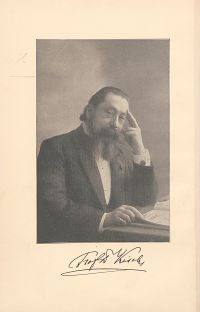
William A. Locy,  Biology and Its Makers

“ Now, egg and sperm are the two germinal elements which unite in development. Fertilization takes place by the union of sperm and egg, and inasmuch as the nuclei of each of these structures contain one-half of the number of chromosomes characteristic of the species, [Pg 313] their union in fertilization results in the restoration of the original number of chromosomes. The fertilized ovum is the starting-point of a new organism, and from the method of its fertilization it appears that the parental qualities are passed along to the cells of every tissue. ”
Source: Gutenberg

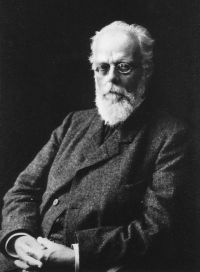
Portrait of Herbert Spencer Herbert Spencer,  The Principles of Biology — Chapter II.10 (1898)

“ But the circumstance that there exist in such organisms elaborate appliances for mutual fertilization, shows that unlikeness of derivation in the united reproductive centres, is the desideratum. Now this is just what the foregoing hypothesis implies. If, as was concluded, fertilization has for its object the disturbance of that approaching equilibrium existing among the physiological units separated from an adult organism; and if, as we saw reason to think, this object is effected by mixture with the slightly-different physiological units of another organism ”
Source: Wikisource

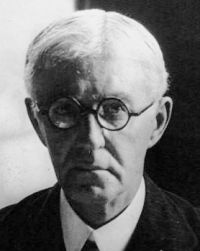
Michael F. Guyer,  Being Well-Born: An Introduction to Eugenics

“ In such cells an accumulation of food to any large extent would hinder rather than help them, because it would seriously interfere with their activity.
Fertilization.—In fertilization (Fig. 12, p. 48) the spermatozoon penetrates the wall of the ovum and after undergoing considerable alteration its nucleus fuses with the nucleus of the egg. In some forms only the head (nucleus) and middle-piece enter, the tail being cut off by a so-called fertilization membrane which forms at the surface of the egg and effectually blocks the entrance of other spermatozoa.
”
Source: Gutenberg

Get perspective with Kwize: daily news enlightened by great literature