Parthenogenesis

Definition and stakes

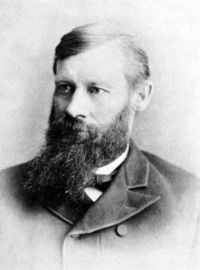
David Sharp,  The Cambridge Natural History, Vol… (1899)

“ Parthenogenesis.—Returning to the various kinds of peculiarities we have enumerated on the preceding page, we may remark that the phenomena of parthenogenesis have been thoroughly established as occurring in Aphidae since Bonnet discovered the fact 150 years ago; and though they have not been investigated in much detail it is known that the parthenogenesis is usually accompanied by the production of young all of the female sex. In other cases males are parthenogenetically produced ”
Source: Gutenberg

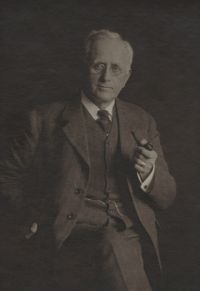
Various,  Popular Science Monthly (1906)

“ Artificial parthenogenesis designates the development of unfertilized ova which normally would not develop at all and which are stimulated to development by placing them under artificial chemical conditions. Doubtless many of you have seen in the newspapers these experiments referred to as if they gave the actual creation of life. Of course that is nonsense. The life is there in the ovum. What artificial parthenogenesis accomplishes is to supply a stimulus, chemical in nature and capable of replacing the fertilization by the spermatozoon, which would otherwise be necessary. ”
Source: Wikisource

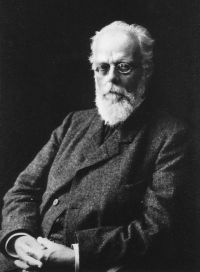
Portrait of August Weismann August Weismann,  Essays Upon Heredity and Kindred Biological Problems

“ The hypothesis of rejuvenescence is, however, opposed by the fact of parthenogenesis; for if fertilization possesses in any way the meaning of rejuvenescence, and depends upon the union of two different forms of force and of matter, which thus produce the power of reproduction, it follows that we cannot understand how it happens that the same power of reproduction may be sometimes produced from one form of matter, alone and unaided. Logically speaking, parthenogenesis should be as impossible as that either nitric acid or glycerine should separately produce the effect of nitro-glycerine. ”
Source: Gutenberg

Get perspective with Kwize: daily news enlightened by great literature