Amphimixis

Definition and stakes

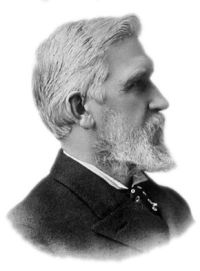
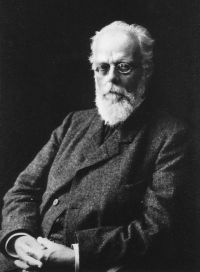
Portrait of August Weismann August Weismann,  The Evolution Theory, Vol. 1 of 2

“ I have merely touched on it in order to make clear that the death of individuals in all multicellular organisms gives us no ground for thinking of the unlimited life of the germ-cells as dependent on a special artifice of nature, such as amphimixis is often supposed to be. Let us always remember that there is parthenogenesis, and that there are unicellular germs (spores) which are never fertilized, and that the reproduction of many species of animals and plants occurs in this way without the intervention of amphimixis at all. ”

Source: Gutenberg

George John Romanes,  Jelly-Fish, Star-Fish, and Sea-Urchins…

“ Turning now to the covered-eyed division of the Medusæ, I find, in all the species I have come across, that excision of the margins of umbrellas produces an effect analogous to that which is produced by excision of the margins of swimming-bells. There is an important difference, however, between the two cases, in that the paralyzing effect of the operation on umbrellas is neither so certain nor so complete as it is on swimming-bells. That is to say, although in the majority of experiments such mutilation of umbrellas is followed by immediate paralysis, this is not invariably the case ”
Source: Gutenberg

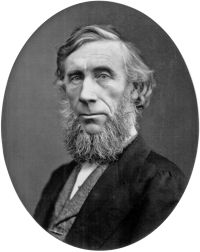
Portrait of John Gray McKendrick John Gray McKendrick,  Life in Motion (1892)

“ The short, sudden contraction we shall call a twitch or simple spasm.
We repeat the experiment, only irritating the muscle instead of the nerve, and we get the same result: a single twitch with a single shock and tetanus when the shocks come in rapid succession.
We have learned from this experiment, then (1) , that when we irritate the nerve going to a muscle, the muscle becomes shorter and thicker, or, in other words, it contracts; (2) , that a single shock of electricity to the nerve is followed by a sudden sharp twitch, a single contraction
”
Source: Wikisource

Get perspective with Kwize: daily news enlightened by great literature