John Gray McKendrick

Biographical details

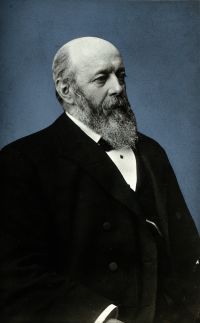
Portrait of John Gray McKendrick John Gray McKendrick,  Life in Motion (1892)

“ Thus, according to the scientific conceptions of the present day, we have to imagine all the matter in the universe as in a state of movement, some movements large and occurring in vast stretches of space, and others almost inconceivably minute. Nothing in this vast mechanism has come to rest. Each particle of matter is quivering, molecules of all gases are vibrating to and fro, and millions of wavelets are streaming through the ether in all conceivable directions. If we suppose that the essence of life is movement, does not this give one a conception that in a sense the universe is alive? ”
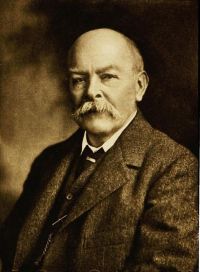
Source: Wikisource

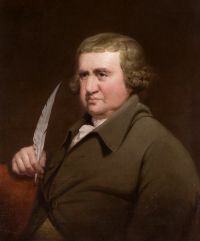
Portrait of John Gray McKendrick John Gray McKendrick,  Life in Motion (1892)

“ How striking is it, my young friends, that the splendid results of modern electrical science, with which we are familiar every day, flowed, in no small degree, from the first physiological experiments of Galvani. Electric lighting, the application of electricity to- the construction of motors, and the thousand ways in which this mysterious thing is becoming the servant of man, sprang from discoveries that date from the time when the Italian philosopher noticed the twitches of a frog's leg near his electrical machine. Truly there is nothing small and insignificant in science. ”
Source: Wikisource

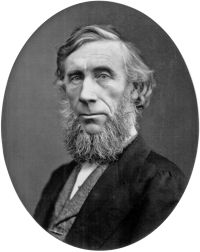
Portrait of John Gray McKendrick John Gray McKendrick,  Life in Motion (1892)

“ It expends or produces mechanical energy, and it also becomes hot. But we know that energy never comes out of nothing. You cannot get it for nothing. You can only get it by the expenditure, or, if you put it in another form, by the disappearance, of another mode of energy. This is one of the greatest thoughts of modern times—this thought of the persistence of energy. We cannot create or destroy matter. We can only transform it. In like manner, we cannot create or destroy energy. We can only transform it. Our steam-engines, and gas-engines, and hot-air engines are all transformers of energy. ”
Source: Wikisource

Get perspective with Kwize: daily news enlightened by great literature