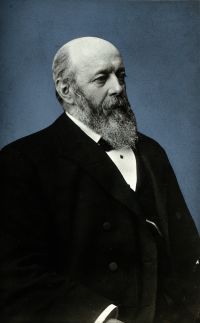
Étienne-Jules Marey

Definition and stakes

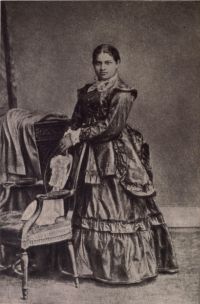
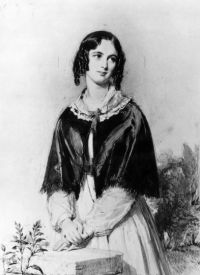
Portrait of Charlotte M. Yonge Charlotte M. Yonge My Young Alcides: A Faded Photograph

And if I should have feared for the best brought up, most religious of young men, in such scenes as I was told were apt to take place at Killy Marey, how could I not be anxious for my nephews? But nothing ever turns out as one expects.
I was at Arked one day, and Lady Diana was telling me of the great rambling house at Killy Marey, and how, when she arrived as a bride, none of the doors would shut except two that would not open, behind one of which lived the family ghost
Source: Gutenberg

Charles Albert Móre A French Volunteer of the War of Independence (1898)

Mery was the only man who kept his heart. He was born in the island of Martinique, 13th January, 1750. When he was only three years old he lost his father, and his mother would not let him go to France to be educated. His grandfather was a judge or magistrate, and young Moreau de St. Mery was when a boy always interceding for some unfortunate prisoner. At his grandfather's death he inherited a sum of money, destined to defray the cost of his legal education in France, but he used the money to pay the old man's debts. At the age of nineteen he came to Paris, and studied hard.
Source: Wikisource

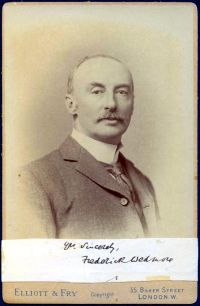
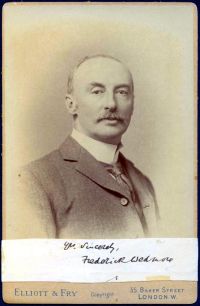
Portrait of Sir Frederick Wedmore Sir Frederick Wedmore Fine prints (1905)

The St Etienne-du-Mont is one of those etchings which possess the abiding charm of perfect things. In it a subject entirely beautiful and dignified is treated with force and with refinement of spirit, and with faultless exactitude of hand. It shows—nothing can better show—the characteristic of Méryon, the union of the courage of realism and the sentiment of poetry; in other words, its realism, like the realism of the finest Fiction, has to be poetic. You have the builder’s scaffolding, the workmen’s figures, for modern life and labour
Source: Gutenberg

Get perspective with Kwize: daily news enlightened by great literature