Summary

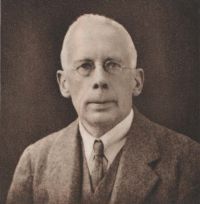
Portrait of Campbell Dodgson Campbell Dodgson The Etchings of Charles Meryon

THE ETCHINGS OF CHARLES MERYON INTRODUCTION. CENTURY has passed since the birth of Meryon, a circumstance which excuses, if it does not actually demand, a survey in retrospect of the great etcher’s work and the growth of his renown. There is no indication, it must be said at once, that the lapse of time has weakened in any degree the sure fabric of his fame. About no other modern etcher, save Whistler, is there an equal consensus of opinion among those whose opinion counts, that he ranks among the great masters of his art.
Source: Gutenberg

Portrait of Campbell Dodgson Campbell Dodgson The Etchings of Charles Meryon

The streets of all the etchings of the sixties are filled with excited crowds or little groups of tall, unnatural looking people, and all kinds of curious monsters and allegorical figures hover in the sky or swoop in rapid flight across it. The Collège Henri IV (plate 29) in some of its states, has for background a sea with sails and whales and sea-gods, and the figures in the foreground are the most extraordinary that Meryon ever drew.
Source: Gutenberg

Portrait of Campbell Dodgson Campbell Dodgson The Etchings of Charles Meryon

Nor is an artist always the best judge of a fellow artist who pursues very different aims from his own. Meryon’s reputation, though it is ungrudgingly admitted and admired by most etchers of to-day and yesterday, was established by the critics and collectors of a generation now extinct. Philippe Burty, who published the first critical article on Meryon and the first catalogue of his etchings in the Gazette des Beaux-Arts of 1863, was the first to discern clearly and to proclaim to the world his peculiar genius.
Source: Gutenberg

Get perspective with Kwize: daily news enlightened by great literature