Cathédrale Notre-Dame de Paris

Definition and stakes

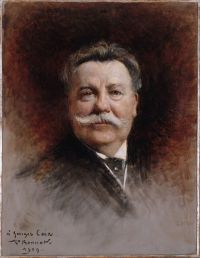
Portrait of Victor Hugo Victor Hugo Notre-Dame de Paris

In those days of brilliancy, warmth, and serenity, there is a certain hour above all others, when the façade of Notre-Dame should be admired. It is the moment when the sun, already declining towards the west, looks the cathedral almost full in the face. Its rays, growing more and more horizontal, withdraw slowly from the pavement of the square, and mount up the perpendicular façade, whose thousand bosses in high relief they cause to start out from the shadows, while the great central rose window flames like the eye of a cyclops, inflamed with the reflections of the forge.
Source: Gutenberg

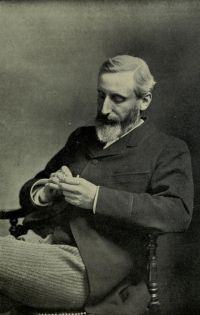
Portrait of Victor Hugo Victor Hugo Notre-Dame de Paris

It was plainly evident that there was great internal commotion in the bishop’s palace. Its shadowy mass was all furrowed with lights which flitted from window to window; as, when one has just burned paper, there remains a sombre edifice of ashes in which bright sparks run a thousand eccentric courses. Beside them, the enormous towers of Notre-Dame, thus viewed from behind, with the long nave above which they rise cut out in black against the red and vast light which filled the Parvis, resembled two gigantic andirons of some cyclopean fire-grate.
Source: Gutenberg

Portrait of Victor Hugo Victor Hugo Notre-Dame de Paris (1888)

Time has caused the staircase to disappear, by raising the soil of the city with a slow and irresistible progress; but while thus causing the eleven steps which added to the majestic height of the edifice, to be devoured, one by one, by the rising tide of the pavements of Paris,— time has bestowed upon the church perhaps more than it has taken away, for it is time which has spread over the façade that sombre hue of the centuries which makes the old age of monuments the period of their beauty.
Source: Wikisource

Get perspective with Kwize: daily news enlightened by great literature