“ During the Renaissance period, while many of the nobility fixed their seats in the eastern and north-eastern part of Paris-within-the-Boulevards on the Right Bank, not a few erected houses for themselves in the open spaces of the Faubourg St. Germain. The most magnificent of these later buildings is the Palais du Luxembourg, erected for Marie de Médicis, after the death of Henri IV, by Jacques Debrosse, one of the best French architects of the generation which succeeded that of Jean Goujon and Philibert Delorme. ”
Palais du Luxembourg
Definition and stakes
The theme of “Palais du Luxembourg” has been addressed by authors such as duc de Louis de Rouvroy Saint-Simon, Various, M. F. Mansfield, Thomas Okey and Grant Allen. It is often associated with terms like Paris, palace, Louis, France and Louvre.
Quotes about “Palais du Luxembourg”
M. F. Mansfield, Royal Palaces and Parks of France
“ To-day the Luxembourg, the Republican Palais du Sénat, is but an echo of the four centuries of aristocratic existence which upheld the name and fame of its first proprietor, the Duc de Piney-Luxembourg, Prince de Tigry, who built it in the sixteenth century. From 1733 to 1736 the palace underwent important restorations and the last persons to inhabit it before the Revolution were the Duchesse de Brunswick, the Queen Dowager of Spain and the Comte de Provence, brother of Louis XVI, to whom it had been given by Letters Patent in 1779. ”
Roland Truslove and Henri de Blowitz, 1911 Encyclopædia Britannica, Volume 20… (1911)
“ The Palais Royal, built by Richelieu about 1630 and afterwards inhabited by Anne of Austria, the regent Philip II. of Orleans and Philippe Égalité, is now occupied by the Council of State and the Théâtre Français. The Palace of the Luxembourg stands on the site of a mansion belonging to Duke Francis of Luxembourg, which was rebuilt by Marie de Medici, wife of Henry IV. The architect, Salomon Debrosse, was ordered to take the Pitti Palace at Florence as his model, but notwithstanding the general plan of the building is French. ”



Related terms
Authors who wrote about “Palais du Luxembourg”
duc de Louis de Rouvroy Saint-SimonVariousM. F. Mansfield Thomas Okey
 Grant AllenRoland Truslove and Henri de BlowitzJetta Sophia WolffD. W. Bartlett
 Laurence SterneMary BrowneFrancis William Blagdon
 James Fenimore CooperWilliam Edward FryeMary King Waddington
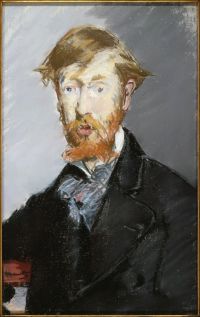 George MooreAgness Greene Foster
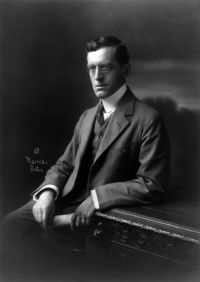 Ralph Adams Cram
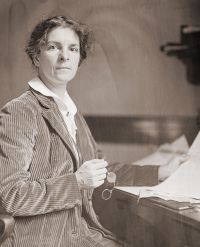 Rheta Childe Dorr
 Victor HugoJohn Sanderson
Thomas OkeyGrant AllenRoland Truslove and Henri de BlowitzJetta Sophia WolffD. W. BartlettLaurence SterneMary BrowneFrancis William BlagdonJames Fenimore CooperWilliam Edward FryeMary King WaddingtonGeorge MooreAgness Greene FosterRalph Adams CramRheta Childe DorrVictor HugoJohn Sanderson