“ The New English Art Club is very typical of this end of the century. It is young, it is interesting, it is intelligent, it is emotional, it is cosmopolitan—not the Bouillon Duval cosmopolitanism of the Newlyn School, but rather an agreeable assimilation of the Montmartre café of fifteen years ago. Art has fallen in France, and the New English seems to me like a seed blown over-sea from a ruined garden. It has caught English root, and already English colour and fragrance are in the flower. A frail flower; but, frail or strong, it is all we have of art in the present generation. ”
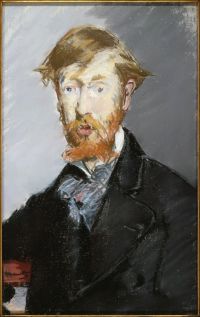
George Moore
Summary
George Moore’s Modern Painting, published in the late 19th century, examines the shifting landscape of art through the lens of current movements and figures. Focusing on the New English Art Club and its international outlook, Moore contrasts emerging artistic approaches with traditional academies, critiquing the restrictive nature of institutionalized education on creativity.
The text highlights the technical skill of painters like Manet, Whistler, and Monet, emphasizing their pioneering use of hue, illumination, and arrangement. Through vivid descriptions of exhibitions and portraits, Moore explores the interplay between formal training and innate talent, ultimately portraying modern painting as a delicate yet essential expression of individuality amid societal limitations.
Quotes from Modern Painting (George Moore)
“ I believe he could rub a picture over with Prussian blue without experiencing any inconvenience; half-an-hour after the colour would be fine and beautiful.And never did this mysterious power which produces what artists know as "quality" exist in greater abundance in any fingers than it did in the slow, thick fingers of Edouard Manet: never since the world began; not in Velasquez, not in Hals, not in Rubens, not in Titian. As an artist Manet could not compare with the least among these illustrious painters; but as a manipulator of oil-colour he never was and never will be excelled. ”
“ The white drapery clings like haze about the edge of the woods, and the flesh tints are pearly and evanescent as dew, and soft as the colour of a flowering mead. But the kneeling figure is not so perfect, and that is why I reluctantly give my preference to the woman by the mirror. Turning again to this picture, I would fain call attention to the azalias, which, in irresponsible decorative fashion, come into the right-hand corner. The delicate flowers show bright and clear on the black-leaded fire-grate; and it is in the painting of such detail that Mr. Whistler exceeds all painters. ”
