Summary

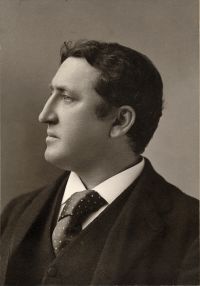
Portrait of James Huneker James Huneker Promenades of an Impressionist

Renoir flowers, dewy, blushing. You exclaim: "How charming!" It is normal French painting, not the painting of the schools with their false ideal of pseudo-Greek beauty, but the intimate, clear, refined, and logical style of a man who does not possess the genius of Manet, Degas, or Monet, but is nevertheless an artist of copiousness, charm, and originality. Charm; yes, that is the word. There is a voluptuous magnetism in his colour that draws you to him whether you approve of his capricious designs or not.
Source: Gutenberg

Portrait of James Huneker James Huneker Promenades of an Impressionist

To give him his due he stands prosperity not quite as well as he did poverty. In every great artist there is a large area of self-esteem; it is the reservoir which he must, during years of drought and defeat, draw upon to keep his soul fresh. Without the consoling fluid of egoism, genius must perish in the dust of despair. But fill this source to the brim, accelerate the speed of its current, and artistic deterioration may ensue. Rodin has been called, fatuously, the second Michael Angelo—as if there could ever be a replica of any human.
Source: Gutenberg

Portrait of James Huneker James Huneker Promenades of an Impressionist

Why not come out plumply with the truth: Velasquez is the supreme harmonist in art. No one ever approached him in his handling save Hals, and Hals hardly boasts the artistic inches of Velasquez. Both possessed a daylight vision of the world. Reality came to them in the sharpest guise; but the vision of Velasquez came in a more beautiful envelope. And his psychology is profounder. He painted the sparkle of the eyes and also the look in them, the challenging glance that asks: "Are we, too, not humans?" Titian saw colour as a poet, Velasquez as a charmer and a reflective temperament.
Source: Gutenberg

Get perspective with Kwize: daily news enlightened by great literature