Paul Cézanne

Definition and stakes

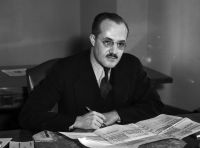
Portrait of James Huneker James Huneker Promenades of an Impressionist

A painter by compulsion, a contemplative rather than a creative temperament, a fumbler and seeker, nevertheless Paul Cézanne has formed a school, has left a considerable body of work. His optic nerve was abnormal, he saw his planes leap or sink on his canvas; he often complained, but his patience and sincerity were undoubted. Like his friend Zola his genius—if genius there is in either man—was largely a matter of protracted labour, and has it not been said that genius is a long labour?
Source: Gutenberg

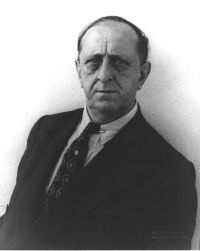
Portrait of Clive Bell Clive Bell Since Cézanne

Cézanne is the full-stop between impressionism and the contemporary movement. Of course there is really no such thing as a full-stop in art any more than there is in nature. Movement grows out of movement, and every artist is attached to the past by a thousand binders springing from a thousand places in the great stem of tradition. But it is true that there is hardly one modern artist of importance to whom Cézanne is not father or grandfather, and that no other influence is comparable with his.
Source: Gutenberg

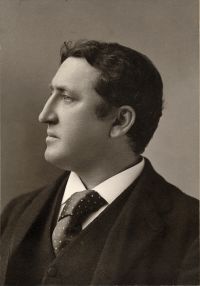
Portrait of James Huneker James Huneker Unicorns

Not that he was an "abstract" painter—as the jargon goes. He was eminently concrete. He plays a legitimate trompe-l'œil on the optic nerve. His is not a pictorial illustration of Provence, but the slow, patient delineation by a geologist of art of a certain hill on old Mother Earth, shamelessly exposing her bare torso, bald rocky pate, and gravelled feet. The illusion is not to be escaped. As drab as the orchestration of Brahms, and as austere in linear economy; and as analytical as Stendhal or Ibsen, Cézanne never becomes truly lyrical except in his still-life.
Source: Gutenberg

Get perspective with Kwize: daily news enlightened by great literature