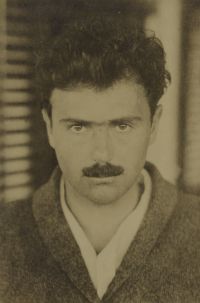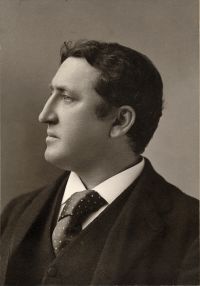
Pablo Picasso

Definition and stakes

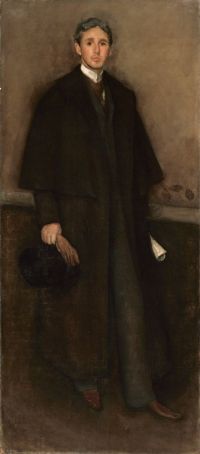
Portrait of Arthur Jerome Eddy Arthur Jerome Eddy,  Cubists and Post-Impressionism

“ The second exhibition, held in the fall of the following year, brought the members into contact with a large number of outside artists, some of whom have become of great importance in the new art, and most of whom were, up to that time, unknown in Germany. These were the Germans, Hermann Haller, Bernhard Hoetger, Eugen Kahler, Adolf Nieder; the Frenchmen, Georges Bracque, André Derain, Kees Van Dongen, Francisco Durio, Pablo Picasso, Georges Rouault, and Maurice de Vlaminck ”
Source: Gutenberg

Max Millard,  100 New Yorkers of the 1970s

“ The photographs, like those found in Newman's three previous books and in his hundreds of assignments for Life, Look, Newsweek and other publications, are far more than mere portraits. Rather, they are profound artistic statements, in which the background of the picture often symbolizes the person's achievement.
"I don't use props: I use reality," explains Newman, taking a break at the West 57th Street studio he has occupied since 1948. On the wall are pictures — he prefers that word to "photographs" — of Marc Chagall, Pablo Picasso, Eugene O'Neill and four American presidents
”
Source: Gutenberg

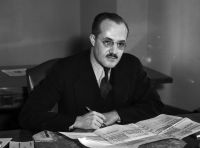
Portrait of Willard Huntington Wright Willard Huntington Wright,  Modern Painting, Its Tendency and Meaning

“ His sculpture is but his painting in a solider medium. It is broken up into planes and organised as to each contour in exactly the same manner as is his work in oils. The difference between Picasso, the sculptor, and Matisse, the sculptor, is the difference between a man who has a slight genius for rhythm and a block order, and one who has a slight genius for characterisation and a perfect ensemble. The art of Picasso, having to do with form as decoration, is admirably adapted to sculpture. The art of Matisse, being flat and dealing with colour as decoration, is inexpressible in clay. ”
Source: Gutenberg

Get perspective with Kwize: daily news enlightened by great literature