Summary

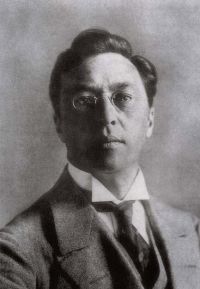
Portrait of Wassily Kandinsky Wassily Kandinsky Concerning the Spiritual in Art

As has been said the generation of a work of art is a mystery. So long as artistry exists there is no need of theory or logic to direct the painter's action. The inner voice of the soul tells him what form he needs, whether inside or outside nature. Every artist knows, who works with feeling, how suddenly the right form flashes upon him. Bocklin said that a true work of art must be like an inspiration; that actual painting, composition, etc., are not the steps by which the artist reaches self-expression.
Source: Gutenberg

Portrait of Wassily Kandinsky Wassily Kandinsky Concerning the Spiritual in Art

A parallel in music are the sad, middle tones of a cello. A cold, light red contains a very distinct bodily or material element, but it is always pure, like the fresh beauty of the face of a young girl. The singing notes of a violin express this exactly in music.
Warm red, intensified by a suitable yellow, is orange. This blend brings red almost to the point of spreading out towards the spectator. But the element of red is always sufficiently strong to keep the colour from flippancy. Orange is like a man, convinced of his own powers.
Source: Gutenberg

Portrait of Wassily Kandinsky Wassily Kandinsky Concerning the Spiritual in Art

This world is too far above us for its harmony to touch our souls. A great silence, like an impenetrable wall, shrouds its life from our understanding. White, therefore, has this harmony of silence, which works upon us negatively, like many pauses in music that break temporarily the melody. It is not a dead silence, but one pregnant with possibilities. White has the appeal of the nothingness that is before birth, of the world in the ice age.
Source: Gutenberg

Get perspective with Kwize: daily news enlightened by great literature