“ There is, in fact, a real excuse for Ruskin’s exaggerated paradox that Claude’s drawings look like the work of a child of ten. There is a whole world of beauty which one must not look for at all in Claude. All that beauty of the sudden and unexpected revelation of an unsuspected truth which the Gothic and Early Renaissance art provides is absent from Claude. As the eye follows his line it is nowhere arrested by a sense of surprise at its representative power, nor by that peculiar thrill which comes from the communication of some vital creative force in the artist. ”
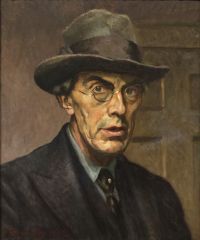
Roger Fry
Summary
Roger Fry’s Vision and Design (1981), a non-fiction work examining the relationship between artistic vision and formal structure, explores how artists such as Giotto, Cézanne, and Renoir convey emotion and perception through visual form. By analyzing paintings, drawings, and architectural design, Fry delves into themes of unity, creative expression, and the conflict between artistic innovation and societal norms.
He criticizes the erosion of craftsmanship in industrialized societies while underscoring the artist’s role in uncovering hidden truths. Through comparisons of historical and contemporary examples, Fry advocates for art’s ability to go beyond mere representation, instead offering a deep engagement between vision and the physical world.
Quotes from Vision and Design (Roger Fry)
“ But if we suppose a state in which all the ordinary objects of daily life—our chairs and tables, our carpets and pottery—expressed something of this reasonableness instead of a crazy and vapid fantasy, the artist as a pure creator might become, not indeed of less importance—rather more—but a less acute necessity to our general living than he is to-day. Something of the sanity and purposefulness of his attitude might conceivably become infused into the work of the ordinary craftsman, something, too, of his creative energy and delight in work. ”
“ It is impossible for art to convey more intensely than this the beauty of such a movement of impetuous yearning. The action of the Christ is as vividly realised; almost too obviously, indeed, does he seem to be edging out of the composition in order to escape the Magdalene’s outstretched hands. This is a striking instance of that power which Giotto possessed more than any other Italian, more indeed than any other artist except Rembrandt, the power of making perceptible the flash of mutual recognition which passes between two souls at a moment of sudden illumination. ”
