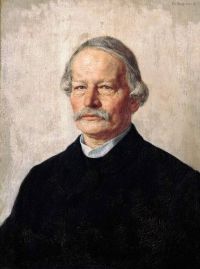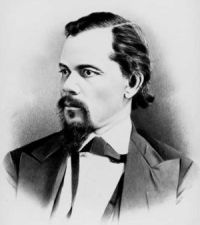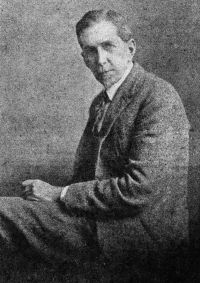
George MacDonald,
David Elginbrod
“ This is another to be added to the many proofs that verisimilitude is not in the least an essential element of verity. ”
Verisimilitude, the semblance of truth, refers to the extent to which a statement or theory mirrors reality, especially in philosophy and science. This idea, pivotal to Karl Popper’s analysis of scientific development, examines how incorrect theories may still contribute to the pursuit of truth. Authors such as George MacDonald cast doubt on its necessity for authenticity, while Lady Florence Dixie connected truth with moral duties, portraying falsehoods as human flaws.
Others, like Oliver Wendell Holmes, examined the line between truth and mental illness, and Gustav Freytag investigated the contrast between knowledge and deceit. These differing viewpoints highlight verisimilitude’s function as a framework for assessing the balance between approximation and absolute truth in human comprehension.
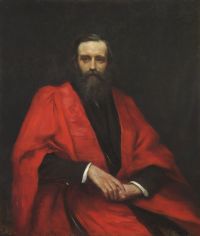
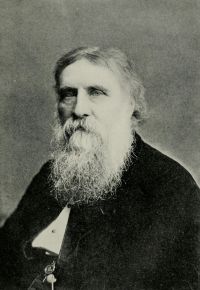
George MacDonald,
David Elginbrod
“ This is another to be added to the many proofs that verisimilitude is not in the least an essential element of verity. ”
Lady Florence Dixie,
Isola; or, The disinherited: A revolt for woman and all the disinherited
(1877)
“ Is not all Truth divine? What! Treason is it to condemn a lie? What made the lie? God? No. Just little Man. Man, still in an imperfect, undrilled state. Shall lies or laws based on them be immortal? Not so, I say. They must be executed. Vergli will be their executioner. Is he a Revolutionist? No, no. He is an Evolutionist. That’s all. Kill him? You cannot! Thought will never die, It is a part of Immortality. Silence this body? That which gives it life You cannot kill, because it is of God. It is that which is speaking to you now. Silence it? Never! ’Tis eternal Life. ”
Oliver Wendell Holmes, The Poet at the Breakfast-Table
“ Take that one word Sin, for instance: all those who have studied the subject from nature and not from books know perfectly well that a certain fraction of what is so called is nothing more or less than a symptom of hysteria; that another fraction is the index of a limited degree of insanity; that still another is the result of a congenital tendency which removes the act we sit in judgment upon from the sphere of self-determination, if not entirely, at least to such an extent that the subject of the tendency cannot be judged by any normal standard. ”
Jean-Baptiste Massillon,
Sermons
(1879)
“ Nevertheless, the world is filled with dissemblers of the truth. We live, it would appear, only to deceive each other: and society, the first bond of which ought to be truth, is no longer but a commerce of dissimulation, duplicity, and cunning. Now, in the conduct of the priests of our Gospel, let us view all the different kinds of dissimulation of which men render themselves every day culpable toward truth; we shall there find a dissimulation of silence, a dissimulation of compliance and palliation, a dissimulation of disguise and falsehood. ”
Ludwig Tieck,
The Old Man of the Mountain — SECTION VIII
“ What we do from conviction as we call it, from pondering about a matter and balancing it first in one scale and then in the other, over and over again, is seldom worth much. Whatever is permanent, characteristic, genuine in our nature, is instinct, prejudice, call it superstition; a conclusion without question or inquiry, an act because one cannot help it. Such is this of mine! You may look upon it as a vow, a solemn oath which I have sworn to myself, and which I cannot violate without the most atrocious perjury against my own heart. ”
Gustav Freytag,
The Lost Manuscript: A Novel
“ Yet more, and worse than that, you have been no thoughtless day-laborer; you have fully and entirely belonged to us; you were, in fact, a scholar, from whose learning many with higher pretensions have frequently taken counsel. You not only treasured in your mind a mass of rare knowledge, but you well comprehend the thoughts to which such knowledge gives rise. You were all this--and yet a forger. With true devotion and self-denial, you united malicious willfulness; you were a confidential and assiduous assistant, and at the same time a deceiver, bold and mocking like a devil. ”
Hesiod, Horace, and an Officer of the U.S. Treasury Department, Hints from Hesiod (1883)
“ Object of the poem to win his brethren and countrymen from strife and dissension, by inculcating an observance of the laws of Justice. The twofold nature of Strife; the one producing violent dissensions, the other virtuous emulation. The folly of litigation, and the squandering of one's hard earnings in needless lawsuits. The strict observance of the laws of Justice, in all our acts and dealings, the best method of preventing them. The thirst for knowledge the first great cause of the origin of evil. The origin of evil, as illustrated in the fable of "Pandora and the Forbidden Jar." ”
Paschal Beverly Randolph,
Dealings with the Dead
(1861)
“ There is truth, therefore, in the doctrine of fore-ordination. But this truth is general always, and not particular, for while the current and area of events are pre-established, still every soul, in any and all its states, has an absolute sphere of self-itivity;—the law of Distinctness permits it to take the utmost advantage of conditions for its own improvement. ”
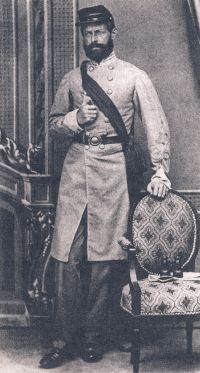
Henry Wirz,
Wirz appeal to President Johnson
“ Fear not; if men hold thee guilty, God does not, and a new life will pervade your being.' Such has been the state of my mind for weeks and months, and no punishment that human ingenuity can inflict could increases my distress. ”
A. Hyatt Verrill,
A voice from the inner world
(1927)
“ It was the most insane thought that had yet entered my brain, but I knew now for a certainty that I was perfectly sane, and, oddly enough, now that I was convinced that the catastrophe which had overtaken the Chiriqui was the devilish work of human beings, I was no longer frightened and my former nightmarish terror of things unknown, gave place to the most intense anger and an inexpressible hatred of the fiends who, without warning or reason, had annihilated hundreds of men and women by means of this new and irresistible engine of destruction. ”
Millais Culpin, Spiritualism and the New Psychology
“ Then we should have a hysteria in which there had never been any deceit complex, though in the absence [Pg 86] of knowledge of the workings of the patient's mind a firm believer in the 'Will to Power' theory might attribute the origin of the condition to a definite desire to escape the strain of war.I can now state that some of the results of conflict between desire and reality form a graduated series, beginning at cases of conscious simulation, then passing on to those of hysteria with repression of the knowledge of deceit, and ending with cases where deceit has never existed ”
Ernest Alfred Vizetelly, With Zola in England: A Story of Exile
“ In fact, from first to last, the Revisionist agitation, whilst proving that the Truth must always ultimately conquer, has likewise shown the supremacy of true intellect over every other force in the world, whether wealth, or influence, or fanaticism. ”
Friedrich Wilhelm Nietzsche,
The Will to Power: An Attempted Transvaluation of All Values…
“ Thou shalt be recognisable, thou shalt express thy inner nature by means of clear and constant signs—otherwise thou art dangerous: and supposing thou art evil, thy power of dissimulation is absolutely the worst thing for the herd. ”
Hamilton Wright Mabie,
Essays on Work and Culture
“ Expression of the whole nature through every faculty is essential to entire sanity of mind and spirit. Every violation of this fundamental law is followed by moral or spiritual disorder, loss of balance, decline of power. To see the world with clear eyes, as Shakespeare saw it, instead of seeing it through distorted vision, as Paul Verlaine saw it, one must think, feel, and act. ”
John Stuart Mill,
Autobiography (Mill) — Chapter V. 1826-1832
(1874)
“ From that time I drew in my own mind, a clear distinction between the doctrine of circumstances, and Fatalism; discarding altogether the misleading word Necessity. The theory, which I now for the first time rightly apprehended, ceased altogether to be discouraging, and besides the relief to my spirits, I no longer suffered under the burden, so heavy to one who aims at being a reformer in opinions, of thinking one doctrine true, and the contrary doctrine morally beneficial. ”
Fred S. Lincoln, An Indiana Girl — Chapter 22 (1901)
“ Truth knows truth here with unerring certainty. Why, I tell you, Virgie, a man simply could not live two selves in this atmosphere of instinctive understanding. I found myself antagonizing myself and, in consequence, everybody else. The exterior reformation was a good beginning because it was in continual pride and vanity, consequently always fighting with the internal comfort of conceit, and that was the birth of conscience in me. ”
M. Schele de Vere, Modern Magic
“ All these phenomena are based upon the division of the patient's individuality, which cannot be remedied by any effort of his own, and which makes him look upon the evil principle in his nature as something outside of himself, and no longer under his control. The phenomena which accompany possession are too fearful in their nature, and yet at the same time too exceptional to keep us altogether and easily from believing, as many thoughtful and even pious men have thought, that in these cases a real demon takes possession of the afflicted. ”
Arthur Woollgar Verrall,
Euripides the Rationalist
(1895)
“ The constant practice of dexterous ambiguity, and the habit of witnessing such dexterity with enjoyment, would not lose their tendency to weaken the springs of truth merely because the temptations, the justifications even, were strong, and the pleasure not only innocent in itself, but deserving to be classed for its intellectual quality among the highest of which humanity is capable. ”
George Meredith,
The Ordeal of Richard Feverel…
“ I fear the world is wiser than its judges! Turn from her, says the world. By day the sons of the world do. It darkens, and they dance together downward. Then comes there one of the world’s elect who deems old counsel devilish; indifference to the end of evil worse than its pursuit. ”
Arthur Conan Doyle,
The New Revelation
(1918)
“ He made light of my criticism of the foolish nature of many of these messages, and of the absolute falseness of some. "You have not got the fundamental truth into your head," said he. "That truth is, that every spirit in the flesh passes over to the next world exactly as it is, with no change whatever. This world is full of weak or foolish people. ”
Somadeva, The Katha Sarit Sagara (1884)
“ Varsha came and gave me sound advice in such words as these, " The only thing that is stable in this ever-changeful world is instability, then why are you distracted though you know this delusion of the Creator"? ”
Baron Edward Bulwer Lytton Lytton, Godolphin, Complete
“ You saw, or fancied you saw in them the shrewdness, the delicacy of tact; the consciousness of duping others; the subtle and intuitive, yet bland and noiseless penetration into the characters around him, which made the prominent features of his mind. And, indeed, of all qualities, dissimulation is that which betrays itself the most often in the physiognomy. A fortunate thing, that the long habit of betraying should find at times the index in which to betray itself. ”
Jacob R. Freese, Secrets of the Late Rebellion, Now Revealed for the First Time
“ These were secrets which no human eye could penetrate, exigencies against which no human foresight could provide, and hence it cannot be said in truth that these men failed in judgment, since they only failed upon points which were entirely outside of all human calculation. ”
János Kriza,
The Folk-tales of the Magyars
(1889)
“ To this they all agreed, and search was made; and soon they found Falsehood, whom they instantly tore to pieces, coiled up her bowels into knots, burnt her, and dispersed her ashes to the winds. But even her dust was so malignant that it was carried all over the world; and that is the reason that wherever men exist there Falsehood must be. ”
Thomas Jefferson,
The Writings of Thomas Jefferson…
“ Differing, on a particular question, from those whom I knew to be of the same political principles with myself, and with whom I generally thought and acted, a consciousness of the fallibility of the human mind, and of my own in particular, with a respect for the accumulated judgment of my friends, has induced me to suspect erroneous impressions in myself, to suppose my own opinion wrong, and to act with them on theirs. ”
J. S. Forsyth, Demonologia; (1827)
“ Or is it an extravagant supposition, that the belief might often have arisen from those spectral illusions, to which men in every age, from the occasional influence of morbific causes, must have been subject? And what would have been the natural self-persuasion, if a savage saw before him the apparition of a departed friend or acquaintance, endowed with the semblance of life, with motion, and with signs of mental intelligence, perhaps even holding a converse with him? ”
Freiherr von Friedrich Hügel, The Mystical Element of Religion…
“ And it is this very persistence of the fundamental unity, together with the strikingly different combination and considerable disaggregation of its elements, that makes the study of hysteria so fruitful for the knowledge of the fully healthy mind and of its unity; whilst the continuance of all the elements of the normal intelligence, even in insanity, readily explains why it is apparently so easy to see insanity everywhere, and to treat genius and sanctity as but so much degeneracy. ”
Gustav Freytag,
Pictures of German Life in the XVIIIth and XIXth Centuries…
“ He will use dissimulation in place of open resistance; he will be humble and yielding, nay, even appear devoted in their presence; but when he thinks he can act secretly, he will do everything against their will and interest. He will think of tricks and intrigues, which, nevertheless, are not so finely woven but that they may be easily seen through. ”
Willard Huntington Wright,
What Nietzsche Taught
“ The persistent exercise of such a dissimulation ends by bringing about the actual nature of the thing itself: the dissimulation in the long run suppresses itself, and organs and instincts are the unexpected fruits in this garden of hypocrisy. 242Neither necessity nor desire, but the love of power, is the demon of mankind. You may give men everything possible—health, food, shelter, enjoyment—but they are and remain unhappy and capricious, for the demon waits and waits ”
Benito Jerónimo Feijoo,
Essays, or discourses, vol. 1…
(1780)
“ IV. So that it is very rare to find a perverse person, who, over and above those glaring vices which manifest themselves so palpably, is not tainted with others, which he affects to hide; and in case there do not predominate in him other passions besides those, which on account of their vehemence are so very conspicuous, these of themselves are sufficient to betray him into faults, which arise from, and are the offspring of other distinct passions, when the committing those faults is indispensably necessary for attaining the objects or purposes of the ruling passion. ”
Sir John Rhys, Celtic Folklore: Welsh and Manx…
“ In the relations of this visible world we find them to have been as rational, and shrewd to detect an historic anomaly, as ourselves. But when once the invisible world was supposed to be opened, and the lawless agency of bad spirits assumed, what measures of probability, of decency, of fitness, or proportion—of that which distinguishes the likely from the palpable absurd—could they have to guide them in the rejection or admission of any particular testimony? ”
Ralph Werther,
Autobiography of an Androgyne
(1918)
“ Because of society’s misunderstanding and prejudging my peculiarity, I was compelled to run the risks of the slums. Mankind would ostracize me for it, but instead they should pity me as one with whom the Almighty has dealt very bitterly.Some Eminent Men Are Inverts. Some eminent men in all callings are numbered among the inverts. Their terrible secret is hidden from the world. If it should become known, they are irretrievably lost, and would be ostracized with the greatest possible disgust and repugnance, although these emotions have no basis in reason. ”
Benito Jerónimo Feijoo,
Essays, or discourses, vol. 1…
(1780)
“ I don’t approve these rigorous decisions, nor can I consider the populace, as the precise antipodes to the hemisphere of truth; they are sometimes right, but this generally speaking, is either the result of chance, or the effect of borrowed reflection. Some wise man, I don’t remember who, compared the vulgar to the moon, on account of their inconstancy: the comparison however was just, as they never shine by the power of their own lights. ”
F. Marion Crawford, Greifenstein
“ But as he did his best to fortify himself in his intention another power stood before him, not a gloomy presence of evil, not a sorrowful but relentless fate, not a thing in itself terrible, grand or heroic, and yet stronger and more real than any of those other shadows which surrounded his life. ”
James Frederick Ferrier,
Blackwood's Magazine
(1838)
“ We will empty his true and real being of all passivity whatsoever, in opposition to those doctrines of a false, inert, and contradictory philosophy, which making him at first, and in his earliest stage, the passive recipient of the natural effluences of things—the involuntary effect of some foreign cause—seeks afterwards to engraft freedom upon him;—a vain, impracticable, and necessarily unsuccessful endeavour, as the whole history of philosophy, from first to last, has shown. ”
Henry James, The Turn of the Screw (1898)
“ Here at present I felt afresh—for I had felt it again and again—how my equilibrium depended on the success of my rigid will, the will to shut my eyes as tight as possible to the truth that what I had to deal with was, revoltingly, against nature. I could only get on at all by taking “nature” into my confidence and my account, by treating my monstrous ordeal as a push in a direction unusual, of course, and unpleasant, but demanding, after all, for a fair front, only another turn of the screw of ordinary human virtue. ”