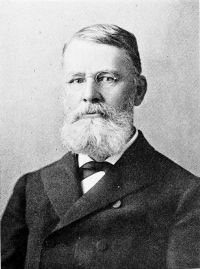
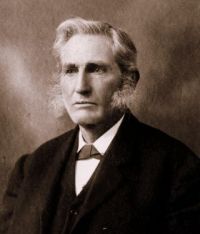
Instability, marked by uncontrolled growth in outputs or internal conditions, spans a wide range of disciplines, from dynamical systems to structural engineering and atmospheric science. Scholars have long examined its effects: John Clark Ridpath described it as a dual force of destruction or protection, while Henri Bergson connected it to recurring transitions between stability and change.
Cora May Williams regarded instability as a precursor to evolutionary balance, and Herbert Spencer compared it to molecular movement that risks breaking down unity. These viewpoints highlight instability not simply as chaos, but as a dynamic process that influences systems, ranging from physical structures to philosophical development, demonstrating its function as both a driver of transformation and a force that challenges limits in nature and thought.
 John Clark Ridpath,
The Life and Work of James A. Garfield…
John Clark Ridpath,
The Life and Work of James A. Garfield…