Summary

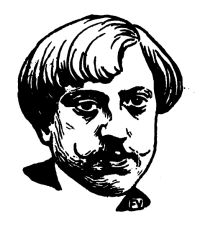
Portrait of Camille Mauclair Camille Mauclair The French Impressionists (1860-1900…

There are some midday scenes by Claude Monet, where every material silhouette—tree, hay-rick, or rock—is annihilated, volatilised in the fiery vibration of the dust of sunlight, and before which the beholder gets really blinded, just as he would in actual sunlight. Sometimes even there are no more shadows at all, nothing that could serve to indicate the values and to create contrasts of colours. Everything is light, and the painter seems easily to overcome those terrible difficulties, lights upon lights, thanks to a gift of marvellous subtlety of sight.
Source: Gutenberg

Portrait of Camille Mauclair Camille Mauclair The French Impressionists (1860-1900…

Degas passed slowly from classicism to modernity. He never liked outbursts of colour; he is by no means an Impressionist from this point of view. As a draughtsman of genius he expresses all by the precision of the planes and values; a grey, a black and some notes of colour suffice for him. This might establish a link between him and Whistler, though he is much less mysterious and diffuse. Whenever Degas plays with colour, it is with the same restraint of his boldness; he never goes to excess in abandoning himself to its charm. He is neither lyrical, nor voluptuous; his energy is cold
Source: Gutenberg

Portrait of Camille Mauclair Camille Mauclair The French Impressionists (1860-1900…

Monticelli painted landscapes, romantic scenes, "fêtes galantes" in the spirit of Watteau, and still-life pictures: one could not imagine a more inspired sense of colour than shown by these works which seem to be painted with crushed jewels, with powerful harmony, and beyond all with an unheard-of delicacy in the perception of fine shades. There are tones which nobody had ever invented yet, a richness, a profusion, a subtlety which almost vie with the resources of music.
Source: Gutenberg

Get perspective with Kwize: daily news enlightened by great literature