Summary

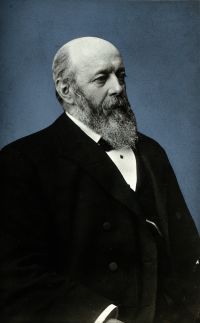
Portrait of John Gray McKendrick John Gray McKendrick 1911 Encyclopædia Britannica, Volume 28… (1911)

VOICE (Fr. voix, from Lat. vox) , the sound produced by the vibrations of the vocal cords, two ligaments or bands of fibrous elastic tissue situated in the larynx. It is to be distinguished from speech, which is the production of articulate sounds intended to express ideas. Many of the lower animals have voice, but none has the power of speech in the sense in which man possesses that faculty. There may be speech without voice, as in whispering, whilst in singing a scale of musical tones we have voice without speech.
Source: Wikisource

Portrait of John Gray McKendrick John Gray McKendrick 1911 Encyclopædia Britannica, Volume 28… (1911)

Assuming that a vowel is always a compound tone, composed of a fundamental and partials, those who uphold the relative pitch theory state that if the pitch of the fundamental is changed the pitch of the partials must undergo a relative change, while their opponents contend that whatever may be the pitch of the tone produced by the larynx, the pitch of the partials that gives quality or character to a vowel is always the same, or, in other words, vowel tones have a fixed pitch.
Source: Wikisource

Portrait of John Gray McKendrick John Gray McKendrick 1911 Encyclopædia Britannica, Volume 28… (1911)

During head voice, the opening between the arytenoids is completely closed; the portion between the vocal cords is open, but in place of being almost a narrow straight slit as in chest voice, it is wide open so as to allow an escape of more air (see fig. 12) . Paralysis of the motor fibres causes aphonia, or loss of voice. If one cord is paralysed the voice may be lost or become falsetto in tone. Sometimes the cords may move in breathing or during coughing, but be motionless during an attempt at the production of voice.
Source: Wikisource

Get perspective with Kwize: daily news enlightened by great literature