Carbonic acid

Definition and stakes

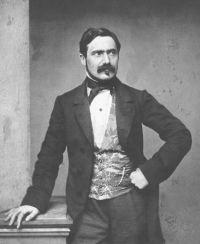
Portrait of Antoine Laurent Lavoisier Antoine Laurent Lavoisier,  Elements of Chemistry,

“ Of all the known acids, the carbonic is the most abundant in nature; it exists ready formed in chalk, marble, and all the calcareous stones, in which it is neutralized by a particular earth called lime. To disengage it from this combination, nothing more is requisite than to add some sulphuric acid, or any other which has a stronger affinity for lime; a brisk effervescence ensues, which is produced by the disengagement of the carbonic acid which assumes the state of gas immediately upon being set free. ”
Source: Gutenberg

Popular Science Monthly (1878)

“ The only known source of carbonic acid, apart from combustion and respiration, are certain terrestrial exhalations of the gas, probably due to chemical reactions liberating small portions which had long before been fixed in the form of carbonates. We are thus forced to one of two conclusions: either the wholly improbable one that the atmosphere, since the appearance of organic life on the earth, has been one of nearly pure, carbonic acid, and of such immense extent that the pressure at the surface would have sufficed, at ordinary temperatures, for its liquefaction ”
Source: Wikisource

Arnold James Cooley,  Cooley's Cyclopædia of Practical Receipts and Collateral Information in the Arts…

“ Carbonic acid is a constituent of the atmosphere, its presence being essential to the existence of vegetable life on the globe. It issues from the earth in many situations, as the Grotto del Cane in Italy, the Valley of Poison in Java, and near the Lake of Laach in Germany. It gives to many mineral springs their sparkling brilliancy, and is held in solution by all natural waters. Combined with the bases, lime and magnesia especially, it exists in large quantities in the crust of the earth. It is the chief product of combustion, and one of the products of fermentation. ”
Source: Gutenberg

Get perspective with Kwize: daily news enlightened by great literature