Summary

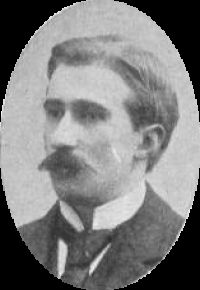
Portrait of W. P. Pycraft W. P. Pycraft The Courtship of Animals

Would a female who had chanced to settle in the territory of a male whose sexual impulses carried him no further than seizing territory remain with him throughout the mating season, held by an imperfectly roused, ill-defined, sexual instinct? Or, eventually becoming mate-hungry, and failing to stimulate him to perform his part, would she desert him and seek another mate? On the other hand, would a male, failing to arouse response in the female he had secured, drive her away and supplant her?
Source: Gutenberg

Portrait of W. P. Pycraft W. P. Pycraft The Courtship of Animals

Instinctively realizing that the time of transfiguration is at hand, the erstwhile crawling grub rises to the surface of the stream, and almost in the twinkling of an eye it mounts into the air on gauzy wings, there for a brief space to execute an aerial dance which in its every phase is amazing. Some species never see the sun. They emerge as the sky begins to redden, and as its glory fades they, too, expire. This brief space is all that Nature has allowed them in which to fulfil her behest to all living things—to increase and multiply.
Source: Gutenberg

Portrait of W. P. Pycraft W. P. Pycraft The Courtship of Animals

Living things are as clay in the hands of the potter. But it is as if they made themselves, for the designer and the guiding hand are alike invisible. No vessel is exactly like its neighbour, either in the quality of its substance or in the details of its construction. And this because the clay of which it is made possesses that mysterious property we call life. A property which endows each new feature as it appears, with an individuality of its own, whose survival, or suppression, depends entirely on its relationship to surrounding parts; on its harmony with its environment, in short.
Source: Gutenberg

Get perspective with Kwize: daily news enlightened by great literature