Harry Marshall Ward

Biographical details

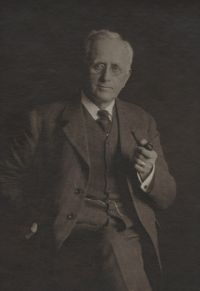
Portrait of Harry Marshall Ward Harry Marshall Ward The Oak (1892)

The attraction is no doubt complex, taking its origin in the value of its acorns and timber to our early forefathers, not unaffected by the artistic beauty of the foliage and habit of the tree, and the forest life of our ancestors, to say nothing of the more modern sentiment aroused when ships of war were built almost entirely of heart of oak; for the Aryan race seems to have used and valued both the fruit and the wood from very early times, and both Celt and Saxon preserved the traditional regard for them.
Source: Wikisource

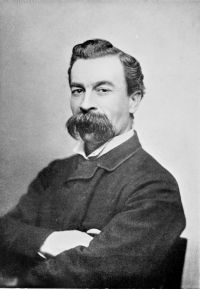
Portrait of Harry Marshall Ward Harry Marshall Ward The Oak (1892)

If we reflect that the little embryo in the acorn starts its life with only a minute store of starch and proteids in its cotyledon, and that all the tons of organic material (chiefly wood) found in an old oak-tree have been super-added to this by the action of the leaves—the small proportion of salts taken up by the roots being quite inconsiderable in comparison—we obtain some idea of the enormous gain of matter and energy from the outside universe which goes on each summer.
Source: Wikisource

Portrait of Harry Marshall Ward Harry Marshall Ward 1911 Encyclopædia Britannica, Volume 6… (1911)

It is, however, in the introduction of the strict biological and philosophical analysis of the life-histories of the lower and most minute forms of life that Cohn’s greatest achievements consist, for he applied to these organisms the principle that we can only know the phases of growth of microscopic plants by watching every stage of development under the microscope, just as we learn how different are the youthful and adult appearances of an oak or a fern by direct observation.
Source: Wikisource

Get perspective with Kwize: daily news enlightened by great literature