Harry Marshall Ward

Harry Marshall Ward

Summary

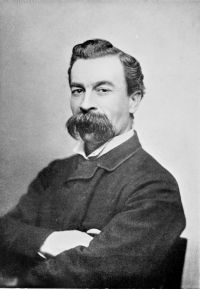
Portrait of Harry Marshall Ward Harry Marshall Ward 1911 Encyclopædia Britannica (1911)

His clear appreciation of the real significance of symbiosis and the dual nature of lichens is one of his most striking achievements, and in many ways he showed powers of generalizing in regard to the evolution of organisms, which alone would have made him a distinguished man. It was as an investigator of the then mysterious Fungi, however, that de Bary stands out first and foremost among the biologists of the 19th century.
Source: Wikisource

Portrait of Harry Marshall Ward Harry Marshall Ward 1911 Encyclopædia Britannica (1911)

He not only laid bare the complex facts of the life-history of many forms,—e.g. the Ustilagineae, Peronosporeae, Uredineae and many Ascomycetes,—treating them from the developmental point of view, in opposition to the then prevailing anatomical method, but he insisted on the necessity of tracing the evolution of each organism from spore to spore, and by his methods of culture and accurate observation brought to light numerous facts previously undreamt of.
Source: Wikisource

Portrait of Harry Marshall Ward Harry Marshall Ward 1911 Encyclopædia Britannica (1910)

He acquired an enthusiastic love of cryptogamic botany in his early years, and soon was recognized as the leading British authority on fungi and plant pathology. He was especially famous as a systematist in mycology, some 6000 species of fungi being credited to him, but his Introduction to Cryptogamic Botany, published in 1857, and his papers on “Vegetable Pathology” in the Gardener’s Chronicle in 1854 and onwards, show that he had a very broad grasp of the whole domain of physiology and morphology as understood in those days.
Source: Wikisource

Get perspective with Kwize: daily news enlightened by great literature