Summary

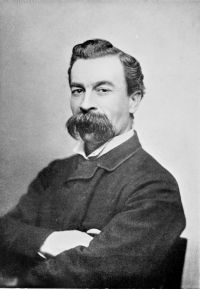
Portrait of Harry Marshall Ward Harry Marshall Ward 1911 Encyclopædia Britannica, Volume 6… (1911)

It is, however, in the introduction of the strict biological and philosophical analysis of the life-histories of the lower and most minute forms of life that Cohn’s greatest achievements consist, for he applied to these organisms the principle that we can only know the phases of growth of microscopic plants by watching every stage of development under the microscope, just as we learn how different are the youthful and adult appearances of an oak or a fern by direct observation.
Source: Wikisource

Portrait of Harry Marshall Ward Harry Marshall Ward 1911 Encyclopædia Britannica, Volume 6… (1911)

Among his most striking discoveries during his studies of the forms and movements of the Bacteria may be mentioned the nature of Zoogloea, the formation and germination of true spores—which he observed for the first time, and which he himself discovered in Bacillus subtilis—and their resistance to high temperatures, and the bearing of this on the fallacious experiments supposed to support abiogenesis; as well as works on the bacteria of air and water, the significance of the bright sulphur granules in sulphur bacteria, and of the iron oxide deposited in the walls of Crenothrix.
Source: Wikisource

Portrait of Harry Marshall Ward Harry Marshall Ward 1911 Encyclopædia Britannica, Volume 6… (1911)

Although these early researches were especially on the Algae, in which group he instituted marked reforms of the rigid system due to F. T. Kützing, Cohn had already displayed that activity in various departments which made him so famous as an all-round naturalist, his attention at various times being turned to such varied subjects as Aldorovanda, torsion in trees, the nature of waterspouts, the effects of lightning, physiology of seeds, the proteid crystals in the potato, which he discovered, the formation of travertin, the rotatoria, luminous worms, &c.
Source: Wikisource

Get perspective with Kwize: daily news enlightened by great literature