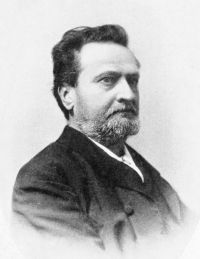
Julius von Sachs

Julius von Sachs

Summary

Portrait of Julius von Sachs Julius von Sachs History of botany (1890)

Though it is easy to see that the founding of the natural system was ever before his mind as the final object of his protracted labours, he was in no eager haste to reach it; he contented himself with arranging his fruits, saying expressly that the natural system would never be founded by these means alone, though the exact knowledge of fruits and seeds supplied the most important means for decision. Thus his great work was at once an inexhaustible mine of single well-ascertained facts, and a guide to the morphology of the organs of fructification and to its application to systematic botany.
Source: Wikisource

Portrait of Julius von Sachs Julius von Sachs History of botany (1890)

We turn from this realm of idealistic philosophy and imagination, from rejuvenescence, the wave-pulse of metamorphosis, the spiral tendency of growth, and the individuality of plants, to the last chapter of our history of systematic botany and morphology, where there is less dogmatism and less poetry, but a firmer ground on which will spring an unexpected wealth of new discoveries and of deeper insight into the nature of the vegetable world.
Source: Wikisource

Portrait of Julius von Sachs Julius von Sachs History of botany (1890)

Free from the genius-stifling burden which the knowledge of individual species had become, a man possessed of varied accomplishments and a well-trained mind, Jung was better qualified than the professed botanists to see what was wanted in botany and would advance it—a phenomenon more than once repeated in the history of the science. But his results remained unknown to all except his immediate pupils, till Ray admitted them into his great work on plants in 1693, and made them the foundation of his own theoretical botany.
Source: Wikisource

Get perspective with Kwize: daily news enlightened by great literature