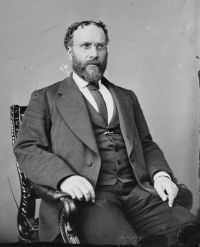
“ Could one meet death in a nobler way? He had his last lines at Ginchy, and “his fine word and incomparable gesture.” And now Picardy of the waving poplars—Picardy that my student days had garlanded with many memories, that shone in recollection with many friendships, now by the strange way of destiny holds my husband’s grave. But he sleeps well in his beloved France, wearing the green emblem of his Motherland with his fallen comrades of the “Irish Brigade.” ”
Picardy
Definition and stakes
Picardy, a hymn tune with origins in a 17th-century French carol, is distinguished by its minor key and 8.7.8.7.8.7 meter, hailing from the Picardy region. Initially linked to the folk song Jésus-Christ s'habille en pauvre, it achieved widespread recognition through arrangements such as Ralph Vaughan Williams’ Let All Mortal Flesh Keep Silence and Gustav Holst’s 3 Festival Choruses.
Writers like Tom Kettle reflect on its emotional power in wartime recollections, while John Ruskin emphasizes its cultural significance in Amiens’ cathedral. Robert Louis Stevenson, on the other hand, places it in the French weavers’ village of Picardy. These diverse viewpoints illustrate the tune’s lasting versatility, connecting sacred music, literature, and regional heritage.
Quotes about “Picardy”
William Smyth Rockstro, A Dictionary of Music and Musicians (1900)
“ TIERCE DE PICARDIE. In Polyphonic Music, it is essential that every Composition should end with a Major Third, even though the Third of the Mode in which it is written should be Minor. The Third, thus made Major by an Accidental Sharp or Natural, is called the 'Tierce de Picardie.' It is not very easy to arrive at the origin of the term; though it may perhaps be accounted for by the proximity of Picardy to Flanders, in which country the characteristic Interval was in common use, at a very early period. ”
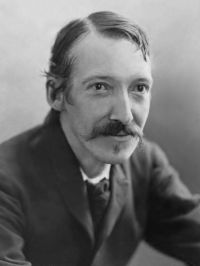 Robert Louis Stevenson,
David Balfour
Robert Louis Stevenson,
David Balfour
“ My way lay over Mouter's Hill, and through an end of a clachan on the braeside among fields. There was a whirr of looms in it went from house to house; bees bummed in the gardens; the neighbours that I saw at the doorsteps talked in a strange tongue; and I found out later that this was Picardy, a village where the French weavers wrought for the Linen Company. Here I got a fresh direction for Pilrig, my destination; and a little beyond, on the wayside, came by a gibbet and two men hanged in chains. ”