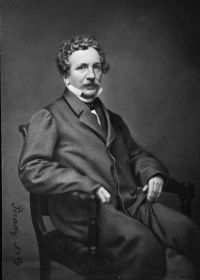
“ To begin, then, with the beginning:--I was, as I have said, born in the heart of the little mountainous principality of Bearn, which, stretching along the northern side of the Pyrenees, contains within itself some of the most fertile and some of the most picturesque, some of the sweetest and some of the grandest scenes that any part of Europe can boast. The chain of my native mountains, interposing between France and Spain, forms a gigantic wall whereby the unerring hand of nature has marked the limits of either land ”
Béarn
Definition and stakes
Béarn AOC, a French wine region covering three departments and two regions, is celebrated for its terroir and historical connections to medieval chivalry. Writers such as Louisa Stuart Costello and Sabine Baring-Gould emphasized its rugged beauty and independent nature, while Eleanor C. Price observed its incorporation into France following the 17th-century campaigns.
The region’s vineyards, established in sandy-clay soils and influenced by Pyrenean microclimates, yield light reds and rosés that reflect both its geological features and cultural background. The combination of historical endurance and winemaking tradition defines Béarn’s lasting legacy.
Quotes about “Béarn”
Sabine Baring-Gould,
A Book of the Pyrenees
(1907)
“ However, go she would, with her beloved Henry, and on reaching Pau she at once set to work to make herself happy, and to be beloved by the people. She began by studying the patois and worked at it so diligently that she was herself astounded at the progress she made. "The newly-married pair," says an old historian, "deliberated how to put Béarn in a better condition from that in which they found it. This land, good and fertile by nature, was in a poor state, uncultivated and sterile through the negligence of the inhabitants. ”
Louisa Stuart Costello,
Béarn and the Pyrenees
“ The neglected castle of the sovereigns of Béarn,—for none of whom, except the immediate family of the brave and bold Henry, need one care to be a champion—remained then a mighty heap of ruin, which every revolving year threatened to bring nearer to utter destruction ”
Louisa Stuart Costello,
Béarn and the Pyrenees
“ All the nobles of the country assemble; and, amongst them, the old "grim baron," Loup Bergund d'Artiguelouve, and his family. Minstrels sing, music sounds, and honours and compliments pour upon the favoured knight; and even his rivals, to judge by their joyous countenances, have only pleasure in their hearts. The Prince of Béarn, and his brilliant court, enter their decorated pavilion amidst the shouts of the assembled guests; the people are admitted to view the jousts; and Raymond advances to the foot of the throne, and receives a paternal embrace from the courteous Gaston Phoebus. ”
Eleanor C. Price, Cardinal de Richelieu (1912)
“ The campaign against the Protestants of Béarn, undertaken by Louis XIII. immediately after the battle of the Ponts-de-Cé, was successful in its object of enforcing the royal edict of 1617 and restoring Church property, now held by the Huguenots, to the use of the Catholic clergy. At the same time, Henry IV.’s independent little kingdom of Béarn was formally united to the kingdom of France. All this was done with much noise and little bloodshed. It amused the King immensely. One game for another, fighting was better than falconry. ”
Louisa Stuart Costello,
Béarn and the Pyrenees
“ The town of Pau is of an ordinary size; the greatest part of its houses are well-built, and covered with slate. It is the seat of a parliament, a university, an academy of belles lettres, and a mint. The greatest part of the noblesse of Béarn make it their usual abode; the Jesuits have a large college founded by Louis XIII. There is a seminary under the direction of the brothers of St. Lazare, a convent of Cordeliers, another of Capuchins, and four nunneries. At the western extremity of the town, is an ancient castle, where the princes of Béarn resided, and where King Henry IV. was born. ”
Edwin Asa Dix,
A Midsummer Drive Through the Pyrenees
“ We are nearing the Pyrenees now, and entering the ancient and famous province of Béarn, once a noted centre of mediæval chivalry. Beam did not become part of France until almost modern times. [13] For seven hundred years preceding, its successive rulers held their brilliant court unfettered and unpledged. "Ours," declared its barons and prelates in assembly, "is a free country, which owes neither homage nor servitude to any one." The life of the province was its own, separated entirely from that of the kingdom. It had its own succession, its own wars and feuds, its own love of country. ”
Agnes Mary Frances Duclaux,
Margaret of Angoulême, Queen of Navarre
(1886)
“ In Margaret's nature ambition was scarcely so eminent a factor that she should break her heart over what, after all, was a fair match for her daughter. The Estates of Béarn had long ago pleaded that their princess should marry no stranger, but rather some great French noble who would strengthen her hands at home. So that this marriage pleased the King of France, the bride herself, and the subjects of the bride. ”
Harold Lamb,
The Grand Cham (Lamb, Adventure magazine…
(1921)
“ Give a thief rope and he will halter himself: a miser will bleed others till there remains no blood in his own veins; a boaster will trip o’er his own tongue. I, being a wayfarer voyaging on behalf of five dead men, will see—the day of judgment, Bembo.” “And a fool, master?” “Will be happy, God knows.” Now in saying this, Michael Bearn voiced the destiny that was to shape his own life and the fate of several others in one of the strangest adventures that was ever recorded in the annals of Venice. Bembo found his master a queer mixture of moodiness and cheer. ”
Louisa Stuart Costello,
Béarn and the Pyrenees
“ The view from the castle-height is very fine; the last of the range of snowy mountains seen in such perfection from Pau rises in great majesty, and closes the scene; while the luxuriant plain and hills around are seen to a great distance. The valiant Catalonian, and the fierce countess, must have been dangerous neighbours to their foes, commanding as they did the country, for leagues round.One of the lords of Moncade was father to a chosen Viscount of Béarn, known in the annals of the country, amongst their numerous Gastons, as Le Bon. ”
Henry Thomas Buckle,
History of Civilization in England…
“ The pith of the question was, that ‘l'édit de Nantes ayant donné pouvoir, tant aux catholiques qu'aux huguenots, de rentrer partout dans leurs biens, les ecclésiastiques de Béarn démanderent aussytôt les leurs.’ Mém. de Fontenay Mareuil, vol. i. p. 392. [161] ‘L'affaire de Béarn, source de tous nos maux.’ Mém. de Rohan, vol. i. p. 156; see also p. 183. ”
Louisa Stuart Costello,
Béarn and the Pyrenees
“ The great physician, Bordeu, of whom Béarn is justly proud, restored their reputation in a great measure: but it is rather within the last thirty years that they have reached the celebrity which they now enjoy.It is generally said that the Vallée d'Ossau combines all the beauties and grandeurs of the Pyrenees; and that the traveller, who has only time to visit this part, has had a specimen of all that is most admirable in this beautiful chain of mountains. For myself, I endeavour to believe this, not having been able to see so much of the Pyrenees as I desired. ”
Sabine Baring-Gould,
A Book of the Pyrenees
(1907)
“ The Count assembled the Estates of Béarn and laid before them his charge against the boy, and they unanimously decided that the prince must not be executed, but kept in durance for awhile; nor would they separate till they had extorted from Phœbus a solemn undertaking to submit to their decision. But the poor lad, knowing his innocence, wounded to the quick at the manner in which he had been duped by his uncle, at the blind conviction of his guilt entertained by his father, at the barbarity with which his companions had been racked, and strung up, refused all food. ”
Sabine Baring-Gould,
A Book of the Pyrenees
(1907)
“ Moreover, one can look from Pau right up the gap of the Val d'Ossau to the roots of the Pic du Midi, an exquisitely beautiful mountain, only surpassed by the Matterhorn; and it has this advantage over its rival, that it can be seen from a great distance, which the other cannot. Below the terrace of the castle rises the insignificant tower of la Monaye, where the specie for circulation in Béarn and the annexed counties was coined. ”
Sabine Baring-Gould,
A Book of the Pyrenees
(1907)
“ The crow you have spared will pluck out your eyes." Calvinism, after having had complete mastery for over half a century, seems not to have taken firm root. At the present day, out of a population in Béarn of 426,350, there are but 5000 Protestants. In one of his bear-hunting expeditions, when a lad, Henry of Navarre had visited the church of Bielle in the Val d'Ossau, and had noticed the columns of Italian marble in the church, the spoils of a Gallo-Roman villa. When he was king he sent to Bielle to have these pillars forwarded to him in Paris. ”
Louisa Stuart Costello,
Béarn and the Pyrenees
“ The chapels are richly adorned, and in better taste than usual, and the [593] church is, on the whole, extremely well kept: the vault-like chill one feels, however, on entering does not say much for its salubrity.The most important tombs which once adorned this sanctuary, were those of the young Prince of Béarn and King of Navarre, (François Phoebus,) who died in 1483. Jean II. d'Albret in 1516, and his wife, Catherine de Foix. Marguérite de Valois—the Fleur des Marguérites,—in 1548; and Henry II., her husband—the immortal grandfather of the great Béarnois. ”
Clara E. Laughlin,
Foch the Man: A Life of the Supreme Commander of the Allied Armies
“ There are the men of the Béarnais, mostly from towns of size and circumstance—educated men, of self-command, tempering the southern warmth which burns in their eyes by the calm intelligence born of experience in life and also by a natural languor like that of their Spanish neighbors. ”
Louisa Stuart Costello,
Béarn and the Pyrenees
“ So that, even in the churches, they have a door set apart by which to enter, with a bénitier and seats for them solely: they are obliged to live in villages apart from other dwellings: they are usually carpenters, and are permitted to use no arms or tools but those [696] expressly required in their trade: they are looked upon as infamous, although they have, according to the ancient Fors de Béarn, a right to be heard as witnesses; seven of them being required to make the testimony of one uninfected man. ”
Charles Bémont,
1911 Encyclopædia Britannica
(1910)
“ As Gaston left only daughters, the viscounty passed at his death to the family of Foix, from whom it was transmitted through the houses of Grailly and Albret to the Bourbons, and they, in the person of Henry IV., king of Navarre, made it an apanage of the crown of France. It was not formally incorporated in the royal domains, however, until 1620. None of these political changes weakened the independent spirit of the Béarnais. From the 11th century onward, they were governed by their own special customs or fors. ”
Louisa Stuart Costello,
Béarn and the Pyrenees
“ Bérangère was daughter of Sancho VI., king of Navarre—not, as some historians say, a princess of Castile or Arragon. After Richard's death, Philip-Augustus confirmed to her the dominion of Maine, in exchange for part of Normandy, which had been settled on her as her dower. She lived for more than twenty years in the town of Le Mans, where her memory was long preserved as La Bonne Reine Bérangère. She founded the monastery of Epau, near Le Mans, where the mausoleum was erected which now adorns the Cathedral of St. ”
Charlotte M. Yonge,
The Chaplet of Pearls
“ Berenger could only kiss her hand in token of earnest thanks before the repast was announced, and the King came to lead her to the table spread beneath the trees. The whole party supped together, but Berenger could have only a distant view of his little wife, looking very demure and grave by the side of the Admiral. But when the meal was ended, there was a loitering in the woodland paths, amid healthy openings or glades trimmed into discreet wildness fit for royal rusticity; the sun set in parting glory on one horizon, the moon rising in crimson majesty on the other. ”
Various, The Atlantic Monthly (1858)
“ Béranger loved the country as people love it on a Sunday at Paris, in walks just without the suburbs. How different from Burns, that other poet of the people, with whom he has sometimes been compared! But, on the other hand, Béranger loved the dweller in the city, the mechanic, the ouvrier, industrious, intellectual, full of enthusiasm and also of imprudence, passionate, with the heart of a soldier, and with free, adventurous ideas. He loved him even in his faults, aided him in his poverty, consoled him with his songs. ”
Margaret Fuller,
Memoirs of Margaret Fuller Ossoli…
“ Many there delight to know you as a great apostle of the ideas which are to be our life, if Heaven intends us a great and permanent life. I count myself happy in having seen you, and in finding with you Béranger, the genuine poet, the genuine man of France. I have felt all the enchantment of the lyre of Béranger; have paid my warmest homage to the truth and wisdom adorned with such charms, such wit and pathos. It was a great pleasure to see himself. If your leisure permits, Monsieur, I will ask a few lines in reply. ”
Alexandre Dumas,
My Memoirs, Vol. V, 1831 to 1832
“ Vous qui appelez M. Béranger votre père, vous devriez savoir ce que tout le monde sait: d'abord, que le modeste grand poète n'est pas un philosophe épicurien, comme il vous plaît de le dire, mais bien un philosophe pénétré du plus profond amour de l'humanité. M. Béranger habite Paris, parce que c'est à Paris, et non ailleurs, qu'il peut remplir son beau rôle de dévouement. Demandez à tous ceux qui souffrent, n'importe à quelle opinion ils appartiennent, si M. Béranger leur a jamais refusé de les aider, de les secourir. Toute la vie de cet homme de bien est employée à rendre service. ”
Bernard Capes, The story of Fifine (1914)
“ Like soiled armour which, being cleaned, looks richer than when new, so, under the rubs of Fate, was Bérard’s soul to reveal its intrinsic worth. And Briande took a little house next to the Presbytery, between whose garden and hers was a wall both high and frail, and yet to them a barrier of rock which no speciousness might scale or passion overthrow. And there, on either side, they grew their flowers; and that was the sole bond between them. And, like him, she gave her virgin life to God until she died. Very young she died, Felix, and on the same day died Bérard. ”
Charlotte M. Yonge,
The Chaplet of Pearls
“ A kinsman of mine has come up to Paris with me, and I have made him my guest. I know not how to break with him—the Chevalier de Ribaumont.’ ‘What, the young ruffler in Monsieur’s suite?’ ‘No, my Lord; his father. He comes on my business. He is an old man, and can ill bear the cost, and I could scarce throw him over.’ Berenger spoke with such earnest, bright, open simplicity, and look so boyish and confiding, that Sir Francis’s heart was won, and he smiled as he said, ‘Right, lad, you are a considerate youth. ”
Mrs. Alexander Fraser,
Daughters of Belgravia; vol. 1 of 3
“ Lord Beranger is tall and thin. His hair is so fair that the silver threads thickly intersecting it are hardly visible. His eyes are blue—the very light blue that denotes either insincerity or imbecility—his smile is too bland to be genuine, his talk is measured to match his gait, and he lives the artificial life of so many of his brotherhood, to whom the opinion of “the world” is everything. ”
William Cleaver Wilkinson,
French Classics
“ Mr. William Young, an American, has a volume of translations from Béranger. Of this particular song, Mr. Young’s version is so felicitous that we unhesitatingly choose it for our readers. The title of the song is, “The Recollections of the People.” It was, we believe, founded on an incident of Béranger’s own observation; we shorten again by a stanza:There was not in Béranger’s genius much innate and irrepressible buoyancy toward poetry, as we English-speakers conceive poetry. ”
Charlotte M. Yonge,
The Chaplet of Pearls
“ Berenger, I knew the sorcerer spake sooth when that little moonbeam child of yours brought me the flowers from the rampart. I had speech with her last night. She has all the fair loveliness that belongs of right to your mother’s grandchild, but her eye, blue as it is, has the Ribaumont spirit; the turn of the head and the smile are what I loved long ago in yonder lady, and, above all, she is her own sweet self. Berenger, give me your daughter Berangere, and I ask no portion with her but the silver bullet. Keep the pearls for your son’s heirloom ”
Peter Lauridsen,
Vitus Bering: the Discoverer of Bering Strait
“ Bering was buried on an island in the Pacific, amid the scenes of his labors, under that sand-barrow which had been his death-bed. For many generations only a plain wooden cross marked his resting-place, and as for his fame, it has been as humble and modest as his head-board. His labors belonged to a strange people who had but little sympathy for the man. ”