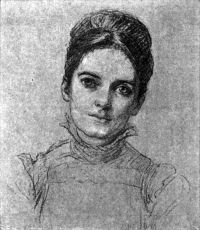
Agnes Mary Frances Duclaux

Agnes Mary Frances Duclaux

Summary

Portrait of Agnes Mary Frances Duclaux Agnes Mary Frances Duclaux Margaret of Angoulême, Queen of Navarre (1886)

Very soon the treaty began to bear its natural fruit; this treaty which Margaret praised in prose and verse; this pact of treason and derogation which she declared should give peace, "not to us alone, but to all Christendom." Whom the gods doom, first they madden. Surely some lunacy of vain belief infected France that day when she signed away her independence among such rejoicings; surely some craze had filmed the brain of the tolerant Queen of Navarre, when, laying will and conscience and judgment at her brother's feet, she praised the infamy which doomed so many innocent to death.
Source: Wikisource

Portrait of Agnes Mary Frances Duclaux Agnes Mary Frances Duclaux Margaret of Angoulême, Queen of Navarre (1886)

The two sad neglected queens encountered there, and there Henry met in the French camp Margaret's beautiful English maid of honour, the black-eyed, slim Anne Boleyn. There met two rivals no less potent than their masters: Wolsey of Canterbury, with his retinue of colossals, and Charles de Montpensier, Constable Bourbon, bearing in his hand the sword of France. Henry of England looked on the Constable, noted the tragic face, wedged like a knife in the hilt between the black masses of his hair, and said to Francis: "Were he my servant, I would cut off his head!"
Source: Wikisource

Portrait of Agnes Mary Frances Duclaux Agnes Mary Frances Duclaux Margaret of Angoulême, Queen of Navarre (1886)

This point must never be forgotten in seeking to understand the history of Margaret of Angoulême. That life, else so hopelessly confused, so vacillating and effortless, becomes clear and definite when once we understand that not the Reformation but the Renaissance inspired it. Never was a spirit less dogmatic or insistent than hers. She was no martyr, no saint or prophetess. She was merely a woman filled by the new fervour for learning, the new reverence for knowledge; the renascent love for art and poetry, no less than for ideas and for science.
Source: Wikisource

Get perspective with Kwize: daily news enlightened by great literature