AI-generated from sources
The Two Feet of Philosophy, From Mundane Motion to Existential Journey
In Brief
- Walking is often perceived as a mundane, mechanical task, an automatic action requiring little mental engagement.
- Many thinkers assert that walking actively stimulates the intellect, fostering observation, speculation, and creative thought by freeing the mind from other distractions.
- Beyond utility, walking can become an art form or an adventure, a deliberate journey valued for its unfolding experience rather than solely its destination.
- At its deepest level, walking offers a spiritual practice, enabling an intimate connection with nature and an attunement to existence.
Main authors


The simple act of walking occupies a contested space in human experience, often relegated to the background of daily life as a purely utilitarian function. In one view, it is little more than a necessary chore or a form of prescribed exercise, undertaken with the same enthusiasm as taking medicine [1]. This perspective reduces walking to a mechanical process, an automatic action that allows the mind to remain fixed on its preoccupations, offering none of the mental engagement found in more dynamic activities [2, 3]. The body moves, but the mind stays put. This automaticity, where we navigate sidewalks and curbs without conscious thought, seems to confirm its status as an intellectually inert activity [4, 5]. The legs perform their duty, but the spirit remains untouched, and for some, the physical effort is merely a means to tire the body into submission [8].
Conversely, this dismissal of walking as mindless locomotion is challenged by a rich tradition that elevates it to a profound existential act. Far from being a mere function, walking is celebrated as a powerful catalyst for intellectual stimulation, creative insight, and deep personal discovery [10, 11]. It is framed as an enterprise that connects the walker to the world in a way no other mode of travel can, fostering an intimacy with the primal elements of existence [29]. This alternate vision posits that the rhythmic movement of the body can liberate the soul, animate the intellect, and transform a simple journey on foot into a work of art or a spiritual pilgrimage [15, 21, 27]. The debate, therefore, is not merely about physical movement but about the potential for meaning embedded in one of our most fundamental actions.
Walking as Mechanical Toil
The most common and perhaps most reductive view of walking frames it as a pragmatic, often tedious, necessity. Hilaire Belloc noted that many people approach a walk as they would a prescription, a joyless task performed for some future benefit rather than present enjoyment . This sentiment is echoed by educators like Dorothea Beale, who, at the turn of the 20th century, argued that walking was inferior to organized games because its mechanical nature failed to distract the mind from its intellectual burdens . In this light, walking is not a form of recreation but simply a continuation of mental strain in a different physical context. To some, like the character described by Henry James, the deliberate act of walking for its own sake is even seen as a bizarre and unhealthy obsession, a "morbid form of activity" [9].
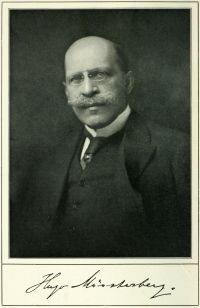
Central to this utilitarian perspective is the automaticity of the act. Physiologists and psychologists alike have observed that walking operates largely as a reflex, requiring little to no conscious mental effort . Hugo Münsterberg described the common experience of arriving at a destination with no memory of the journey, the mind having been completely absorbed in other problems while the body operated on autopilot . This unconscious competence, as Samuel Butler explained, is a learned habit; what was once an arduous and complex task for a child becomes a background process for an adult [7]. This very effortlessness is what positions it, for some, as an activity devoid of deeper engagement.
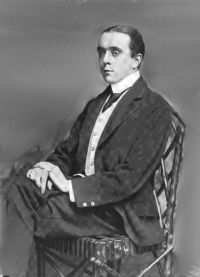
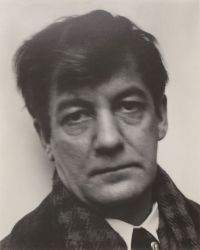
From this perceived lack of engagement follows the argument that walking can be intellectually deadening. The writer Max Beerbohm directly contested the notion that walking stimulates the brain, asserting instead that it actively "stops the brain" [6]. When walking becomes routine and the scenery familiar, its value even as physical exercise diminishes, as it merely provides an opportunity for unproductive introspection . For the writer Sherwood Anderson, long walks were a recurring compulsion that ultimately "solved nothing," serving only to exhaust the body enough to permit sleep . In these interpretations, walking is stripped of any romance, becoming at best a neutral function and at worst a physically demanding and mentally barren exercise.
A Stimulus for the Thinking Mind
In direct opposition to the idea of walking as a mental void, a significant school of thought champions it as a powerful intellectual catalyst. This perspective posits a reciprocal relationship between physical and mental activity, where movement of the muscles acts as a direct stimulus to the brain [13]. Jean-Jacques Rousseau famously articulated this connection, stating that his body needed to be in motion for his mind to work, a sentiment later echoed by Arnold Haultain [18]. In this view, walking is not merely compatible with thinking; it actively animates and enlivens the spirits, sharpening judgment and facilitating a bold flow of ideas . Robert Cortes Holliday even described it as a "call-boy to wit," a handmaiden to intellectual cultivation .
The mechanism for this stimulation lies in the unique balance of exertion and freedom that walking provides. An essayist in The Atlantic Monthly analyzed this by explaining that because the will and muscles perform the familiar task of walking with little effort, the intellect is left unusually free [17]. This liberation allows the mind to engage in observation, speculation, and contemplation without being suppressed . Bernarr Macfadden suggested that while other exercises might be too strenuous, walking accelerates circulation and arouses the body's vital forces just enough to make the brain exceptionally active [16]. It is this perfect equilibrium—physical activity without physical distraction—that turns a walk into a playground for the intellect.
The benefits of this ambulatory thinking extend beyond pure problem-solving to emotional and psychological well-being. Hilaire Belloc believed that a vigorous walk could purge the mind of pride and narrowness, restoring a sense of childlike curiosity about the world [12]. For others, the constant forward motion and the swift passing of scenery provide a tangible release from nervous anxiety, the physical rhythm disrupting obsessive mental loops [14]. Ultimately, the experience of moving through an open landscape, free from the constraints of a dependent situation, can generate a profound sense of liberation, allowing the mind to roam through an "immensity of beings" and construct ideas without fear or inhibition .
The Art and Adventure of Walking
Beyond its role as an intellectual aid, walking can be elevated to the status of a fine art and a grand adventure. This requires a conscious shift in intention, from merely covering ground to crafting an experience. Hilaire Belloc makes a crucial distinction between walking as a "mechanic art," where the goal is simply locomotion, and a "fine art," where the movement is so attuned to one's inner state that the feet move without conscious thought, guided by an internal music [19]. In this elevated form, the walk itself becomes the purpose. G. K. Chesterton reinforced this idea, comparing a walk to a work of art whose full value is only revealed upon completion, enjoyed for its unfolding rather than its destination .
This artistic approach is deeply intertwined with a spirit of adventure. Henry David Thoreau was a fierce advocate for this view, contrasting what he called true walking—the "enterprise and adventure of the day"—with the dull, prescribed swinging of dumbbells for health [22]. To truly walk is to go in search of the "springs of life," an act that may demand ultimate commitment . Both Thoreau and Belloc evoke the image of the walker as a crusader on a perpetual quest, ready to leave everything behind and never return, transforming even the shortest stroll into a journey of profound significance [23, 26]. To walk for abstract goals like glory or discovery, Belloc argues, is to align the act with one's entire being [20].
The artistry of walking also manifests in the physical grace of movement itself. The description of a painted figure in mid-stride, for instance, highlights the balanced, rhythmic swing of a body in swift motion, a poise that is dynamic and alive [24]. Friedrich Nietzsche viewed the mastery of walking as the acquisition of a "second nature," a process of learning that cultivates a new grace and an appreciation for the sheer difficulty of the act [25]. This refined skill, born of practice, distinguishes the true walker from the clumsy empiricist, turning locomotion into a form of elegant, personal expression.
A Sacred and Spiritual Practice
In its most profound interpretation, walking transcends the physical, intellectual, and even artistic realms to become a spiritual practice. This perspective views walking as a means of achieving an unparalleled intimacy with the "sacred things and the primal things of earth," a connection lost to those who travel by mechanical means . The act becomes a conduit for experiencing the world in its most elemental form. However, this connection is not automatic; as Henry Van Dyke suggests, it requires being properly "in tune for a walk." This state of spiritual and bodily readiness allows one to find deep satisfaction in the simplest elements, like the taste of air and water, and to be receptive to the good fortune the world offers [30].
This deep connection suggests that walking is more than a learned skill; it is an innate and spirit-led activity. Hilaire Belloc mused that we did not teach ourselves to walk but were guided by an inner spirit, the same force that grants us speech, humor, affection, and eventually, the capacity for prayer . From this vantage point, walking is a fundamental expression of our being. The French poet Paul Claudel saw this autonomous power of motion as a way to measure the "subtle appeals" of the world and to understand its underlying harmony [28]. The simple, even rhythm of one's legs becomes a tool for attuning the soul to the silent call of existence, transforming the walker into a living part of a cosmic whole.
The journey to understand walking reveals a profound spectrum of human experience. It begins with its dismissal as a mundane, automatic chore, a mere physiological process that is at best a neutral background to our busy minds and at worst an intellectually stifling form of labor . From this functional baseline, the act is re-envisioned as a potent tool for the intellect, a rhythmic activity where the liberation of the body frees the mind for contemplation, observation, and creative problem-solving . The path then ascends further, framing the walk as a deliberate art form and a personal adventure, where the journey itself is the masterpiece and the walker an explorer of both outer landscapes and inner frontiers . At its apex, walking becomes a spiritual practice, a means of forging a sacred connection with the primal world and the self .
Ultimately, the debate over the essential nature of walking reflects a larger tension between utility and meaning, efficiency and experience. The simple act of placing one foot in front of the other can be interpreted as either a concession to routine or a profound declaration of freedom . The value extracted from the journey depends less on the physical path than on the internal disposition of the traveler. Whether a walk remains a mechanical task or blossoms into a source of insight and joy is determined by the walker's willingness to be in tune with the experience, transforming mere motion into a vehicle for discovery .