AI-generated from sources
The dueling paths: labor, faith, and the historical burden of walking in mexico
In Brief
- Mexican pathways are historically 'scars of toil,' deeply worn gullies created by centuries of mule trains and human labor, reflecting an extractive economy based on coercion.
- The historical act of walking was dictated by economic necessity, intrinsically tied to the exploitative hacienda system and the ubiquitous role of the muleteer (arriero), sharply contrasting with the ideal of leisurely rambling.
- The dangerous Mexican landscape, fraught with natural and human perils, ensured that travel was a pragmatic struggle for survival, far removed from philosophical contemplation.
- Beyond commerce, the landscape also served as the stage for profound spiritual journeys, including the foundational migration of the Aztecs and later religious penances, offering a counter-narrative of movement guided by faith and destiny.
Main authors

The act of walking is often framed in modern literary and philosophical traditions as a profound expression of freedom and an intimate communion with nature [1]. Thinkers like Henry David Thoreau championed the walk as a journey into a landscape un-owned and untamed, a physical manifestation of an interior, idealized path toward self-discovery and a higher truth [2, 3, 4]. In this conception, the walker is an autonomous agent, choosing their direction based on a subtle magnetism in nature, far from the constraints of civilization . The path is a medium for spiritual repletion and cheerful humors, an experience sought for its own sake rather than as a means to a commercial end .
This romantic ideal, however, stands in stark contrast to the historical reality of movement within the Mexican landscape. For centuries, the most common paths were not routes of leisure but channels of labor, etched into the earth by relentless economic necessity [5, 6]. The dominant figures on these trails were not solitary philosophers but muleteers, or `arrieros`, indigenous porters, and hacienda peons, for whom walking was not a choice but an inescapable component of their toil [7, 8]. The tracks they followed were dictated by commerce and the demands of a social structure built on resource extraction and vast agricultural estates, creating a history of walking defined less by freedom and more by compulsion and survival [9].
The Path as a Scar of Toil
The physical character of Mexico's historic pathways is a direct testament to their utilitarian origin. Far from being gentle trails meandering through picturesque scenery, they are often deep, narrow gullies worn into the soil and rock over generations . This profound imprint on the land was created by the single-file passage of countless mule trains, which for centuries formed the backbone of the nation's transportation system . The routes were not chosen for their aesthetic appeal but for their practicality, navigating treacherous mountain terrain through a series of difficult turns and passes where sure-footedness was the paramount concern [10, 11]. The science of the journey lay in the efficient packing of mules and the selection of the most direct, if arduous, route between destinations [12].
The human figures who populated these laborious paths were inextricably linked to the animals they guided. The `arriero` with his string of mules was a ubiquitous and essential feature of Mexican economic life, responsible for transporting everything from commercial goods to precious metals . Alongside them were indigenous `cargadores`, or porters, whose movement was defined by extreme physical exertion in often harsh conditions [13]. This relationship between human and animal was one of pragmatic codependence, a shared struggle against a challenging environment where the fine instinct of the mule could mean the difference between life and death for its master [14]. The journey was a demanding profession, a world away from the leisurely stroll of the philosophical rambler [15].
This system of movement was deeply embedded in a wider socio-economic structure characterized by the hacienda system and the systemic exploitation of labor . The great estates often controlled the lives of thousands of peons, who lived and worked under conditions that offered little personal freedom or economic mobility . The miserable scale of wages for laborers ensured that walking or leading mules was a function of necessity, not a recreational choice . In this context, the paths crisscrossing the country were arteries of an extractive economy, facilitating the movement of resources that enriched landowners and a distant state while entrenching a social hierarchy based on coerced labor . Even the mail system once relied on unarmed indigenous men running across dangerous mountain paths, their vulnerability a calculated risk in a system that valued speed and efficiency above all [16].
Navigating a Perilous Landscape
The Mexican landscape itself presented a formidable and active challenge to the traveler on foot or mule. It was not a passive backdrop for contemplation but an environment fraught with inherent dangers that demanded constant awareness. Travelers could find themselves suddenly separated from companions by insidious fissures that appeared without warning on the plains, growing from mere cracks into impassable gulfs [17]. Mountain trails were equally perilous, consisting of narrow, worn passes where a single misstep could send a mule tumbling down a precipice . The path itself was often a succession of precarious turns along deep ravines, where the constant threat of a fall was magnified by darkness or difficult terrain .
For outsiders, this physically challenging environment was often compounded by a sense of psychological threat. The perception of the remote Mexican countryside was one of a wild and untamed space, home to perceived dangers such as bandits and indigenous populations deemed unfriendly or superstitious [18]. This gaze transformed the act of walking from a potentially liberating experience into a cautious expedition requiring armed guards and careful planning . The traveler's journey was thus shaped not by a search for harmony with nature, but by an effort to safely navigate a landscape seen as rife with both natural and human hostility [19].
The evolution of transportation technology casts this historical experience into sharp relief. The modern traveler, traversing the same steep mountain slopes from the comfort of a cushioned Pullman car, is utterly insulated from the physical and mental hardships that defined earlier journeys [20]. The direct, visceral connection to the terrain—the fatigue of the ascent, the fear of a misstep, the menace of the unknown—is replaced by a detached observation of passing scenery. This technological shift underscores how the very meaning of traversing the landscape has changed, separating the act of travel from the laborious, and often dangerous, reality of the path itself.
Journeys of Faith and Destiny
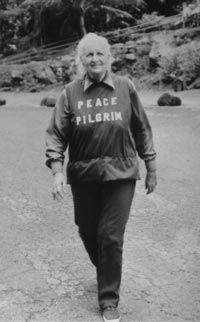
Beyond the realms of labor and commerce, another form of walking imbued the Mexican landscape with meaning: the spiritual journey or pilgrimage. This mode of travel is not driven by economic necessity but by an internal compass of faith, a quest for inner peace, or a desire to fulfill a divine purpose [21, 22]. The pilgrim's path is defined by a sense of higher purpose, where the physical act of walking becomes a moving prayer and a way to achieve harmony with a power greater than oneself [23]. This introduces a crucial counter-narrative to the walk of pure toil, reasserting the element of will and spiritual aspiration onto the act of movement.
This tradition of sacred travel has deep roots in Mexico's pre-colonial history. The migration of the Aztecs from their ancestral homeland of Aztlan, for example, can be understood as a foundational pilgrimage [24]. This was not a simple relocation but a long, interrupted journey guided by prophecy, a collective spiritual quest to find a destined capital. This epic movement suggests that long before the Spanish conquest, the landscape was already being traversed by peoples whose steps were dictated by religious belief and a sense of shared destiny .
In the colonial and post-colonial periods, spiritual journeys continued, albeit in different forms. The practice of `desagravios`, a public penance performed collectively in churches, represents a more structured and localized form of spiritual movement, channeling religious devotion into a communal ritual [25]. While distinct from the solitary, long-distance pilgrimages of other traditions, it nonetheless affirms the role of physical participation in acts of faith . These journeys, whether the epic migration of a whole people or the penitent steps within a town, offer a powerful alternative history of walking in Mexico. They demonstrate that the path could be more than a gully of commerce; it could also be a sacred route, a physical line connecting the human to the divine.
The act of walking in the Mexican landscape is thus laden with a profound and persistent duality. It is, on one hand, a story of coercion and grueling labor, of paths physically carved into the earth by the unceasing traffic of mules and the tired feet of those who served a demanding economic system . This history is inscribed in the very terrain, in the deep ravines that served as highways and the social structures, like the hacienda, that dictated who must walk and why . It is a narrative of movement as a measure of social status and economic constraint, where the road represents not freedom but the boundaries of a life of toil .
Yet, this same landscape has also served as the stage for journeys of immense spiritual significance. From the foundational pilgrimage of the Aztec people in search of a homeland to the public penance of later centuries, the act of walking has also been a powerful expression of faith and collective destiny . The romantic ideal of the solitary walker communing with an untouched wilderness offers an incomplete and often misleading lens through which to view this history . To truly understand the meaning of a Mexican path, one must see both the subjugation of the laborer and the devotion of the pilgrim. The tracks worn into the land are a complex text, chronicling a history written not only in sweat and servitude but also in faith and sacred purpose.