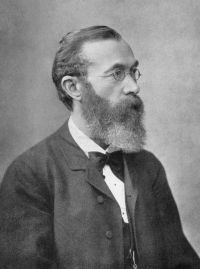
Wilhelm Max Wundt

Wilhelm Max Wundt

Summary

Portrait of Wilhelm Max Wundt Wilhelm Max Wundt Elements of Folk Psychology

To an age that is satiated with culture and feels the traditional forms of life to be a burdensome constraint, the state of nature becomes an ideal once realized in a bygone world. In contrast to the wild creature of Thomas Hobbes and his contemporaries, we have the natural man of Jean Jacques Rousseau. The state of nature is a state of peace, where men, united in love, lead a life that is unfettered and free from want.
Source: Gutenberg

Portrait of Wilhelm Max Wundt Wilhelm Max Wundt Elements of Folk Psychology

Particularly where these thoughts and feelings are directly reproduced in language, the work, even though coming down from a long-departed past, has an incomparably greater power to transport us to its world than is ever possible to plastic art. How much more vividly do we not experience the life of the Homeric heroes while reading the Iliad than when viewing the Mycenian art of that period!
Of all the products of the verbal arts, it is the epic that most faithfully mirrors the character of the heroic age as a whole. The human hero here stands in the forefront of action.
Source: Gutenberg

Portrait of Wilhelm Max Wundt Wilhelm Max Wundt Elements of Folk Psychology

How immense is the chasm between the secret barter of primitive man who steals out of the primeval forest by night and lays down his captured game to exchange it, unseen by his neighbours, for implements and objects of adornment, and the commerce of an age when fleets traverse the seas, and eventually ships course through the air, uniting the peoples of all parts of the world into one great commercial community! We cannot undertake to delineate all aspects of this development, for the latter includes the entire history of mankind.
Source: Gutenberg

Get perspective with Kwize: daily news enlightened by great literature