“ In this way a process which on the surface was nationalistic became fundamentally a part of the organic evolution of civilization, which redirected the cultural processes of a nation and eventually of what was, then, the modern world. ”
Cultural evolution
Definition and stakes
The theme of “cultural evolution” has been addressed by authors such as Theodore Graebner, Thomas Henry Huxley, William McDougall, J. M. Robertson and Franz Boas. It is often associated with terms like civilization, art, culture, human and anthropology.
Quotes about “cultural evolution”
Bahá'í International Community, One Common Faith
“ Until the opening of the twentieth century, such simplistic arguments were commonplace, but historical and anthropological research now provides a seamless panorama of the process of cultural evolution by which these and countless other expressions of human creativity came into existence, were transmitted through successive generations, underwent gradual metamorphoses and often spread to enrich the lives of peoples in far distant lands. ”
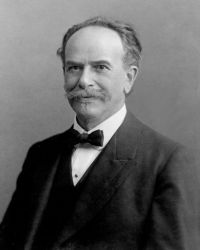 Franz Boas,
The Methods of Ethnology
(1920)
Franz Boas,
The Methods of Ethnology
(1920)
“ First of all, the history of human civilization does not appear to us as determined entirely by psychological necessity that leads to a uniform evolution the world over. We rather see that each cultural group has its own unique history, dependent partly upon the peculiar inner development of the social group, and partly upon the foreign influences to which it has been subjected. ”
Henry K. Rowe, Society: Its Origin and Development
“ Through such social processes as these—through unconscious suggestion, through communication and discussion that mould public opinion, through changes in environment and the influence of new leaders of thought and action—the evolution of folk life has carried whole races, sometimes to oblivion, but generally out of savagery and barbarism into a material and cultural civilization. ”
Franz Boas,
Anthropology
(1908)
“ With increasing knowledge of the data of anthropology, the forms of society, of religion, of art, and the development of invention, do not seem quite so simple as they appeared to earlier investigators. Attempts were made to fit the hypothetical typical evolution of mankind to the historical development of culture in different parts of the world, so far as it had been reconstructed. ”
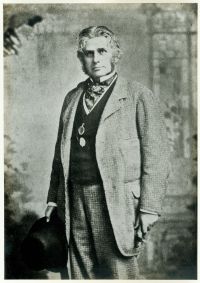 Augustus Henry Lane-Fox Pitt-Rivers,
The Evolution of Culture, and Other Essays
Augustus Henry Lane-Fox Pitt-Rivers,
The Evolution of Culture, and Other Essays
“ In other words, he considered that in the various manifestations of culture among the less civilized peoples were to be seen more or less direct survivals from the earlier stages or strata of human evolution ”
Theodore Graebner, Evolution: An Investigation and a Critique
“ He sees in all the institutions of civilization, in every department of culture, in the rise and fall of nations, the progress and decay of literatures, a result of natural laws, working out the evolution of human society as it exists to-day. ”
Thomas Wilson, The Swastika, the Earliest Known Symbol…
“ The imaginary and newly invented theory that culture is the result of the psychologic nature of man manifesting itself in all epochs and countries, and among all peoples, by the evolution of some new discovery made to fit a human need—that as all human needs in a given stage are the same, therefore all human culture must, per se, pass through the same phases or stages—is a theory to which I refuse adhesion. ”
 Madison Grant,
The Conquest of a Continent; or…
Madison Grant,
The Conquest of a Continent; or…
“ This creative principle—the most mysterious of the recently discovered phenomena of evolution, to which I have devoted the researches of nearly half a century—is that racial preparation for various expressions of civilization—art, law, government, etc.—is long antecedent to these institutions. ”
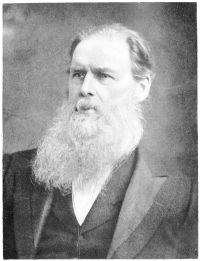 Edward B. Tylor,
Primitive culture, vol. 1 (of 2…
(1871)
Edward B. Tylor,
Primitive culture, vol. 1 (of 2…
(1871)
“ It being shown that the details of Culture are capable of being classified in a great number of ethnographic groups of arts, beliefs, customs, and the rest, the consideration comes next how far the facts arranged in these groups are produced by evolution from one another. ”
Franz Boas,
The Methods of Ethnology
(1920)
“ While on the whole the unique historical character of cultural growth in each area stands out as a salient element in the history of cultural development, we may recognize at the same time that certain typical parallelisms do occur. ”
Edward B. Tylor,
Primitive culture, vol. 1 (of 2…
(1871)
“ In carrying on the great task of rational ethnography, the investigation of the causes which have produced the 21phenomena of culture, and of the laws to which they are subordinate, it is desirable to work out as systematically as possible a scheme of evolution of this culture along its many lines. ”
Augustus Henry Lane-Fox Pitt-Rivers,
The Evolution of Culture, and Other Essays
“ That these remarks are not merely speculative, that the progress of civilization has been continuous and connected, while the races which have been engaged in the formation of it, like individuals, have had their periods of birth, maturity, and decay, is sufficiently proved by history. ”
Portal:The Folk-Lore Society, The Folk-Lore Journal (1885)
“ In a happy hour the English folk-lorists are reconstructing, by means of the study of superstitions, ceremonies, rites, manners, customs, tales, and games, that proto-history of mankind, that most ancient ideal world, that grand mosaic, whose separate pieces are each one of these productions: but let them study also those facts which teach that there exists an evolution of ideas similar to that of organisms ”
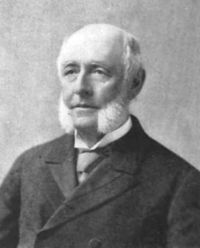 George Park Fisher,
Outlines of Universal History, Designed as a Text-book and for Private Reading
George Park Fisher,
Outlines of Universal History, Designed as a Text-book and for Private Reading
“ There are, also, histories of culture. History, from a cultural point of view, without paying regard to national boundaries, seeks to unfold the rise and progress of arts and industry, of inventions, of customs, manners, and institutions. It is the history of culture and civilization. History, from the ethnological point of view, would describe the migrations and experiences of the different races of men, and the formation of the various nationalities by these races, through conquest and intermixture. ”
Augustus Henry Lane-Fox Pitt-Rivers,
The Evolution of Culture, and Other Essays
“ History is but another term for evolution. There are histories and histories, as any one may determine who has read Green’s Short History of the English People, and compared it with the kind of matter which passed for history in his school days. But our position with regard to culture has always been one which has forced on our comprehension the reality of progress, whilst with respect to the slow progress of external nature, it has been concealed from us, owing to the brief span of human existence and our imperfect records of the past. ”
 J. M. Robertson,
The Evolution of States
J. M. Robertson,
The Evolution of States
“ It is still common, among men who professedly accept the theory of evolution, to speak of special culture developments, notably those of sculpture and literature in Greece, art in medieval Italy, and theocratic religion in Judea, as mysteries beyond solution. ”
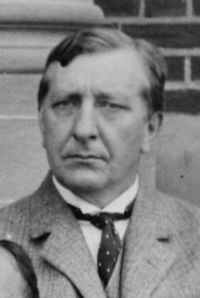 William McDougall,
The Group Mind: A Sketch of the Principles of Collective Psychology
William McDougall,
The Group Mind: A Sketch of the Principles of Collective Psychology
“ If we use the word ‘tradition’ in the widest possible sense to denote all the intellectual and moral gains of past generations, in so far as they are not innate but are handed on from one generation to another by the personal intercourse of the younger with the older generation, and if we allow the notion of tradition to include all the institutions and customs that are passed on from generation to generation, then we may class all the changes of a people that constitute the evolution of a national character under the two heads: evolution of innate qualities and evolution of traditions. ”
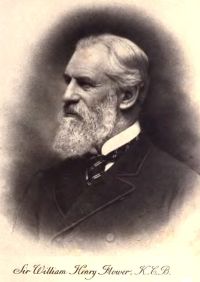 William Henry Flower,
Popular Science Monthly
(1884)
William Henry Flower,
Popular Science Monthly
(1884)
“ Knowledge of the origin and development of particular existing customs throws immense light upon their real nature and importance; and, conversely, it is often only from a profound acquaintance with the present or comparatively modern manifestations of culture that we are able to interpret the slight indications afforded us by the scanty remains of primitive civilization. ”
Franz Boas,
Anthropology
(1908)
“ The sameness of a number of fundamental ideas and inventions has suggested to some investigators the belief that there are old cultural achievements belonging to a period previous to the general dispersion of the human race,—a theory that has some points in its favor, though its correctness cannot be proved. ”
Portal:The Folk-Lore Society, Folk-Lore (1910)
“ The change being so great,—the phenomenon of savage survivals in culture established, the position of the history and development of culture as an integral part of anthropology vindicated, and the claims of anthropology as a subject of study recognized by the Universities,—the question has naturally been more than once asked,—Is there any further need for the Folk-Lore Society? ”
Augustus Henry Lane-Fox Pitt-Rivers,
The Evolution of Culture, and Other Essays
“ If the various gradations of culture exhibited by the condition of living races—the savage, the semi-civilized or barbaric, and the civilized races—could be regarded as accurately typifying the successive stages through which the higher forms of culture have been evolved in the course of the ages ”
Howard Washington Odum, Religious Folk-Songs of the Southern Negroes
“ Not only its relation to civilization as an historical science and as it bears definitely upon peoples of modern cultural areas is recognized, but its essential value in the study of psychological, anthropological, and sociological conditions has called forth the most careful study that has been possible to give it. ”
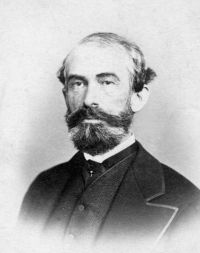 Frank Hastings Hamilton,
Popular Science Monthly
(1883)
Frank Hastings Hamilton,
Popular Science Monthly
(1883)
“ The term "civilization" is here used in its broad and legitimate sense, as including not only mental culture, with progress in science and art, but also the comforts, luxuries, and æsthetics of life, which are its natural and inevitable concomitants. ”
Augustus Henry Lane-Fox Pitt-Rivers,
The Evolution of Culture, and Other Essays
“ So fully has the truth of this been recognized by those who are not themselves advocates for the theory of development, that in order to account for the very first stages of human progress they have found it necessary to assume the hypothesis of supernatural [92] agency: such we know was the belief of the classical pagan nations, who attributed the origin of many of the arts to their gods; such we know to be the tradition of many savage and semi-civilized nations of modern times that have attained to the first stages of culture. ”
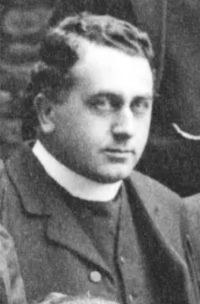 De Lacy O'Leary,
Arabic Thought and Its Place in History
(1922)
De Lacy O'Leary,
Arabic Thought and Its Place in History
(1922)
“ In the evolution of the social structure the factor of first importance is the transmission of culture, which is not a matter of heredity but due to contact, for culture is learned and reproduced by imitation and not inherited. ”
 Carl Ritter,
Comparative geography
(1865)
Carl Ritter,
Comparative geography
(1865)
“ Furnished as they have been with the most liberal gifts of nature, they must receive a culture of which we as yet have little conception. In what way this can be done, the history of the past reveals. ”
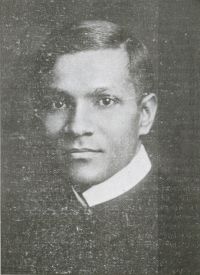 Benoy Kumar Sarkar,
The Science of History and the Hope of Mankind
(1912)
Benoy Kumar Sarkar,
The Science of History and the Hope of Mankind
(1912)
“ Religion, industry, state, education, and literature have been consciously transformed by the heroic efforts of such great men of the world, and these conscious and artificial transformations of the several aspects of social life have been the constituents of a new environment and thus the seeds of Renaissance. ”
E. W. Burgess, Introduction to the Science of Sociology
“ If it is the function of the historical process to accumulate and conserve the common fund of social experience, it is the function of the cultural process to shape and define the social forms and the social patterns which each preceding generation imposes upon its successors. ”
Franz Boas,
The Methods of Ethnology
(1920)
“ The difference between the two directions of study may perhaps best be summarized by the statement that American scholars are primarily interested in the dynamic phenomena of cultural change, and try to elucidate cultural history by the application of the results of their studies; and that they relegate the solution of the ultimate question of the relative importance of parallelism of cultural development in distant areas, as against worldwide diffusion, and stability of cultural traits over long periods to a future time when the actual conditions of cultural change are better known. ”
 James George Frazer,
The Belief in Immortality and the Worship of the Dead…
James George Frazer,
The Belief in Immortality and the Worship of the Dead…
“ Thus when we arrange all the known peoples of the world according to the degree of their savagery or civilisation in a graduated scale of culture, we obtain not merely a comparative view of their relative positions in the scale, but also in some measure an historical record of the genetic development of culture from a very early time down to the present day. ”
Augustus Henry Lane-Fox Pitt-Rivers,
The Evolution of Culture, and Other Essays
“ Thus the existing races of mankind may be taken to represent the budding twigs and foliage, each in accordance with the relative superiority of its civilization, appertaining to branches higher and higher placed, upon the great stem of life. ”
Mihai Nadin, The Civilization of Illiteracy
“ When the cultural dominates, the sign or language experience becomes an interpretation, i.e., a continuation of the semiotic experience. Interpretation of any kind corresponds to the never-ending differentiation from the biological and is representative of the constitution of culture. Under the name culture as used above, we understand human nature and its objectification in products, organizations, ideas, attitudes, values, artifacts. ”
 William Ralph Inge,
The Idea of Progress
(1920)
William Ralph Inge,
The Idea of Progress
(1920)
“ The racial life of the species to which we happen to belong is a brief episode even in the brief life of the planet. And what we call civilization or culture, though much older than we used to suppose, is a brief episode in the life of our race. ”
Transactions of the Second International Folk-Congress (1892)
“ That hypothesis attributes the origin of folk-tales, as of every other species of tradition, to the constitution of the human mind. A similar environment acting upon the mind will everywhere produce similar results. And it is the variations of the environment, both physical and social, as well the moral and material products of civilisation as the natural features of the earth, its fauna and flora, which give rise to the variety of stories all presenting perpetual coincidences, and all evolved from a few leading ideas common to the race. ”
 Scott Nearing,
Civilization and Beyond: Learning from History
Scott Nearing,
Civilization and Beyond: Learning from History
“ Human culture is the sum total of ideas, relationships, artifacts, institutions, purposes and ideals currently functioning in any community. Three elements are present in each human society: man, nature and the social structure. Human culture at any point in its history is the social structure: the aggregate of existing culture traits, the products of man's ingenuity, inventiveness and experimentation, set in their natural environment.Civilization is a level of culture built upon foundations laid down through long periods of pre-civilized living. ”
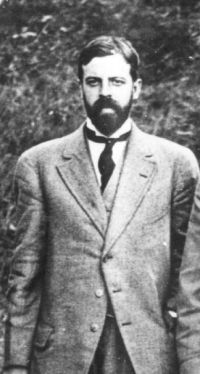 A. L. Kroeber,
Anthropology
(1923)
A. L. Kroeber,
Anthropology
(1923)
“ Here, then, is the cause of the seeming preoccupation of social or cultural anthropology with ancient and savage and exotic and extinct peoples: the desire to understand better all civilizations, irrespective of time and place, in the abstract or in form of generalized principle if possible. ”
 Hamilton Wright Mabie,
Essays on Work and Culture
Hamilton Wright Mabie,
Essays on Work and Culture
“ There never was a more radical misconception of a fundamental process, for culture in the true sense involves, as a process, the highest and truest development of a race, and, as a product, the most enduring spiritual expression of race genius and experience. ”
 Oswald Spengler,
The Decline of the West
(1926)
Oswald Spengler,
The Decline of the West
(1926)
“ In the same way as we have elected to distinguish the Soul as the possible and the World as the actual, we can now differentiate between possible and actual culture, i.e., culture as an idea in the (general or individual) existence and culture as the body of that idea, as the total of its visible, tangible and comprehensible expressions—acts and opinions, religion and state, arts and sciences, peoples and cities, economic and social forms, speech, laws, customs, characters, facial lines and costumes. ”
Edward B. Tylor,
Primitive culture, vol. 1 (of 2…
(1871)
“ THE SCIENCE OF CULTURE. Culture or Civilization—Its phenomena related according to definite Laws—Method of classification and discussion of the evidence—Connexion of successive stages of culture by Permanence, Modification, and Survival—Principal topics examined in the present work.Culture or Civilization, taken in its wide ethnographic sense, is that complex whole which includes knowledge, belief, art, morals, law, custom, and any other capabilities and habits acquired by man as a member of society. ”
Nevin O. Winter, Mexico and Her People of To-day
“ From these sources a manner of living has been evolved which bears evidences of culture and refinement. This system has flowed on through the intervening centuries, undisturbed by the march of progress, until the last quarter of a century. ”
 Walter Lippmann,
Public Opinion
(1929)
Walter Lippmann,
Public Opinion
(1929)
“ In fact, human culture is very largely the selection, the rearrangement, the tracing of patterns upon, and the stylizing of, what William James called "the random irradiations and resettlements of our ideas." ”
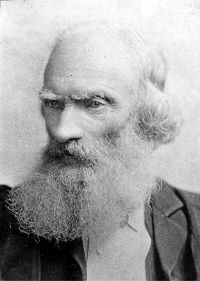 Sir Daniel Wilson,
The lost Atlantis, and other ethnographic studies
Sir Daniel Wilson,
The lost Atlantis, and other ethnographic studies
“ Thus we have, in this particular, a race which has established a complex civil and religious polity, and made great progress in the useful and fine arts,—as its pottery, textile fabrics, wrought metals, highways and aqueducts, colossal architectural structures and court of almost imperial splendour prove,—on the same level, as regards the quantity of brain, with a race whose social and religious conditions are among the most degraded exhibited by the human race. ”
Related terms
Authors who wrote about “cultural evolution”
Theodore Graebner Thomas Henry HuxleyWilliam McDougallJ. M. RobertsonFranz BoasAugustus Henry Lane-Fox Pitt-RiversEdward B. TylorBahá'í International CommunityHenry K. RoweThomas WilsonGeorge Park FisherPortal:The Folk-Lore SocietyHoward Washington OdumMadison GrantDe Lacy O'LearyE. W. BurgessA. L. KroeberMihai Nadin
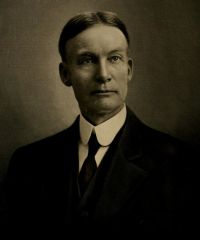 Frank W. Blackmar
 Goldwin Smith
Thomas Henry HuxleyWilliam McDougallJ. M. RobertsonFranz BoasAugustus Henry Lane-Fox Pitt-RiversEdward B. TylorBahá'í International CommunityHenry K. RoweThomas WilsonGeorge Park FisherPortal:The Folk-Lore SocietyHoward Washington OdumMadison GrantDe Lacy O'LearyE. W. BurgessA. L. KroeberMihai NadinFrank W. BlackmarGoldwin Smith