AI-generated from sources
The paradox of enlightenment: When knowledge hinders wisdom
In Brief
- The Enlightenment mandated the courageous use of reason, viewing ignorance (lack of understanding) as the primary source of evil and the main obstacle to human progress.
- Philosophers have long warned that the uncritical pursuit of knowledge can foster vanity, intellectual arrogance, and rigid rationalism, thereby alienating the individual from true moral or spiritual wisdom.
- A crucial distinction exists between natural ignorance and 'learned ignorance'—a profound state achieved by great intellects who recognize the inherent limits of human knowledge.
- Ultimate human flourishing requires a synthesis: using reason to dispel debilitating ignorance while simultaneously cultivating the conscious humility of knowing what one does not know.
Main authors


The intellectual project of the Enlightenment is perhaps best captured by its mandate for humanity's release from a self-imposed state of immaturity, advocating for the courage to use one's own reason without external guidance [1]. This movement championed the relentless pursuit of knowledge as the primary instrument for progress and the definitive cure for societal ills [2, 3, 4]. Within this framework, ignorance is cast as the fundamental source of evil, prejudice, and human suffering, a condition to be overcome through the expansion of scientific and rational thought [5, 6]. The core assumption is that a well-informed mind is the basis for a virtuous and prosperous life, and that the accumulation of knowledge is a direct path to liberation .
However, this foundational faith in maximized reason presents a significant paradox. Thinkers across various historical and philosophical traditions have consistently observed that a certain form of ignorance may be not only beneficial but essential for achieving genuine wisdom, peace, and even for the very possibility of life itself [7, 8]. This creates a profound tension between the rationalist's ambition for total enlightenment and the profound insight that often emerges from an honest acknowledgment of the limits of human understanding [9, 10]. The quest for absolute knowledge may, in fact, hinder the attainment of a more subtle, intuitive wisdom [11, 12].
This inherent conflict necessitates a deeper examination of the natures of both knowledge and ignorance. It is insufficient to categorize all knowledge as inherently good and all ignorance as a 'blind giant' to be vanquished [13]. Instead, a more nuanced perspective suggests the existence of forms of ignorance that are 'useful,' 'beautiful,' or strategically necessary [14, 15]. This exploration reveals that the Enlightenment ideal, while powerful in its critique of superstition and unexamined authority, remains incomplete without appreciating a sophisticated, 'learned ignorance'—a state of awareness that transcends mere data accumulation and recognizes the vastness of the unknowable [16, 17].
The Enlightenment Mandate: Knowledge as Liberation
At its heart, the Enlightenment represented a profound shift toward empowering the individual through the faculty of reason . This philosophical current positioned knowledge not as a passive collection of facts, but as the active engine of human and societal betterment. Its proponents argued compellingly that the world's most persistent problems—from political injustice and economic inequality to personal vice—stemmed not from the possession of knowledge, but from its absence . In this view, ignorance is the natural ally of prejudice, the bedrock of barbarism, and the primary obstacle to progress [18].
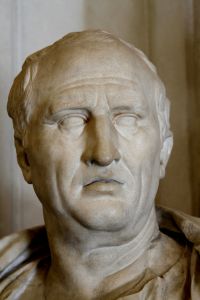
This perspective elevates the pursuit of knowledge to a moral imperative. It becomes a crucial tool for dispelling error, particularly the ignorance of good and evil that Cicero identified as the source of life's greatest anxieties and sorrows . The human mind, with its unique capacity for reason, is seen as naturally ordained to continually expand its comprehension of the universe, with no justifiable boundaries placed upon its inquiry [19, 20]. The very engines of this progress are identified as scepticism and rational inquiry, forces that save humanity from the stagnation of unchallenged dogma [21].
From this vantage point, ignorance is not a neutral state but an active and detrimental force. It is depicted as a cloud that darkens the rational soul, hindering its innate desire for the good [22]. Furthermore, a lack of knowledge constrains individuals, forcing them to rely on the authority and advice of others rather than their own independent judgment [23]. The entire scientific and philosophical enterprise can be understood as a collective effort to escape this state of dependent unknowing, a quest for certainty that prioritizes understanding over mere utility or comfort [24]. The historical function of Enlightenment rationalism, therefore, was to serve as an indispensable instrument for dismantling the inconsistencies and absurdities of inherited, unexamined belief systems [25].
The Perils of Pure Reason: When Knowledge Hinders Wisdom
Despite the undeniable power of the rationalist project, a significant counter-narrative has long warned of its inherent limitations and potential for harm. The uncritical pursuit of knowledge, for instance, can foster vanity and intellectual arrogance, creating a 'man of learning' who is paradoxically further removed from a state of true wisdom than an unlettered peasant [26]. This critique is often aimed squarely at the 'dogmatic and arrogant rationalism' that emerged from the Enlightenment, a mindset that becomes smugly confined within its own logical systems, denying the existence of realms of experience—such as awe and wonder—that lie beyond its analytical grasp [27].
Knowledge itself, when improperly integrated, can become a direct hindrance to moral and spiritual insight. A mind saturated with information about evil and falsehood may find it exceptionally difficult to recognize or believe in goodness and truth . This suggests that the accumulation of facts is not a neutral process; it actively shapes and can even limit perception. Some thinkers warn that 'a little knowledge' is especially perilous, leading to a kind of rigid, ascetic fatalism [28]. Similarly, pushing intellectual inquiries too far beyond the point of reasonable utility can lead not to profound truths but to extravagant and senseless conclusions [29].
This critique culminates in the radical proposition that, in certain circumstances, ignorance is not only acceptable but preferable, particularly 'where knowledge leads to woe' [30]. The relentless effort to destroy ignorance can become a source of profound unhappiness, a constant striving that eradicates a state of potential bliss . This dissatisfaction with the promise that more knowledge automatically equates to a better life is palpable in the reflections of one who, after deep consideration, came perilously close to viewing all knowledge as a 'mirage,' concluding for a time that ignorance was, in fact, the 'truest wisdom' [31].
Re-evaluating Ignorance: From Void to Virtue
This profound critique of rationalism necessitates a complete re-evaluation of ignorance itself. Rather than viewing it as a simple void or deficiency, thinkers like Montaigne and Pascal propose a more complex, structured understanding . They articulate a crucial distinction between two forms of ignorance. The first is the 'natural' or 'Abecedarian' ignorance into which all are born. The second is a 'doctoral' or 'learned ignorance' achieved only by great intellects after they have exhausted the limits of human knowledge and discovered that they ultimately know nothing. This latter form is not a failure but a profound achievement: an ignorance that is conscious of itself .
This 'learned ignorance' is presented not as a deficit but as a form of high wisdom. It is embodied in the humble admission, 'I do not know,' which Robert Ingersoll calls the 'creed of intelligence' when confronting life's ultimate questions . This intellectual modesty stands in stark contrast to what Plato deemed the 'most reprehensible ignorance': the false conceit of knowing what one does not actually know [32]. This perspective champions a form of conscious unknowing, recognizing that 'true ignorance' can approach the infinite in a way that finite, bounded knowledge never can [33].
This productive form of ignorance is framed as essential for both life and continuous intellectual growth. Friedrich Nietzsche goes so far as to claim that a 'great solid belt of ignorance' is a vital, non-negotiable condition for any living organism to preserve itself and prosper . Others find its value in its function as a catalyst for discovery. The great pleasure of ignorance, Robert Lynd argues, is that it fuels curiosity and the desire to ask questions—a dynamic pleasure lost to the dogmatist, who finds satisfaction only in providing answers [34]. It is this 'useful' and even 'beautiful' ignorance that allows for the perpetual possibility of new insight and wonder .
The Enlightenment's campaign to vanquish ignorance through the power of reason provided an indispensable framework for human progress, effectively identifying the dangers of a passive, unthinking state that fosters prejudice and dependence . Its proponents were correct in asserting that knowledge could be a liberating force. Yet, the uncritical veneration of knowledge as an absolute good overlooks a crucial series of distinctions. The pursuit of enlightenment risks collapsing into a form of sophisticated error if it fails to recognize its own inherent limits and dismisses the profound wisdom embedded in an honest acknowledgment of the unknown .
Ultimately, a more complete vision of human flourishing requires a synthesis that moves beyond this dichotomy. It involves a process akin to using the 'thorn of knowledge' to remove the 'thorn of ignorance,' only to then discard both in order to achieve a higher, more absolute state of realization [35]. This path leads to the cultivation of a 'learned ignorance'—a state of conscious humility before the vastness of reality . This is not an abandonment of reason but its ultimate fulfillment: a wisdom that understands the critical difference between accumulating information and achieving true communion with life [36]. This mature understanding accepts that some of the most profound truths are found not in the catalog of what we know, but in our courageous and open-minded embrace of what we do not.