AI-generated from sources
A conflict of realities: William Blake's imagination versus Joseph McCabe's empiricism
In Brief
- William Blake posited that true reality is infinite and eternal, accessible only through the visionary imagination, viewing the material world as a deceptive 'vegetable glass.'
- Joseph McCabe championed an empirical worldview, defining reality as finite and measurable, focused on material and social reform governed by scientific principles.
- The empirical mandate restricts knowledge to observable phenomena, dismissing transcendent claims as merely psychological projections or 'day-dreams' of the metaphysician.
- The tension between these worldviews ultimately highlights the limits of human cognition, suggesting that neither the visionary nor the empiricist can fully transcend the 'phenomenal veil' to grasp reality as it truly is.
Main authors

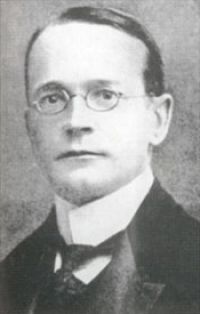

A fundamental schism exists in the human endeavor to apprehend truth, a conflict centered on whether reality is a boundless, eternal realm accessed through imaginative insight or a finite, material world defined by the limits of empirical observation [1, 2]. This dichotomy finds a powerful embodiment in the philosophical chasm separating the visionary artist William Blake from the rationalist social theorist Joseph McCabe. For Blake, the true nature of existence is located in a world of imagination, infinite and eternal, of which the observable, physical world is but a pale reflection or a 'vegetable glass' . Reality, in this view, is not discovered through the senses but created and entered into through a 'fiery chariot of contemplative thought' [3].
Conversely, thinkers like Joseph McCabe represent a worldview grounded in the material and the phenomenal. Here, the supreme goal is the organization of a prosperous and orderly society through scientific principles and the systematic management of human life [4]. In this framework, metaphysical speculation is a 'day-dream,' and internal feelings or impulses are merely psychological phenomena, not conduits to objective truth [5]. Reality is that which can be measured, registered, and reformed, a tangible project rather than an internal vision . This intellectual opposition raises a central question about the nature of being itself: Is reality defined by the transcendent power of genius to abrogate limits, or is it circumscribed by the inherent limitations of human perception and the empirical data it can process [6, 7]?
Exploring this tension reveals not merely a conflict between art and science, but a deeper philosophical inquiry into the relationship between appearance and reality, subject and object, and the finite and the infinite [8, 9]. The limitations of human consciousness itself become a central theme, questioning whether either the visionary or the empiricist can ever fully grasp a reality that may ultimately lie beyond the reach of both imagination and sensory experience [10, 11, 12].
The Sovereignty of the Imagination: Blake's Eternal World
William Blake's cosmology posits the imagination as the sole arbiter of what is real and eternal . He fiercely rejected a reality predicated on sensory data, which he characterized as a 'Fibrous Vegetation' or a state of sleep, a web of death woven by limiting reason [13, 14]. To merely copy the material world, as a painter might copy a model, was not art but a contemptible deception, a failure to engage with the true substance of existence [15]. True reality is composed of particular 'images of wonder' that must be entered into imaginatively; to do so is to 'arise from the grave' and leave mortal things behind . This perspective identifies general knowledge as remote and flawed, arguing that wisdom resides in particulars perceived not by the physical eye but by the mind's eye .
This visionary faculty allows the individual to perceive life beyond the 'mundane and mortal elements,' breaking the 'chains of reason and religion' [16]. In Blake's mythological system, described by his interpreter Algernon Charles Swinburne, this is not a passive observation but an active, creative process. Beings can be molded into new forms, and perception itself can be altered, giving the poor 'infinite wealth of insight' while leaving the rich in 'thick darkness' [17]. For Blake, matter is non-existent apart from spirit, meaning that every conceivable place or thing has an 'invisible and inconceivable' counterpart [18]. This framework dissolves the barrier between the historical and the mythical, casting actual events into a 'crucible of vision' to produce a new, amalgamated reality [19].
The aim of this visionary art was liberation—to enlighten the wise innocence of children and to enfranchise humanity from the dual bondage of pietism and materialism [20]. It is a 'gospel of deliverance' that seeks to reveal the 'Human Abstract,' a mythical understanding of how simple nature becomes corrupted by artificial belief and selfish fear [21]. By walking 'among the fires of hell,' a metaphor for embracing the enjoyments of Genius that conventional minds see as insanity, one can access an 'Infernal wisdom' that transcends the limitations of the five senses [22]. This process is an act of reuniting soul and body with a 'glorious violence' and 'rage of delight,' a stark contrast to a world seen as mere mechanism or matter [23].
The Empirical Mandate: Reality as Observable and Malleable
In stark opposition to Blake's visionary ontology stands the materialist and empirical worldview championed by thinkers like Joseph McCabe. This perspective defines reality not by internal states but by external, observable, and improvable conditions . The 'supreme business of a State,' for instance, is the tangible happiness and prosperity of its people, achieved through the scientific organization of industry, reformation of justice, and the systematic removal of perceived social defects . Reality is a problem to be solved through rational systems, where education becomes a tool for shaping individuals into orderly and industrious citizens .
This worldview is underpinned by a philosophy that dismisses transcendent claims as psychological projections. A mental impulse or craving, what one might call an insight or vision, is reinterpreted as a purely psychological phenomenon, and metaphysical concepts like 'necessary existence' are seen as illegitimate transfers of thought patterns onto the external world . This aligns with a broader philosophical tradition that restricts significant knowledge to the sphere of empirical cognition . From this standpoint, concepts like reality, substance, and causality are only meaningful when applied to the world of sense; they are inadequate for explaining the universe as a whole or anything beyond experience [24]. The world is a panorama of objective things, a vast and complex spectacle that can be tabulated but never fully fathomed [25].
This empirical approach is, by its nature, obstinately focused on phenomena and inherently distrustful of ideals that cannot be verified through experience [26]. Reality is defined as a terminus within the possibilities of experience [27]. The truth of an idea is psychological in nature, aiming to describe and enumerate aspects of experience rather than transcend them [28]. Any attempt to realize a perfect ideal in the world of experience is seen as not only impracticable but absurd, as natural limitations constantly break in upon the perfection of the idea, making it appear fictitious and unreal [29].
The Phenomenal Veil: Universal Limits on Knowledge
The stark contrast between visionary and empirical worldviews ultimately converges on a shared problem: the inherent limitations of human consciousness [30]. Neither approach can definitively claim to grasp reality as it truly is, independent of the observer [31, 32]. The empirical investigator is constrained by the senses, which only perceive the surface of surroundings, a 'thin film' dividing us from a deeper reality [33, 34]. The mind's ability to perceive is limited to present objects and their most obvious relations, making it incapable of grasping the infinite complexity of the universe [35]. This leads to the Kantian conclusion that our faculty of cognition cannot transcend possible experience, and that 'things in themselves,' while possessing a real existence, lie beyond our sphere .
Similarly, the visionary's claim to access a higher reality is not without its own epistemological challenges. While imagination may not be bound by the same rules as sensory perception, the visionary mind still confronts a 'capricious and variable world' that the will cannot fully shape or control . The experience of a spectre, for example, is always constrained by what the visionary has previously seen or known, suggesting its origins are subjective rather than objective [36]. The process of thinking itself is a constant effort to transcend the limitation that reality always falls partly outside the thought that attempts to capture it [37]. We arrive at reality only through limitation, by carving out a defined figure from infinite space and time [38].
This suggests that the distinction between appearance and reality is a construct of thought itself, emerging the moment we begin to question our felt experience . Reality becomes that which the intellect infers from sense data, yet the very principles of that inference are themselves empirical and relative [39]. Both the visionary and the scientist are engaged in a process of extracting a partial aspect from an infinitely complex phenomenon [40]. The 'Real' remains a determinate object that our fragmentary ideas and experiences attempt to approach but which always lies 'Beyond' our complete grasp . Whether through a specter or a scientific instrument, we are dealing with phenomena, not the ultimate ground of being [41].
The fundamental conflict between the worlds of William Blake and Joseph McCabe illustrates a timeless dilemma in the human quest for understanding. Blake's reality is an infinite, eternal world accessible only through the sublime power of imagination, a faculty that sees the material world as a restrictive illusion . McCabe's reality is the finite, phenomenal world, a social and material project to be understood and perfected through the rigorous application of reason and science . One seeks to transcend the 'vegetable glass of nature,' while the other seeks to polish it to perfection.
Ultimately, this schism reveals less about a single, definitive truth and more about the essential nature of human consciousness. It reflects a 'nostalgia for unity,' an 'appetite for the absolute' that drives the mind to try and reduce the shimmering, complex mirrors of phenomena into a single, unifying principle [42]. Both visionary insight and empirical reason are powerful tools in this endeavor, yet both are constrained by the profound limitations of the human mind . Reality, whether conceived as an Absolute Experience or as the sum total of physical laws, remains an object our thoughts can only imperfectly represent . The enduring tension between these two modes of knowing is not a problem to be solved, but a reflection of the fundamental condition of a finite mind striving to comprehend an infinite existence [43].