AI-generated from sources
The transition from a priori reason to empirical verification
In Brief
- Classical philosophy relied on a priori reason, deriving truth from universal principles and pure deduction (demonstration) without recourse to systematic experimental testing.
- The experimental paradigm, championed by figures like Francis Bacon, mandated that all reasoning, even mathematical, must be verified through rigorous observation and physical demonstration.
- The ascendancy of empiricism did not erase theory but initiated a necessary dialogue, resulting in a 'critically empirical' approach where theory and data mutually inform and constrain each other.
Main authors

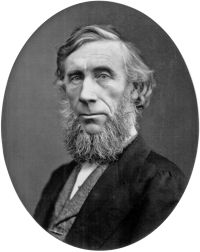
The history of knowledge reveals a profound epistemological shift, pivoting from a mode of inquiry rooted in pure reason and contemplation to one that demands rigorous empirical validation [1, 2]. The archetypal ancient philosopher sought to comprehend the world through introspection and deduction, attempting to bring sensory experience under the control of rational thought without the notion of controlled experimentation . This approach trusted in the power of the mind to discern the fundamental order of the cosmos, viewing the universe as a system of causes and effects to be understood through logical demonstration rather than direct manipulation [3].
This intellectual tradition eventually confronted a new paradigm, one that grew suspicious of 'arm-chair' speculation and championed a more intimate engagement with the material world [4]. The emerging consensus insisted that even the most elegant reasoning, including mathematical demonstration, must be verified by observation and experiment before it could be trusted as a true representation of reality [5]. This development poses a central question: did the rise of the experimental method simply replace the contemplative tradition, or did it initiate a more complex and enduring dialogue between theory and evidence? The persistence of theoretical frameworks and the acknowledged limitations of purely empirical data suggest that the philosopher's role did not vanish but was fundamentally redefined, creating a necessary, albeit often tense, synthesis of rational insight and empirical grounding [6, 7, 8].
The dominion of a priori reason
The classical philosophical method was built upon the supremacy of a priori reason, where knowledge was derived from first principles and universal truths accessed through intellect rather than the senses [9]. In this framework, proper demonstration had to proceed from causes that were primary, true, and more fundamental than the conclusions they supported . The philosopher's task was to ascend from the messy and particular world of sensory experience to the clean and universal realm of ideas and forms [10]. This intellectual pursuit valued internal consistency and logical rigor above all, operating on the belief that the structure of reality could be mapped by the structure of thought itself, a process that could be derailed if one became lost in the labyrinth of mere appearances .
This approach was not an idle exercise but a deliberate effort to impose rational order on a seemingly chaotic world . It sought to uncover an immutable natural law through contemplation, believing that a comprehensive understanding of the whole could be achieved without the need to test its individual components experimentally . The process was largely deductive, beginning with axioms or self-evident truths and reasoning downwards to specific conclusions, a method that saw little need for the kind of empirical verification that would later become the hallmark of science [11]. The ultimate goal was to move beyond the subjective and transient to grasp objective, eternal principles .
From a modern empirical perspective, the limitations of a system reliant solely on reason are apparent. Francis Bacon, a pivotal figure in the transition, identified the fallibility of 'natural human reason left to itself,' arguing that the impressions of the senses could be erroneous and that demonstrations themselves could establish faulty systems of philosophy if based on flawed first principles [12]. Without the corrective feedback of experimentation, a philosophical system could become an elaborate but hollow construct, detached from the reality it purported to explain [13]. The ancient philosopher's lack of a mechanism for systematic, controlled testing meant there was little to prevent error from being codified into doctrine .
The mandate of experience: The rise of the experimental philosopher
In response to the perceived limits of pure speculation, a new intellectual figure emerged: the 'experimental philosopher' [14]. This individual was defined not by their contemplative prowess but by their mastery of experiment, becoming the archetype of a new way of knowing [15]. The core tenet of this rising philosophy was that the highway to understanding nature's secrets was experimentation, and its watchword was demonstration—not through abstract logic, but through proofs that could appeal directly to the senses [16]. This marked a conscious turn away from established authorities and textual traditions in favor of direct engagement with the physical world [17].
The new method was characterized by a systematic process of observation, reasoning, and, crucially, re-testing. Figures like Peregrinus were praised for their methodical approach: experimenting, observing, drawing conclusions, and then subjecting those conclusions to further experimental trials before accepting them as valid [18]. This iterative cycle stood in stark contrast to the deductive finality sought by earlier thinkers. It embodied a newfound humility, an acknowledgment that human reason required the discipline of empirical validation to avoid error . This spirit was famously articulated by Francis Bacon, who argued that while experience is the best form of demonstration, the way experiments were commonly conducted was often 'blind and stupid,' necessitating a more organized and purposeful approach to inquiry [19].
This empirical mandate fundamentally altered the relationship between the knower and the known. The experimental philosopher's role was not merely to observe nature but to actively 'combine the conditions of Nature and to produce her results,' as exemplified by the work of Darwin [20]. Knowledge was no longer just to be received through contemplation but actively constructed through intervention and measurement . The distrust of 'arm-chair' speculation became a core intellectual virtue, establishing a new criterion for truth based on observable, verifiable, and repeatable phenomena .
A necessary dialogue: The symbiosis of theory and experiment
The ascendancy of empiricism did not, however, lead to the complete erasure of theoretical philosophy. A simple narrative of replacement overlooks the complex interdependence that developed between theory and practice. It was soon recognized that empirical knowledge derived from 'the observation of detached facts' is insufficient on its own [21]. Raw data requires a hypothesis or a broader theoretical framework to bring it into accordance with other facts and ultimately reveal the underlying laws of nature [22]. Experimentation without a guiding theory can be as blind as a theory without experimental proof .
A more nuanced view sees philosophy and science engaged in a symbiotic relationship. Philosophy can be understood as 'critically empirical,' a discipline that accepts the findings of experimental research but seeks to transcend them by understanding science as a whole and examining its foundational assumptions . In this model, the philosopher provides the critical, high-level perspective that contextualizes scientific discovery . Conversely, even highly abstract philosophy benefits from empirical grounding; rational concepts are confirmed and supplemented by empirical disciplines, creating a more complete and robust system of knowledge [23]. The ultimate goal is to make theories submit to practical tests while ensuring that practice itself is scientific and embodies the most reasonable ideas available [24].
This dynamic interplay acknowledges that different types of questions require different methods. While science aims to express physical phenomena in mathematical terms, it is recognized that for the foreseeable future there will be room for both the 'philosophical experimenter and the mathematician' . Some of the most powerful scientific theories, such as evolution, gain acceptance not through direct experimental demonstration, which may be impossible, but through their 'general harmony with scientific thought' and their ability to cohesively explain a vast range of observations [25]. This illustrates that the pursuit of knowledge is not a monolithic enterprise but a diverse ecosystem of methods, where theoretical construction and empirical testing mutually inform and constrain one another.
The intellectual journey from the ancient contemplative thinker to the modern experimental scientist represents a fundamental reorientation of the human quest for knowledge. The classical philosopher's reliance on a priori reason and universal demonstration was challenged and largely superseded by a new imperative for empirical verification . The philosopher who once gazed inward for truth was joined, and in many domains replaced, by one who looked outward, demanding that all claims be subjected to the rigorous scrutiny of observation and experiment . This shift is powerfully symbolized by the artisan standing at the door of the philosopher's study, ready to transform abstract ideas into tangible realities suited for human life [26].
Yet, this transition did not result in the simple triumph of experiment over theory. Instead, it forged a new, indispensable synthesis. As thinkers like Kant proposed, some structures of knowledge may rise above the sphere of possible experience, providing the very framework that makes empirical cognition possible [27, 28]. The modern search for truth thrives in the dynamic tension between these two poles. Philosophy becomes 'critically empirical,' providing the conceptual architecture and critical oversight for scientific inquiry, while science provides the hard data that grounds, refines, and sometimes refutes philosophical speculation . The most profound understanding emerges from this perpetual dialogue, where the courage of theoretical imagination is tempered by the discipline of experimental verification, ensuring that our grasp of reality is both expansive and securely anchored [29].