 Samuel Taylor Coleridge,
Specimens of the Table Talk of Samuel Taylor Coleridge
Samuel Taylor Coleridge,
Specimens of the Table Talk of Samuel Taylor Coleridge
“ Facts, you know, are not truths; they are not conclusions; they are not even premisses, but in the nature and parts of premisses. ”
A fact is a true piece of information about reality, distinct from beliefs, theories, or values. It can be verified through observation, independent of subjective interpretation. Authors have long wrestled with its nature: Coleridge distinguished facts as premises, not conclusions; Royce framed them as elements of the world’s unity; Sumner viewed social norms as factual realities; Muir questioned anthropocentric claims about nature’s design.
James emphasized the interplay between truth and factual statement. These perspectives reveal facts as both objective standards and contextually shaped constructs, reflecting the tension between empirical reality and human interpretation.
Samuel Taylor Coleridge,
Specimens of the Table Talk of Samuel Taylor Coleridge
“ Facts, you know, are not truths; they are not conclusions; they are not even premisses, but in the nature and parts of premisses. ”
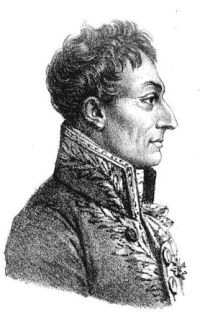 C.-F. Volney,
The Ruins; Or, Meditation on the Revolutions of Empires and the Law of Nature
C.-F. Volney,
The Ruins; Or, Meditation on the Revolutions of Empires and the Law of Nature
“ Our understanding, confounded and amazed at so many statements, some of them learned, others absurd and all incomprehensible, remains in uncertainty and doubt. One only reflection has struck us: on reviewing so many prodigious facts, so many contradictory assertions, we ask ourselves: What are all these discussions to us? ”
 Josiah Royce,
The World and the Individual, First Series
(1899)
Josiah Royce,
The World and the Individual, First Series
(1899)
“ Our very theory insists that your internal meanings, your ideas viewed as internally significant, your selections and expressions, are typical instances of facts, and of precisely the facts of whose unity the world consists. ”
 William Graham Sumner,
Folkways
William Graham Sumner,
Folkways
“ The justification of them is that when we wake to consciousness of life we find them facts which already hold us in the bonds of tradition, custom, and habit. The mores contain embodied in them notions, doctrines, and maxims, but they are facts. ”
 Francis Galton,
Inquiries into Human Faculty and Its Development
Francis Galton,
Inquiries into Human Faculty and Its Development
“ Putting these, then, at least for the moment, to one side, we find ourselves face to face with two great and indisputable facts that everywhere force themselves on the attention and compel consideration. ”
William James, The Meaning of Truth
“ The great shifting of universes in this discussion occurs when we carry the word 'truth' from the subjective into the objective realm, applying it sometimes to a property of opinions, sometimes to the facts which the opinions assert. ”
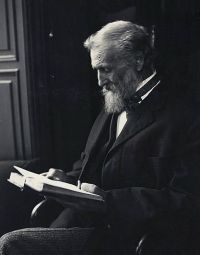 John Muir,
A Thousand-Mile Walk To The Gulf
(1916)
John Muir,
A Thousand-Mile Walk To The Gulf
(1916)
“ The world, we are told, was made especially for man—a presumption not supported by all the facts. ”
W. Grant Hague, The Eugenic Marriage, Volume 3…
“ They drew the attention of mankind to the reality of a certain immutable fact. These truths, these principles, these facts, have all been tested, and they have been found to be everlasting. In other words, we find there are certain truths, certain principles, certain facts, that every living thing must obey, must subscribe to, must live up to or perish. ”
Charles J. Callan, Moral Theology
“ Thus, knowledge of general principles must be applied to particular affairs, and this supposes that one knows how to reason correctly, how to infer the particular from the general, how to put facts together. ”
 William Edward Hartpole Lecky,
Historical and Political Essays
William Edward Hartpole Lecky,
Historical and Political Essays
“ The [2] power of vividly realising and portraying men, or societies or modes of thought that have long since passed away; the power of arranging and combining great multitudes of various facts; the power of judging with discrimination, accuracy, and impartiality conflicting arguments or evidence; the power of tracing through the long course of events the true chain of cause and effect, selecting the facts that are most valuable and significant and explaining the relation between general causes and particular effects, are all very different and belong to different types of mind. ”
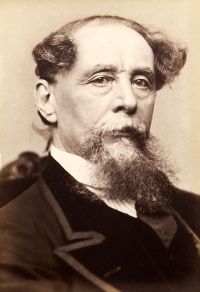 Charles Dickens,
Hard Times
(1854)
Charles Dickens,
Hard Times
(1854)
“ THE ONE THING NEEDFUL‘Now, what I want is, Facts. Teach these boys and girls nothing but Facts. Facts alone are wanted in life. Plant nothing else, and root out everything else. You can only form the minds of reasoning animals upon Facts: nothing else will ever be of any service to them. This is the principle on which I bring up my own children, and this is the principle on which I bring up these children. Stick to Facts, sir!’ ”
Josiah Royce,
The Sources of Religious Insight
“ And, furthermore, what I have asserted about the insight which the reason gives us is so far from being opposed to the pragmatist's facts, that every rational consideration of the type of truth which they define leads us back to the consideration of absolute truth and to the assertion of an all-inclusive insight. ”
 Voltaire,
Voltaire's Philosophical Dictionary
Voltaire,
Voltaire's Philosophical Dictionary
“ Humanly speaking, let us define truth, while waiting for a better definition, as—"a statement of the facts as they are." ”
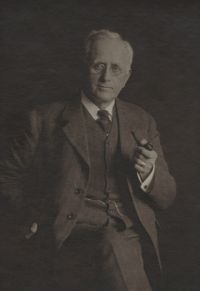 A. C. Seward,
Darwin and Modern Science
A. C. Seward,
Darwin and Modern Science
“ There has been, as in art, a study of values, which secures perspective and solidity in our representation of facts. On the one hand, a given utterance or event cannot be drawn into evidence as if all items were of equal consequence, like sovereigns in a bag. ”
 Joseph Jacobs,
Literary studies by Joseph Jacobs
(1896)
Joseph Jacobs,
Literary studies by Joseph Jacobs
(1896)
“ What strikes one in his criticisms of life even more than their penetration is their sanity and completeness. Many a controversial victory he has won in discussions about letters or life, or sometimes even in politics, by attending to the one question, What are the actual and complete facts of the case? He takes human nature all round, and sees how far a proposed remedy answers to all its needs. ”
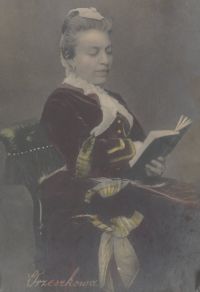 Eliza Orzeszkowa,
An Obscure Apostle: A Dramatic Story
Eliza Orzeszkowa,
An Obscure Apostle: A Dramatic Story
“ But in order to bring out facts and figures they must be thrown against the background on which they have risen and developed, and in the deep perspectives of which there are elements which are the causes of their existence. ”
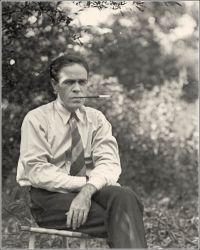 Milo Hastings,
The Book of Gud
Milo Hastings,
The Book of Gud
“ Therefore the great truth of moral principle should be regarded above the smaller truths of material facts and mental logic—and many of the inhabitants of your world, if I know mortal nature, will agree with me. ”
 John Stuart Mill,
On Liberty
(1869)
John Stuart Mill,
On Liberty
(1869)
“ There must be discussion, to show how experience is to be interpreted. Wrong opinions and practices gradually yield to fact and argument: but facts and arguments, to produce any effect on the mind, must be brought before it. ”
R. Austin Freeman, The Mystery of 31 New Inn
“ Of the facts that are known to us we invent certain explanations. From each of those explanations we deduce consequences; and if those consequences agree with new facts, they confirm the explanation, whereas if they disagree they tend to disprove it. ”
 Walter Lippmann,
Public Opinion
Walter Lippmann,
Public Opinion
“ It is often very illuminating, therefore, to ask yourself how you got at the facts on which you base your opinion. Who actually saw, heard, felt, counted, named the thing, about which you have an opinion? ”
Samuel Taylor Coleridge,
The Literary Remains of Samuel Taylor Coleridge…
“ It is of the utmost importance, wherever clear and distinct conceptions are required, to make out in the first instance whether the term in question, or the main terms of the question in dispute, represents or represent a fact or class of facts simply, or some self-established and previously known idea or principle, of which the facts are instances and realizations, or which is introduced in order to explain and account for the facts. ”
 Alfred North Whitehead,
Science and the modern world
(1925)
Alfred North Whitehead,
Science and the modern world
(1925)
“ This new tinge to modern minds is a vehement and passionate interest in the relation of general principles to irreducible and stubborn facts. All the world over and at all times there have been practical men, absorbed in ‘irreducible and stubborn facts’: all the world over and at all times there have been men of philosophic temperament who have been absorbed in the weaving of general principles. It is this union of 4passionate interest in the detailed facts with equal devotion to abstract generalisation which forms the novelty in our present society. ”
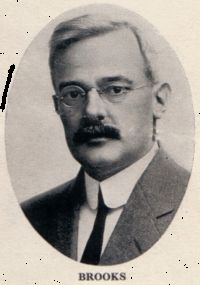 Stratton D. Brooks,
Composition-Rhetoric
Stratton D. Brooks,
Composition-Rhetoric
“ Summary.+—To summarize the preceding paragraphs, the authority we quote, the maxims we state, the facts we adduce become valuable because they appeal to general theories already believed by the reader. Success in argument demands, therefore, that we consider carefully what theories may probably be in the mind of our audience, and that we present our argument in such a way as to appeal to those theories. ”
 G. K. Chesterton,
The Club of Queer Trades
G. K. Chesterton,
The Club of Queer Trades
“ “On what else is the whole world run but immediate impressions? What is more practical? My friend, the philosophy of this world may be founded on facts, its business is run on spiritual impressions and atmospheres. ”
 Rabindranath Tagore,
Sadhana : the realisation of life
Rabindranath Tagore,
Sadhana : the realisation of life
“ Facts are many, but the truth is one. ”
 Henry David Thoreau,
Autumn
(1892)
Henry David Thoreau,
Autumn
(1892)
“ My facts shall all be falsehoods to the common sense. I would so state facts that they shall be significant, shall be myths or mythologic, facts which the mind perceived, thoughts which the body thought, with these I deal. ”
 Joseph Conrad,
Lord Jim
(1900)
Joseph Conrad,
Lord Jim
(1900)
“ They wanted facts. Facts! They demanded facts from him, as if facts could explain anything! ”
 Harriet Martineau,
Society in America, Volume 2 (of 2…
Harriet Martineau,
Society in America, Volume 2 (of 2…
“ Meantime, some prominent facts appear to stand out from their history and condition, which it may be useful to recognise, while refusing to pronounce upon their positive or comparative virtue and happiness. ”
Frederic DeWitt Wells, The Man in Court
“ Given a man's condition in life, his habits, his occupation, his church, his associations, his politics, and given on the other hand a certain state of facts, it is nearly ascertainable how he is going to decide those facts. ”
Alfred North Whitehead,
Science and the modern world
(1925)
“ They are seeking to go behind stubborn and irreducible facts: they wish to explain in the light of universal principles the mutual reference between the various details entering into the flux of things. ”
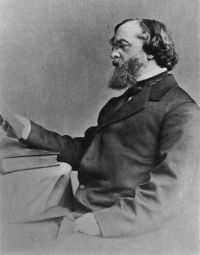 James Freeman Clarke,
Orthodoxy: Its Truths And Errors
James Freeman Clarke,
Orthodoxy: Its Truths And Errors
“ By substantial truth we mean this—that in all the great systems of opinion which have had a deep hold on the human mind, over broad spaces and through long periods, there is something suited to man's nature, and corresponding with the facts of the case. ”
Dugald Mackichan, Convocation Addresses of the Universities of Bombay and Madras (1892)
“ Experiment and observation, contact with facts and laws independent of our subjectivity, and marked by all the features of a commanding reality, are calculated to correct this one-sidedness, to awaken deeper convictions with regard to the absoluteness of truth and with this strengthened love of truth and reverence for truth to help forward the development of the moral and higher side of man's intellectual life. ”
John Theodore Merz and Henry Sturt, 1911 Encyclopædia Britannica, Volume 17… (1911)
“ To comprehend the real position we are forced to the conviction that the world of facts is the field in which, and that laws are the means by which, those higher standards of moral and aesthetical value are being realized ”
 Thomas Paine,
The Writings of Thomas Paine, Complete
Thomas Paine,
The Writings of Thomas Paine, Complete
“ Before anything can be reasoned upon to a conclusion, certain facts, principles, or data, to reason from, must be established, admitted, or denied. ”
Charles Dickens,
Hard Times — Book the First, Chapter I
(1854)
“ "In this life, we want nothing but Facts, sir; ”
 Henry White Warren,
Among the Forces
Henry White Warren,
Among the Forces
“ Whilst common sense looks at things or visible nature as real and final facts, poetry, or the imagination which dictates it, is a second sight, looking through these, and using them as types or words for thoughts which they signify. ”
 Samuel McChord Crothers,
The Gentle Reader
Samuel McChord Crothers,
The Gentle Reader
“ The trouble with facts is that there are so many of them. ”
 Edmund Burke,
The Works of the Right Honourable Edmund Burke…
Edmund Burke,
The Works of the Right Honourable Edmund Burke…
“ Such are the arguments that are used, both publicly and privately, in every discussion upon this point. They are generally full of passion and of error, and built upon facts which in themselves are most false. ”
 George E. Ellis,
The Red Man and the White Man in North America
(1882)
George E. Ellis,
The Red Man and the White Man in North America
(1882)
“ Of course common-sense, after all, must be trusted on such themes to draw the line not only between opinions and theories, but even in the statement and interpretation of facts, as they come from romancers, sentimentalists, idealists, and philanthropists, or from literal, practical, matter-of-fact persons, speaking from experience. ”
 Thomas Henry Huxley,
Evidence as to Man's Place in Nature
(1863)
Thomas Henry Huxley,
Evidence as to Man's Place in Nature
(1863)
“ Eschewing all expressions of opinion on controverted points of science, philosophy, religion, and politics, it aims at an accurate representation of facts and institutions, of the results of physical research, of the prominent events in the history of the world, of the most significant productions of literature and art, and of the celebrated individuals whose names have become associated with the conspicuous phenomena of their age—doing justice to all men, all creeds, all sections. ”
 Ernest Naville,
The Heavenly Father: Lectures on Modern Atheism
Ernest Naville,
The Heavenly Father: Lectures on Modern Atheism
“ With this reservation, we may say that the control of moral truths is made by experience like that of physical truths. In all departments of knowledge, a thought may be held as true when it accounts for facts. ”
 Victor Hugo,
Les Misérables
(1862)
Victor Hugo,
Les Misérables
(1862)
“ Nevertheless, these details, which are wrongly called trivial,—there are no trivial facts in humanity, nor little leaves in vegetation,—are useful. ”
Thomas Henry Huxley,
Aphorisms and Reflections from the Works of T. H. Huxley
“ My business is to teach my aspirations to confirm themselves to fact, not to try and make facts harmonize with my aspirations. ”
John Stuart Mill,
Autobiography
“ The practical reformer has continually to demand that changes be made in things which are supported by powerful and widely-spread feelings, or to question the apparent necessity and indefeasibleness of established facts; and it is often an indispensable part of his argument to show, how those powerful feelings had their origin, and how those facts came to seem necessary and indefeasible. ”
 Charles Darwin,
On The Origin of Species
(1859)
Charles Darwin,
On The Origin of Species
(1859)
“ A fair result can be obtained only by fully stating and balancing the facts and arguments on both sides of each question; ”
 Ralph Chaplin,
The Centralia Conspiracy
Ralph Chaplin,
The Centralia Conspiracy
“ The facts will speak for themselves. Credit them or not, but read! ”
William Graham Sumner,
The Forgotten Man, and Other Essays
(1918)
“ It consists in the impression made on the mind for the time being by a particular fact, or by the interests of a particular group of persons, to which attention is directed while other facts or the interests of other persons are entirely left out of account. ”
 Alfred H. Lloyd,
The will to doubt
Alfred H. Lloyd,
The will to doubt
“ Our life is ever cherishing what we are pleased to call its verities, some in religion and morals, some in politics, some in mathematics and science, some in the more general relations to nature, but what elusive things these verities are! ”
 Ralph Waldo Emerson,
Miscellanies
(1855)
Ralph Waldo Emerson,
Miscellanies
(1855)
“ Only as far as that shines through them, are these times or any times worth consideration. I wish to speak of the politics, education, business, and religion around us, without ceremony or false deference. You will absolve me from the charge of flippancy, or malignity, or the desire to say smart things at the expense of whomsoever, when you see that reality is all we prize, and that we are bound on our entrance into nature to speak for that. ”
“ But how do we human beings get at what we call natural truth? By observation—so men say—and by experience. But by whose experience? By the united, by the synthesized, by the revised, corrected, rationally criticized, above all by the common, experience of many individuals. ”
Samuel Taylor ColeridgeJosiah RoyceWilliam Graham SumnerCharles DickensThomas Henry HuxleyAlfred North WhiteheadJohn Stuart MillC.-F. VolneyW. Grant HagueJohn MuirWilliam JamesFrancis GaltonA. C. SewardJoseph JacobsWilliam Edward Hartpole LeckyCharles J. CallanMilo HastingsEliza OrzeszkowaR. Austin FreemanWalter LippmannThe journey to the moon was driven by data, but human understanding of space is perpetually split between empirical facts and the spiritual need for narrative. From detailed NASA reports to Emerson's insight on the 'baldness of the fact,' the tension between science and fable remains central to human thought.
In clandestine criminal cases, guilt often rests entirely on the compilation of surrounding facts. This inferential reliance clashes with the high judicial standard of moral certainty. The legitimacy of legal accountability depends on excluding all reasonable alternative explanations for the assembled evidence.
The legal battle against generative AI infringement centers on a centuries-old dilemma: distinguishing between human creativity and mechanical reproduction. From photography to digital models, courts consistently rule that skillful labor alone does not grant copyright if the product is designed solely to be a copy.
From Oscar Wilde's radical defense of artifice and 'lying' as civilizing forces to Lavoisier's warning against self-deception, the war between fantasy and fact has long defined human knowledge. Science depends on creative leaps, but only rigorous observation can prevent hypothesis from degenerating into extravagance.
Is value inherent in the object or projected by the observer? An analysis of the philosophical battle between objective truth and subjective conviction, revealing how everything from personal identity to massive social events derives its meaning from the fusion of what is real and what is felt.
The objective facts established by clinical investigation are inherently limited. Memory is an active force that transforms sterile data into luminous, ritualized experiences, fusing mechanical recollection with spiritual purpose to construct personal and collective history.
Pure science seeks truth without regard for utility; popular education demands immediate application. This historical clash has led to a pedagogical failure where book-based learning and 'frothy' dissemination create superficial scientific literacy. Reforming education requires teachers to become investigators and prioritizing the scientific habit of mind.
Scientific inquiry is perpetually caught between its commitment to objective truth and the political necessity of utility. When findings challenge the status quo, governments risk suppressing knowledge, promoting ignorance, and degrading pure research in favor of dogma.
