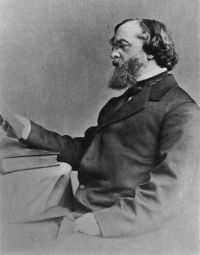
James Freeman Clarke

James Freeman Clarke

Summary

Portrait of James Freeman Clarke James Freeman Clarke Orthodoxy: Its Truths And Errors

What to the sinner, borne down by the mighty weight of transgression? What to the dying man, who knows not how to prepare to meet his God? We need the Church of Christ—the Church whose great aim it is, and always has been, to renew and regenerate the soul from its foundation, to lay the axe at the root of the tree of evil, and the very sound of whose bell, rolling its waves of music over the sleeping hills on the Sabbath morning, is worth more to the soul than a thousand lyceums and debating societies.
Source: Gutenberg

Portrait of James Freeman Clarke James Freeman Clarke Orthodoxy: Its Truths And Errors

The Trinity, truly received, would harmonize science, faith, and vital piety. The Trinity, as it now stands in the belief of Christendom, at once confuses the mind, and leaves it empty. It feeds us with chaff, with empty phrases and forms, with no real inflowing convictions. It seems to lie like a vessel on the shore, of no use where it is, yet difficult to remove and get afloat; but when the tide rises, and the vessel floats, it will be able to bear to and fro the knowledge of mankind, and unite various convictions in living harmony.
Source: Gutenberg

Portrait of James Freeman Clarke James Freeman Clarke Orthodoxy: Its Truths And Errors

This is what we need for comfort, for no hardship would seem hard while we were thus looking at the things which are eternal, and knowing that every light affliction works out an eternal weight of glory. This is what we need for improvement. For no efforts at improvement can accomplish that which this inward inspiration can do. It is a tide which bears us on. It takes from us the weight of years. It is the sap which rises into every branch, penetrates every twig, swells the buds, expands the leaves, opens the blossoms, ripens the fruit, and causes universal growth.
Source: Gutenberg

Get perspective with Kwize: daily news enlightened by great literature