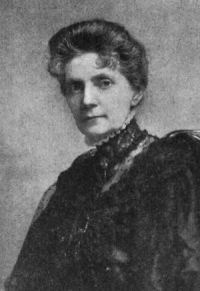
“ But when, on the contrary, one accepts a logical and luminous system of thought, a revelation which offers an explanation of the mystery of being entirely consistent with reason, you think that very remarkable! ”
Explanation
Definition and stakes
An explanation is a collection of statements that clarify the causes, background, and outcomes of facts, often through principles or laws. Philosophers and writers have examined it from various perspectives: Christian Reid focused on logical systems that align with reason, while William James associated it with mental states as observable facts.
Carl Jung promoted simplifying complexity, and Josiah Royce tied explanation to action and understanding. These perspectives demonstrate how explanation connects scientific precision with everyday comprehension, striving to convert knowledge into understandable structures rather than simply stating facts.
Quotes about “explanation”
 Letitia Elizabeth Landon,
Theresa
(1832)
Letitia Elizabeth Landon,
Theresa
(1832)
“ But as our explanation will be more brief than one broken in upon by words of wonder, regret, and affection, we will proceed to it; holding that explanation, like advice, should be of all convenient shortness. ”
Carl Gustav Jung, Collected Papers on Analytical Psychology… (1916)
“ Proceeding purely reductively, one discovers the final meaning in these universal human things; and demands nothing further from an explanation than that the unknown and complicated shall be reduced to the known and simple. ”
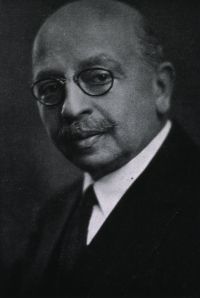 Joseph Jastrow,
Popular Science Monthly
(1904)
Joseph Jastrow,
Popular Science Monthly
(1904)
“ The explanation in philosophical terms of thought and reality has usurped, in his opinion, the larger, more fruitful as well as more hopeful interest in the functional manifestations of the deeper, more universal and significant aspects of mind. ”
 Josiah Royce,
The Sources of Religious Insight
Josiah Royce,
The Sources of Religious Insight
“ As a result we shall soon find that, just as our first statement of the insight of reason, if indeed it is a true statement, transforms our view of the sense in which the world is real, so a deeper study of the relations of insight to action transforms our first cruder notion of the reason itself, of its office in life, and of the truth that it reveals. ”
William James, The Philosophical Review (1892)
“ Now the sort of 'fact of experience' on which in my book I have proposed to compromise, is the so-called 'mental state,' in whose existence not only common men but philosophers have uniformly believed. ”
David Masson, The Three Devils: Luther's, Milton's…
“ Soul, mind, spirit, these old and simple words are the strongest, the profoundest, the surest; age cannot antiquate them, nor science undo them; they last with the rocks, and still go beyond. But, having in view rather the operation than the cause, we find a use also in such alternative phrases as “mode of thinking,” “mode of feeling and thinking,” “habit of thought,” “moral and intellectual character or constitution,” and the like. ”
 Johann Gottlieb Fichte,
Sun-Clear Statement — First Conversation
(1868)
Johann Gottlieb Fichte,
Sun-Clear Statement — First Conversation
(1868)
“ To begin, you surely know how to distinguish the really actual, that which is the true fact of your present experience and life, or that which you actually live and experience, from the non-actual, the merely imagined. ”
William James, Essays in Radical Empiricism
“ On the principles which I am defending, a ‘mind’ or ‘personal consciousness’ is the name for a series of experiences run together by certain definite transitions, and an objective reality is a series of similar experiences knit by different transitions. ”
 Georg Wilhelm Friedrich Hegel,
The Logic of Hegel
Georg Wilhelm Friedrich Hegel,
The Logic of Hegel
“ And the unutterable,—feeling or sensation,—far from being the highest truth, is the most unimportant and untrue. If I say 'The individual,' 'This individual,' 'here,' 'now,' all these are universal terms. Everything and anything is an individual, a 'this,' and if it be sensible, is here and now. ”
 Jonathan Edwards,
Selected Sermons of Jonathan Edwards
Jonathan Edwards,
Selected Sermons of Jonathan Edwards
“ But if we take reason strictly, not for the faculty of mental perception in general, but for ratiocination, or a power of inferring by arguments; I say, if we take reason thus, the perceiving of spiritual beauty and excellency no more belongs to reason than it belongs to the sense of feeling to perceive colors, or to the power of seeing to perceive the sweetness of food. ”
 Clement of Alexandria,
Ante-Nicene Christian Library/Volume XII
(1869)
Clement of Alexandria,
Ante-Nicene Christian Library/Volume XII
(1869)
“ And sometimes we may know some one or more of those powers or properties,—as, for example, the desires and affections of the soul,—and be ignorant of the essence, and make it the object of investigation. ”
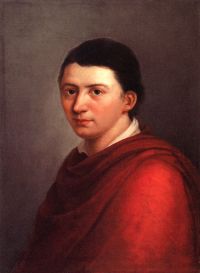 Friedrich von Schlegel,
The philosophy of life, and philosophy of language…
Friedrich von Schlegel,
The philosophy of life, and philosophy of language…
“ On the other side, the distinguishing and discerning reason comes in with its questions and doubts, and chemical analysis, to resolve every thing finally into naught, and to explain all the conceptions of the mind as groundless and unsubstantial, as so many pure illusions of the senses, conceits of caprice, prejudices of a limited understanding, and mere pictures or creations of fancy. ”
Boyd Henry Bode, Creative Intelligence: Essays in the Pragmatic Attitude
“ By definition, reason and experience were antithetical, so that the concern of reason was not the fruitful expansion and guidance of the course of experience, but a realm of considerations too sublime to touch, or be touched by, experience. ”
“ But how do we human beings get at what we call natural truth? By observation—so men say—and by experience. But by whose experience? By the united, by the synthesized, by the revised, corrected, rationally criticized, above all by the common, experience of many individuals. ”
William James, The Will to Believe, and Other Essays in Popular Philosophy
“ I mean by this that the conceiving or theorizing faculty—the mind's middle department—functions exclusively for the sake of ends that do not exist at all in the world of impressions we receive by way of our senses, but are set by our emotional and practical subjectivity altogether. [2] It is a transformer of the world of our impressions into a totally different world,—the world of our conception; and the transformation is effected in the interests of our volitional nature, and for no other purpose whatsoever. ”
 James Frederick Ferrier,
Blackwood's Magazine
(1842)
James Frederick Ferrier,
Blackwood's Magazine
(1842)
“ I assent to the veracity of sense, and I believe that the very perception or sensible image is the external object, and on no account whatever will I consent 'to disclaim this principle.' Your philosophy—your more rational opinions— representation—your reasonings which, you say, necessitate me to depart from my primary instincts—all these I give, without reservation, to the winds. ”
 Edwin Abbott Abbott,
The Kernel and the Husk
(1886)
Edwin Abbott Abbott,
The Kernel and the Husk
(1886)
“ Reason (or, as some prefer to call it in this limited sense, Understanding) is the power by which we compare, and, from our comparisons, draw inferences or conclusions. By means of it we compare the suggestions of the Imagination with the suggestions of Experience, and accept or reject the former in accordance with the result of our comparison. xii. Hope Hope is desire, of which we imagine the fulfilment, while recognizing the presence of doubt. ”
George Henry Dole, The Philosophy of Creation (1906)
“ Thus as perceptions, which are first, are the conclusions of reason, so the facts of true revelation, being given, become the conclusions of all sound logic; for every truth of the Word can be confirmed by irrefutable reasoning. ”
 G. E. Moore,
Philosophical Studies
G. E. Moore,
Philosophical Studies
“ And other philosophers have suggested that what we mean by "real" is—"connected in some way with a purpose—helping or hindering, or the object of a purpose." But if we look into their meaning, we find they mean—connected with a real purpose. ”
Friedrich von Schlegel,
The philosophy of life, and philosophy of language…
“ As the fancy is the apprehension or seizing of an object, the reason a combination or distinction, so the understanding is the faculty which penetrates, and, in its highest degree, clearly sees through its object. We understand a phenomenon, a sensation, an object, when we have discerned its inmost meaning, its peculiar character and proper significance. ”
George Henry Dole, Divine Selection or The Survival of the Useful (1903)
“ We may conclude with logic as sound and certain as is used in any scientific deduction, that every sense, faculty, and hope of the human soul has an objective reality in relation to which it is developed as surely as the wing argues an atmosphere, or the eye an ether. ”
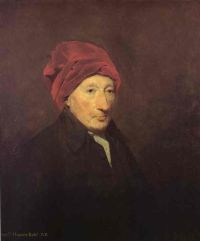 Thomas Reid,
An Inquiry into the Human Mind…
Thomas Reid,
An Inquiry into the Human Mind…
“ As it is experience only that discovers these connections between natural causes and their effects; without inquiring further, we attribute to the cause some vague and indistinct notion of power or virtue to produce the effect. ”
Alexander Campbell Fraser, Thomas Reid
“ Advance in philosophy is advance in interpreting the meaning of each of these three postulates, and of their mutual relations, as seen in an improved conception of what ‘matter’ means, what ‘self’ means, and what ‘God’ means. ”
Robert Flint, Theism; being the Baird Lecture of 1876
“ And its First Cause, I must proceed to remark, reason and observation alike lead us to believe must be one—a single cause. When one First Cause is sufficient to explain all the facts, it is contrary to reason to suppose another or several. ”
Josiah Royce,
The Sources of Religious Insight
“ But the universal form in which any opinion comes to your consciousness, and gets its definition for your own mind, is this form of an appeal to an insight that is superior in grasp, in unity, in coherence, in reasonableness to your momentary insight. ”
Martha Evans Martin, The Ways of the Planets
“ What we wish to contemplate here are the plain facts, the knowledge of which enlivens and enriches one’s mind and nature. If the contemplation of them kindles one’s fancy or excites one’s emotions, these results at least will not be second-hand. ”
 George Edward Moore,
Principia Ethica — Chapter VI
(1903)
George Edward Moore,
Principia Ethica — Chapter VI
(1903)
“ Connected with the distinction just made between ‘object’ in the sense of the qualities actually before the mind and ‘object’ in the sense of the whole thing which possesses the qualities actually before the mind, is another distinction of the utmost importance for a correct analysis of the constituents necessary to a valuable whole. ”
Josiah Royce,
The World and the Individual, Second Series
(1901)
“ What I say is that our present recognition of the concrete things in which we all believe is not a mere acceptance of any content of sense, but does include an intention to act, and does fulfil, as far as it goes, a purpose, and our own conscious purpose. ”
William James, Psychology: Briefer Course
“ But truly in comparison with the wonderful fact that our thoughts, however different otherwise, can still be of the same, the question whether that same be a single thing, a whole class of things, an abstract quality or something unimaginable, is an insignificant matter of detail. Our meanings are of singulars, particulars, indefinites, problematics, and universals, mixed together in every way. ”
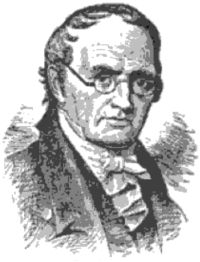 Robert Waln,
Observations on the Sermons of Elias Hicks
Robert Waln,
Observations on the Sermons of Elias Hicks
“ There is a clear distinction between things which are according to, above, and contrary to, reason. The first are propositions, the truth of which may be discovered by the use of the ideas we have acquired from sensation and reflection. ”
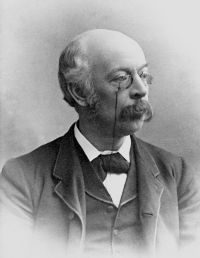 Robert Adamson,
Fichte — Chapter VIII. Concluding Remarks
(1881)
Robert Adamson,
Fichte — Chapter VIII. Concluding Remarks
(1881)
“ Under this conception, the oppositions of thought which play so important a part in philosophy,—Being and Thought, Mind and Nature, Soul and Body, Freedom and Law, Natural Inclination and Moral Effort, Mechanism and Teleology,—are reconciled. ”
Georg Wilhelm Friedrich Hegel,
Science of Logic
(1816)
“ Probably nobody will feel disposed to deny that the phenomenal world presents contradictions to the observing mind; meaning by 'phenomenal' the world as it presents itself to the senses and understanding, to the subjective mind. ”
Alexander Campbell Fraser, Thomas Reid — Chapter XI (1898)
“ In short, this postulate is among the inspired revelations of the Common Sense that are contained in our share of Divine Reason. We may speak of understanding as 'human,' with its often discordant generalisations; but there can be no merely 'human' Reason. ”
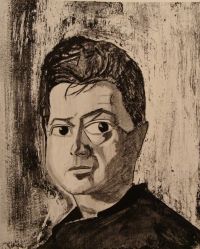 Francis Bacon,
The Works of Francis Bacon
(1884)
Francis Bacon,
The Works of Francis Bacon
(1884)
“ That the majesty of generalities, and the divine nature of the mind in taking them, if they be truly collected, and be indeed the direct reflexions of things, cannot be too much magnified. And that it is true, that interpretation is the very natural and direct intention, action, and progression of the understanding, delivered from impediments. ”
G. E. Moore,
Philosophical Studies
“ What, then, that we observe, can give us any reason for believing that anyone else has certain particular perceptions, thoughts or feelings? It has, I think, been very commonly assumed that the observation of my own perceptions, thoughts, and feelings, can, by itself, give me such a reason. ”
Alexander Campbell Fraser, Thomas Reid (1898)
“ I can only justify them in reason by showing that human nature responds to them, and forbids me to reject them in my actions, on pain of being judged a lunatic, whatever I may say in my speculative theories. 'Such original and natural judgments,' he says, 'are part of the furniture which nature hath given to the human understanding. ”
William James, The Meaning of Truth
“ This notion of a FIRST in the shape of a most chaotic pure experience which sets us questions, of a SECOND in the way of fundamental categories, long ago wrought into the structure of our consciousness and practically irreversible, which define the general frame within which answers must fall, and of a THIRD which gives the detail of the answers in the shapes most congruous with all our present needs, is, as I take it, the essence of the humanistic conception. ”
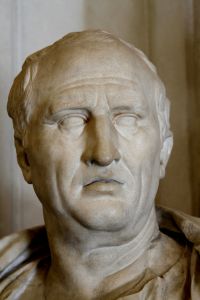 Marcus Tullius Cicero,
The Orations of Marcus Tullius Cicero…
Marcus Tullius Cicero,
The Orations of Marcus Tullius Cicero…
“ But when we speak of a man's habitual condition, we mean his constant and absolute completeness of mind or body, in some particular point—as for instance, his perception of virtue, or of some art, or else some science or other. ”
C. G. Jung, Collected Papers on Analytical Psychology
“ The concept revelation in the sense that quite suddenly, with ineffable certainty and delicacy, something is seen, something is heard, something convulsing and breaking into one's inmost self, does but describe the fact. ”
Infanta of Spain Eulalia, The thread of life
“ By the side of the intellectual element, by which we estimate our thoughts and actions, there is feeling; that is, the sensibility which modifies the judgment and enlightens the deep thought determining our responsibility. ”
William James, The Principles of Psychology, Volume 1…
“ As mere conceptions, the effect-theory and the cause-theory of attention are equally clear; and whoever affirms either conception to be true must do so on metaphysical or universal rather than on scientific or particular grounds. ”
William James, Essays in Radical Empiricism
“ On the subjective side we have a fairly definite picture—sensation, association, interest, hypothesis, these account in a general way for the growth into a cosmos of the relative chaos with which the mind began. ”
William James, The Principles of Psychology, Volume 2…
“ We should propose to ourselves nobler views, namely, to recreate and exalt the mind with a prospect of the beauty, order, extent, and variety of natural things: hence, by proper inferences, to enlarge our notions of the grandeur, wisdom, and beneficence of the Creator," etc., etc., etc. ”
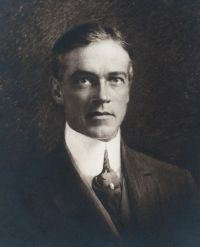 Victor Mapes,
Heart and Soul by Maveric Post
Victor Mapes,
Heart and Soul by Maveric Post
“ My purpose, in imagining these illustrations, was to render obvious and palpable the limitations of the intellect, when it attempts to translate feelings into terms of reason, or when it attempts to substitute scientific calculations for spontaneous emotions. The essence of one is [Pg 177] feeling; the essence of the other is logic ”
 Herbert Spencer,
First Principles
Herbert Spencer,
First Principles
“ Whether the wish is father to the thought, or whether sentiment and idea have a common genesis, there equally arises the question—Whence comes the sentiment? That it is a constituent in man’s nature is implied by the hypothesis ”
Various, British Quarterly Review, American Edition…
“ We have elaborate and almost exhaustive schemes of theories on the nature of perception, or our knowledge of the external world, the laws of association, the problem of causality, and the nature of conscience. ”
Jaime Luciano Balmes, Fundamental Philosophy, Vol. 1…
“ These principles, based on the data of experience,—that is, on sensations the existence of which we know from consciousness, assure us that the objectiveness of sensations, or the reality of the external world, is a truth. ”
Josiah Royce,
The World and the Individual, First Series
(1899)
“ Our very theory insists that your internal meanings, your ideas viewed as internally significant, your selections and expressions, are typical instances of facts, and of precisely the facts of whose unity the world consists. ”
