Robert Flint

Biographical details

Robert Flint,  Theism; being the Baird Lecture of 1876

“ Many of you will remember how Robertson of Brighton,—when describing the crisis of the conflict between doubt and faith in the awful hour in which, as he says, life has lost its meaning, and the grave appears to be the end of all, and the sky above the universe is a dead expanse, black with the void from which God has disappeared,—tells us that he knows but of one way in which a man may come forth from this agony scatheless—namely, by holding fast to those things which are certain still, the grand, simple landmarks of morality. ”
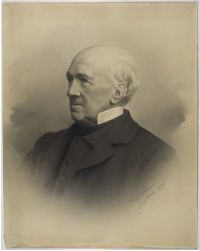
Source: Gutenberg

Robert Flint,  Theism; being the Baird Lecture of 1876

“ Well mayest thou exclaim, 'Is there no God, then; but at best an absentee God, sitting idle, ever since the first Sabbath, at the outside of His universe and seeing it go?' 'Has the word Duty no meaning? is what we call Duty no Divine messenger and guide, but a false earthly phantasm made up of desire and fear?' 'Is the heroic inspiration we name Virtue but some passion; some bubble of the blood, bubbling in the direction others profit by?' I know not; only this I know, if what thou namest Happiness be our true aim, then are we all astray. ”
Source: Gutenberg

Robert Flint,  Encyclopædia Britannica, Ninth Edition (1888)

“ It is absurd to condemn either system or the spirit of system in theology or any other science. To systematize is an intellectual necessity; to systematize aright is a happy achievement and an immense boon ; it is merely systematizing erroneously which is evil. Theology, by professing to be a science, pledges itself to systematize in a scientific manner. By claiming to be the science of religion it undertakes to exhibit the truths of religion in their proper relationship to one another, in their organic unity and essential interdependence. ”
Source: Wikisource

Get perspective with Kwize: daily news enlightened by great literature