AI-generated from sources
The life of resistance: Why true virtue is defined by endurance, not progress
In Brief
- A profound perspective holds that a meaningful life is primarily a continuous act of resistance against internal moral decay and external chaos, rather than a journey of steady progress.
- True virtue is not cultivated in moments of ease or triumph but is forged in the crucible of suffering and hardship, where character is measured by what an individual can withstand.
- Endurance is noble because it involves a 'voluntary defeat of our own unwillingness to endure,' representing the triumph of the rational will over instinctual desires to flee from pain.
- The pathway to moral excellence is depicted as a long, arduous ascent requiring relentless watchfulness, patience, and sustained effort against the forces of entropy.
Main authors


The modern conception of a worthwhile life is often tethered to the idea of progress—a forward and upward trajectory of personal development, achievement, and accumulating well-being [1, 2]. This narrative suggests that through reason, effort, and favorable circumstances, humanity moves toward a better future, both collectively and individually [3, 4]. In this view, virtue is a state to be achieved, a summit reached after a steady climb [5]. However, a more profound and challenging perspective emerges from a deeper examination of human experience, one that reframes the very nature of existence.
This alternative understanding posits that a strong and meaningful life is defined not by advancement but by a constant, often grueling, act of resistance [6]. This shifts the focus from acquisition to preservation, from forward motion to the sheer effort of holding one's ground against debilitating external forces and corrosive internal strains [7, 8]. Life, in this light, becomes less a journey of discovery and more a battle of attrition against chaos, pain, and moral entropy. The core of a virtuous character is thus found not in its accomplishments, but in its capacity to endure.
This raises a fundamental question about the nature of moral excellence: If life is primarily a struggle, how does this transform our understanding of virtue? It compels an inquiry into whether true virtue is cultivated in moments of triumph or forged in the crucible of suffering [9, 10]. This perspective suggests that the highest human qualities are not gifts of fortune but are rather the hard-won results of persevering through hardship, resisting temptation, and enduring pain when progress seems impossible [11, 12]. The focus moves from what a person achieves to what they are able to withstand.
Redefining life: From inevitable progress to active resistance
The belief in progress is a powerful and attractive force, suggesting that change is a fundamental and positive characteristic of life . This worldview holds that humanity is on an upward path, and that through the application of reason and law, a better future is not only possible but natural . In this model, life is a process of growth and forward movement along lines of least resistance, drawing what is needed for its expression and discarding what is no longer useful [13, 14]. Setbacks are seen as temporary deviations from an otherwise positive trajectory, mere checks in a process that is expected to resume its onward march .
In stark opposition to this optimistic view stands the assertion that a strong, sound life is fundamentally a form of resistance . This perspective contends that the default state of existence is not growth but decay, not order but chaos. Consequently, maintaining moral and physical integrity requires a ceaseless struggle . This resistance is not a singular event but a continuous condition of life, a daily effort against internal and external pressures that threaten to degrade or destroy . It is an unending battle where ceasing to advance means immediately falling back, making the very act of not losing ground a victory in itself [15].
This struggle is waged on multiple fronts. Externally, it is a fight against misfortune, poverty, sickness, and the malice of others [16, 17]. Internally, it is a war against one's own 'unwillingness to endure,' as well as against inclinations toward vice, temptation, and moral lassitude [18]. The path to virtue is not a smooth ascent but a difficult excavation; its consolations are not immediate but must be dug for, becoming more apparent only as the passions are subdued through persistent effort [19]. The idea that it ever 'gets easy to be good' is a fallacy; the struggle is perpetual and is precisely what forges noble character .
The crucible of suffering: Endurance as the hallmark of virtue
If life is defined by resistance, then suffering is not an anomaly to be avoided but the primary arena in which virtue is tested and proven [20]. The capacity to withstand hardship becomes the ultimate measure of character [21]. Indeed, without the presence of adversity—without 'foes to her exercise'—virtue itself can atrophy and die, whereas it grows stronger through trial and effort [22]. This framework suggests that true strength is revealed not when circumstances are favorable, but when one is confronted with pain, loss, and seemingly insurmountable challenges [23].
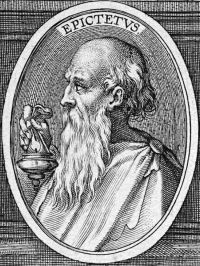
The Stoic philosophers provide a radical interpretation of this concept, arguing that the brave endurance of suffering is not merely a necessary evil but is, in itself, a desirable good [24]. This is because enduring hardship is an expression of virtue, and since virtue is the highest good, its manifestation under duress is to be valued . When one endures torment, it is not a single quality being displayed, but a confluence of many virtues: patience, fortitude, prudence, and constancy [25, 26]. This active confrontation with pain transforms the sufferer from a passive victim into an active agent of moral will.
It is crucial, however, to distinguish between a passive, helpless state of suffering and an active, intelligent form of endurance [27]. True resilience is not a grim, unthinking condition but a conscious and willed act. It involves an intelligent cooperation with reality, a form of active resignation that is rich in vitality and hope . There is a profound nobility in this willed endurance, as it represents a triumph of the rational self over the instinctual desire to flee from pain . This is perhaps most visible in those rare individuals who manage to triumph over chronic, daily anguish, turning a life of potential 'moral wreck' into something truly 'splendid' . Their resistance demonstrates the potency of the human will to create meaning and dignity in the face of relentless adversity [28].
The psychology of resistance and the will to persevere
The battleground of resistance is ultimately internal, located within the human consciousness [29]. Success and failure are not merely external outcomes but reflections of an inner state—a 'firm grip' on events that originates from an indescribable internal force . When this inner resourcefulness begins to falter, to 'slip' or 'get tired,' the external world rebels and withdraws from one's influence . This suggests that the primary act of resistance is maintaining this inner vitality, a psychological fortitude that exerts pressure on the very movement of life.
This internal struggle is characterized by a conscious and continuous effort of will . Attaining virtue is depicted as a long, steep, and arduous ascent that requires relentless watchfulness, patience, and energy . It is a process of self-formation and reformation, a deliberate creation of new, more resilient internal relations through reason and will [30]. This perspective directly counters the notion that virtue is a natural gift; rather, it is acquired through 'institution, learning, and study,' and perfected only through constant practice [31]. The seeds of virtue may be innate, but their growth requires cultivation against the weeds of countervailing impulses .
Perseverance, then, becomes a key component of this virtuous resistance. It is defined as the capacity to endure the difficulty that arises from delays in achieving a good outcome [32]. This quality is seen as secondary to, but annexed with, the primary virtue of fortitude, which endures the greater dangers of death . The psychological challenge lies in sustaining effort when the goal is distant and the path is arduous . It is this sustained act of will, this triumph over oneself, that ultimately allows an individual to gain true possession of their own life, even in the midst of finitude and disaster . The victory is not necessarily in reaching a final destination, but in the unwavering commitment to the climb itself.
The narrative of life as steady progress, while comforting, proves inadequate when confronted with the pervasive realities of suffering, struggle, and inner turmoil. A more robust and honest philosophy of life acknowledges that a virtuous existence is often characterized less by advancement and more by a tenacious act of resistance . This resistance is not a momentary crisis but a permanent condition, a daily struggle against both external adversity and the internal pull toward moral apathy . Virtue, seen through this lens, is not a static prize but a dynamic process—a fire that must be continually stoked against the winds of entropy.
Ultimately, this perspective redefines the measure of a successful life. It is gauged not by the heights achieved, but by the weight endured; not by the absence of struggle, but by the quality of one's engagement with it . The brave and patient endurance of hardship becomes an end in itself, a profound expression of human dignity and the power of the will . By embracing life as resistance, one finds nobility not in avoiding defeat, but in the 'voluntary defeat of our own unwillingness to endure,' a victory that allows us to win ourselves even when all else is lost .