AI-generated from sources
From Missionary to National Myth, The Metamorphosis of Saint Patrick
In Brief
- The historical Saint Patrick was a humble 5th-century missionary, focused on establishing an indigenous Irish Church and integrating Christian principles with existing cultural and legal frameworks.
- His popular image as a miracle-worker and serpent-banisher was largely fabricated through centuries of hagiographic embellishment, prioritizing edification over historical accuracy.
- Patrick’s legend, including tales of interaction with pagan culture and the shamrock, served to seamlessly weave Christianity into Irish identity and justify cultural continuity.
- Through this mythologization, Saint Patrick became the symbolic father of the Irish nation and the eternal guarantor of its distinct Catholic spiritual character.
Main authors
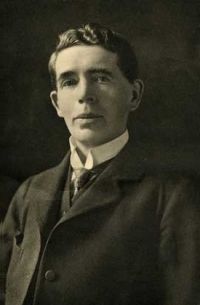
The enduring figure of Saint Patrick is deeply embedded in the cultural imagination, synonymous with the identity of Ireland itself. Yet, the popular archetype—a masterful thaumaturge who banished serpents and wielded the shamrock as a theological tool—stands in stark contrast to the historical person revealed in his own writings [10]. The authentic documents attributed to him, such as his Confessio and his letter to the soldiers of Coroticus, paint a portrait of a self-described "sinner and unlearned" man, a humble and sometimes beleaguered missionary driven by a profound sense of divine purpose [1, 2]. This discrepancy between the man and the myth is so vast that some scholars, as Douglas Hyde notes, have questioned the very singularity of his historical personality, suggesting the grand figure we know today might be a composite of several lesser individuals [3].
The transformation from a modest 5th-century bishop into a national symbol was not a product of historical drift but of a deliberate and sustained process of myth-making. As J. B. Bury observed in the early 20th century, the accounts of Patrick's life composed in subsequent centuries were not intended as historically accurate records but as tools for edification, designed to shape a heroic ideal that would resonate with a popular audience [7]. This hagiographic impulse, common in ancient and medieval writing, prioritized moral and religious lessons over factual reporting, gradually overlaying the real events of Patrick's life with layers of legend and miraculous embellishment [8, 9]. In this process, a metaphorical expression of divine guidance could, over a generation, evolve into a literal visitation from an angel, setting the stage for the creation of a colossal spiritual hero [12].
The Pragmatic Missionary and His Hagiographic Shadow
From his own epistles, the historical Patrick emerges as a figure defined by his humility and his sense of operating as an outsider. He identifies himself not as a triumphant conqueror but as a "proselyte and a fugitive," dwelling among barbarians for the love of God and prepared to sacrifice his life for his mission . This self-perception of lowliness was a consistent theme, with later accounts reinforcing that he considered himself the "vilest of all sinners" and of little importance despite his works . Though primarily a man of action rather than a man of letters, the authenticity of his surviving writings provides a crucial, if limited, window into the character of the man before he was enveloped by legend .
Patrick's approach to his mission was profoundly pragmatic, focused on establishing a self-sustaining and indigenous Christian church in Ireland. A cornerstone of his strategy was the creation of a native clergy, a policy he pursued by identifying and educating promising Irish youths to lead their own communities in the new faith [4, 6]. This foresight in building a local church hierarchy, rather than relying solely on foreign missionaries, was essential for the long-term endurance of his work and mirrored policies later adopted by figures like Pope Gregory the Great for the conversion of England .
Crucially, Patrick did not seek to obliterate the existing Irish culture but to integrate Christian principles within its established framework. He engaged with the ancient laws of the land, purifying and augmenting them rather than discarding them wholesale [5]. This collaborative effort is believed to have produced the great legal compilation known as the “Senchus Mohr,” demonstrating a sophisticated effort to harmonize the new religion with the nation's pre-existing social and legal structures . This willingness to build upon what was already there facilitated a smoother acceptance of the Gospel, particularly among the societal elites .
The process of mythologization began early, as biographers started to reshape Patrick's life to fit the mold of a more conventional and impressive saint. These writers, motivated by the desire to edify their audiences, constructed a narrative that would appeal to popular tastes for the heroic and the miraculous . They embellished his biography with prestigious connections, such as suggesting he was instructed by eminent religious leaders in Gaul or commissioned directly by Pope Celestine—details entirely absent from Patrick's own accounts but which served to elevate his authority and legitimacy [11]. It was through these spurious additions that the historical figure began to be obscured by his legendary counterpart .
The Proliferation of Divine Power and Miraculous Deeds
As the centuries passed, the forceful personality of the historical missionary was coarsened into a caricature of divine power, transforming him into a figure who could command nature, bargain with God, and curse those who displeased him [13]. The human dimensions of his character were lost in a sea of wonders [14]. Hagiographic accounts endowed him with an array of supernatural abilities, from lighting a fire with icicles as a boy to floating to Ireland on a blessed altar stone. He was depicted turning a marauder into a wolf, compelling a stolen goat to cry out from within a thief's stomach, and restoring the dead to life on numerous occasions . These tales depicted not a humble servant of God, but a formidable agent of divine might.
Among the most iconic legends are those that served as powerful allegories for his mission. The story of Patrick banishing all serpents from Ireland became a universally received tradition, widely interpreted as a symbolic representation of his triumph over paganism, which was often depicted as a serpent or dragon in Christian art [17, 18]. Similarly, the use of the three-leaved shamrock as a simple, visual tool to explain the doctrine of the Holy Trinity became a defining element of his legend, showcasing him as an effective object-teacher [16]. Another potent narrative emerged around Croagh Patrick, a site where pilgrims were said to endure terrifying torments that purged them of their sins, framing his spiritual legacy in terms of profound trial and purification [15].
The new Christian faith did not simply supplant pagan beliefs; it often absorbed and repurposed them in a process of cultural syncretism. Legends arose claiming that Druid magicians had prophesied Patrick's arrival and the subsequent fall of their gods, thus framing his mission as a divinely ordained destiny foreseen even by his adversaries [22]. Later narratives show Patrick actively engaging with and blessing the custodians of Ireland's pre-Christian culture, such as its bards and craftsmen [19, 20]. In a particularly telling legend, angels are said to have instructed him to listen to and record the ancient pagan histories for the benefit of future generations, legitimizing the preservation of the island's heroic past within a Christian framework [21]. This blending allowed for a cultural continuity where, as Kenneth Morris suggests, the Irish people could be Christianized while remaining fundamentally "pagan-hearted" in their worldview [24].
The Father of a Sacred Nation
The culmination of this mythologizing process saw Saint Patrick elevated from a missionary saint to the symbolic father of the Irish nation. He became the singular "Apostle of Ireland," credited with the wholesale conversion of its people, from warlike chieftains to humble peasants [25, 26]. In this grand narrative, his arrival marked a pivotal moment in history where idols were shattered, Druids were transformed into priests, and the entire island was brought into the Christian fold, positioning him as a new patriarch—a Christian Abraham for the Irish people . This heroic, and largely apocryphal, version of his life became firmly established in the national consciousness, particularly during eras when political turmoil limited the presence of critical scholarship [23].
Patrick's figure became inextricably linked to the unique and enduring character of Irish Catholicism. Hilaire Belloc would later describe Ireland itself as the "greatest miracle any saint ever worked," a nation seemingly raised from the dead and sanctified by its apostle [27]. The nation's remarkable history of maintaining its Catholic faith without succumbing to heresy or schism has been attributed directly to Patrick's foundational work [28]. According to this tradition, he established the supreme authority of the Roman Pontiff as a core tenet of the Irish Church, leaving a permanent spiritual "impress" that has defined the nation's religious identity for centuries .
Ultimately, Patrick's lasting success and his elevation to a national archetype stemmed from his legendary ability to build upon the culture he encountered rather than simply replacing it [30]. He is remembered not only for bringing a new faith but for pressing the native arts and legal traditions into its service, employing Irish craftsmen to build his churches and adorn his sacred vessels . This narrative of seamless integration, where history becomes luminous and takes on the "rosy hues of a myth," is perhaps best suited to poetic expression, as it captures the fusion of faith and culture that defines his legacy [29]. In doing so, Patrick became more than a historical figure; he became, as Belloc put it, an inhabitant of the very soil he rendered sacred .
The historical journey of Saint Patrick's legacy provides a remarkable case study in the construction of a national archetype. The figure who emerges from his own 5th-century writings is a humble, self-effacing missionary, acutely aware of his own perceived shortcomings as he pursued a divine calling . Over the subsequent centuries, this modest historical core was systematically buried under layers of hagiographic embellishment, a process driven not by a concern for accuracy but for the edification of a growing Christian populace . He was recast as a master of miracles, a commander of divine power whose narrative was carefully woven into the existing tapestry of Irish pagan lore to ensure its resonance and acceptance .
Through this profound transformation, Patrick transcended the role of a mere saint to become the symbolic father of the Irish nation and the eternal guarantor of its distinct spiritual character . The resulting figure—a composite of historical memory, religious allegory, and masterful cultural assimilation—demonstrates how a society can reshape a historical individual to meet its evolving cultural and spiritual needs . In the end, the myth of Saint Patrick became his greatest miracle, forging an identity for a people and sanctifying a nation in his image .