AI-generated from sources
The Saint and the Sepulcher, Francis of Assisi and the Paradox of Relics
In Brief
- Francis of Assisi's radical message in the 13th century advocated for absolute poverty and renunciation of worldly possessions, viewing it as the path to spiritual freedom and profound joy.
- His anti-materialism did not reject the physical world but embraced creation as a conduit for the divine, fostering a deep empathy for all living things as manifestations of God's goodness.
- Christianity holds a long-standing tension regarding relic veneration, with some viewing it as a sacred tradition linked to the resurrection of the body, while others, like John Calvin, condemned it as superstition and idolatry.
- The enduring paradox of Francis's legacy is evident in his hidden tomb and the magnificent basilica built in his honor, challenging believers to find devotion that transcends tangible objects and embodies inner transformation.
Main authors
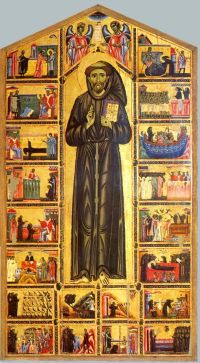

In the landscape of spiritual history, few figures cast as long a shadow as Francis of Assisi. His message, a radical call to embrace poverty and renounce worldly possessions, emerged as a profound challenge to the burgeoning materialism of his 13th-century world [1]. This appeal for a return to primitive apostolic simplicity was not merely an economic or social critique; it was a spiritual revolution aimed at rediscovering a deeper, more authentic joy rooted in immaterial freedom [4, 5]. Francis perceived that the path to imitating Christ lay in divesting oneself of wealth, power, and status, a choice that seemed incomprehensible to his contemporaries and continues to provoke modern sensibilities [7, 8]. The enduring power of his story lies in this deliberate choice of
The Gospel of Radical Renunciation
At the heart of the Franciscan message was a decisive spiritual revolt against the prevailing values of a society increasingly defined by commerce and luxury . Francis, inspired by a direct reading of the Gospel, embarked on a mission to preach a life of absolute poverty, instructing his followers to carry no gold, silver, or even a second coat [3]. This was a conscious effort to counteract the pride and avarice that he saw infecting not only secular life but also the Church itself, advocating for a return to the unselfish devotion of the earliest Christians . By renouncing his own considerable wealth and inheritance, he sought to inflame others with a zeal for a different kind of treasure—one found not in earthly goods but in spiritual communion with God [2].
This renunciation was not a grim duty but the very source of profound joy and spiritual liberty . For Francis, true contentment could only spring from the soul, liberated from the anxieties of possession. This idea has been interpreted by later observers, such as David Grayson, as a form of “achieved poverty,” a deliberate choice made by one who had other options, which distinguishes it from the state of involuntary deprivation [6]. This willful embrace of what others coveted most was a testament to his belief that perfect bliss lay not in power or knowledge, but in a state of spiritual purity that transcended worldly attachments .
The simplicity of Francis's actions and words, though sometimes appearing to defy conventional human wisdom, was understood by his followers as being guided by a divine light . His objective was to become more Christ-like by making himself contemptible in the eyes of the world. It is this unique combination of radical humility and profound spiritual insight that has allowed his appeal to transcend his own era [9]. Indeed, some commentators, such as Mrs. Humphry Ward, have seen in his teachings a timeless religion of love and poverty that resonates with modern movements seeking knowledge and spiritual renewal, suggesting the perennial power of his anti-materialist stance [10].
Creation as a Conduit for the Divine
Contrary to a view of asceticism that rejects the physical world, Francis's anti-materialism was rooted in a deep and joyful affirmation of creation. He practiced a form of Nature-Mysticism, perceiving in every element of the natural world—from stones and plants to birds and insects—the vibrant pulse of a single, divine life [11]. His was not a detached appreciation of beauty, but a profound empathy for all living things, recognizing their inherent right to exist and flourish as manifestations of God's goodness . This perspective transformed the tangible world from an object of possession into a medium for experiencing the eternal.
This spiritual embrace extended even to his own body, which he famously referred to not as an enemy, but as a brother [14]. In moments of intense physical suffering, he did not curse his mortal form but instead composed joyous canticles praising the sun, water, and all of creation [12]. As Paul Sabatier notes, the real St. Francis is the one who sees the radiance of divine beauty in the whole of the created order. His life was an embodiment of the Christian logic that to love and imitate Christ is an ultimate privilege, and that a failure to rejoice is a failure in love [13]. His love for God flowed outward as an ecstatic love for his fellow creatures and the world they inhabited.
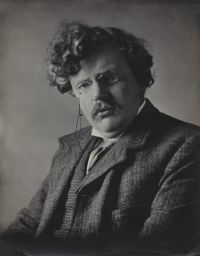
Therefore, Franciscan poverty was not a sterile rejection of joy or a stoic pride in deprivation [17]. As Gilbert Keith Chesterton articulated in the early 20th century, Francis was fundamentally a lover—a troubadour of a nobler romance whose love for God encompassed a genuine love for humanity and all of existence [15]. He renounced material ownership precisely so that he could possess everything on a spiritual plane, holding all of creation in a communion of love rather than a grasp of possession . His life demonstrated that self-abnegation, charity, and purity were not ends in themselves, but pathways to a more profound connection with both the divine and the material world, a spirit that has retained its relevance for centuries [16].
The Enduring Tension of Material Veneration
Despite Francis's focus on an immaterial spirituality, his life and death unfolded within a Christian tradition deeply invested in the veneration of physical relics. From one theological perspective, the mortal remains of the saints are not mere corpses but sacred deposits, intrinsically linked to the belief in the resurrection of the body [18]. This view, articulated by theologians like Thomas Slater in the 1920s, holds that when the authenticity of a relic is established with moral certainty, it is permissible to pay it relative honor because of its connection to a holy person [19]. The human impulse for veneration is seen as a timeless and fundamental sentiment that creates forms of worship; it is the principle itself that is pure, even if its expressions can become corrupted [20].
However, this practice has long been a site of intense controversy. Figures of the Reformation, most notably John Calvin, viewed the worship of relics as a deplorable descent into superstition and idolatry, an abomination where believers turned from the living God to adore inanimate objects [21]. Calvin argued that this practice, born of a foolish curiosity, had degenerated into an execrable sacrilege, often propagated through the circulation of fraudulent items by impostors who deceived the faithful [24]. This critique was amplified in later centuries by skeptics such as Robert Green Ingersoll, who dismissed all sacred relics as “religious rubbish” and those who relied on them as idiotic or dishonest [22].
This debate highlights a fundamental tension within Christianity. Some historians have characterized the established religion's focus on martyrs, saints, and relics as a form of groveling superstition, a mere travesty of polytheism that lacked the redeeming qualities of older beliefs [23]. This critical view suggests that a faith centered on crucifixes and tombs risks becoming stagnant, dwelling on the past rather than engaging with present duties [25]. Yet, a counterargument, offered by G. K. Chesterton in 1908, posits that a modern inability to engage with such material forms of worship might not be a sign of spiritual superiority, but rather of being “below idolatry”—mentally and morally incapable of investing an object with sacred meaning [26].
The Paradox of the Hidden Saint of Assisi
The legacy of St. Francis is physically and symbolically enshrined in a profound paradox. To truly understand him, one must look beyond the magnificent basilica built in his honor at Assisi and instead seek the quiet humility of a place like Santa Maria degli Angeli, especially as evening falls and the ornate trappings of worship fade into obscurity [27]. The grand, material church housing his legacy stands in stark contrast to the immaterial gospel he preached. This tension is further embodied in the mystery surrounding his final resting place. Though he was buried in the great church, the precise location remains unknown, giving rise to local legends that he is not dead but lives on in a secret crypt, far from the reach of pilgrims and prelates [28].
This concealment aligns with a theological notion that divine providence often acts to confound the human tendency toward idolatry by removing or obscuring the physical traces of sacred figures and events [29]. The hidden tomb of the man who preached poverty becomes a powerful symbol of his own message. Indeed, Francis himself reportedly urged people to turn from the visible to the invisible, arguing that true religion was opposed to the worship of relics [30]. In an astonishingly radical interpretation, he is said to have suggested that the Holy Ghost could only descend upon the disciples after they were deprived of Christ's physical presence, implying that spiritual insight requires a letting go of material anchors .
Herein lies the ultimate paradox: a saint who taught that the body of Christ was laid beneath a simple stone, who questioned why the bones of any man should be framed in gold and silver, is himself venerated through the very structures and practices he questioned . The physical site at Assisi thus becomes a monument not only to his life but also to the unresolved conflict between his anti-materialist call and the persistent human desire to touch, see, and venerate the tangible remnants of the holy. His legacy continues to challenge believers to find a devotion that transcends the relic and embodies his call for an inner transformation, seeing God in all of creation without the need for possession.
The life and teachings of St. Francis of Assisi present an enduring spiritual challenge, centered on the tension between his radical gospel of immaterial joy and the deep-seated human impulse to venerate the material world . His renunciation of wealth was not a rejection of creation but a profound embrace of it, a way to possess everything through love rather than ownership . He offered a path to spiritual freedom by detaching from worldly goods, a message that directly confronted the materialism of his age and continues to resonate in our own . Yet, this profoundly anti-materialist vision has been memorialized through the very means he seemed to eschew: magnificent basilicas, revered sites, and the tradition of relic veneration that his own words appeared to question .
The mystery of his hidden tomb serves as a potent metaphor for this paradox, suggesting that the true essence of his legacy cannot be physically located or possessed . It forces a confrontation between faith as an internal, spiritual state and devotion as an external practice anchored in tangible objects. The enduring fascination with Francis lies in this unresolved dialogue. His story compels every generation to question the nature of its own attachments and to ask whether true reverence is found in the preservation of sacred objects or in the living embodiment of a spirit that sees the divine in all things, free from the constraints of possession.