“ We have our own special powers of intellect, our own special experience, our own moral conscience, our own moral life to live. So, while it is true that we stand or fall together, it is also true—and it is a deeper truth—that we stand or fall alone.In this crowded world, with its intercourse and jostling, with its network of relationships, with its mingled web of life, we are each alone. Below the surface there is a deep, and below the deep there is a deeper depth. In the depth of the human heart there is, and there must be, solitude. There is a limit to the possible communion with another. ”
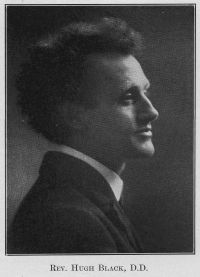
Hugh Black
Biographical details

Hugh Black (1868–1953), a Scottish-American theologian and author, explored themes of spirituality, human relationships, and the tension between personal solitude and communal living. Ordained in 1891 and later teaching at Union Theological Seminary, Black’s works—such as Friendship (1898) and Christ or Caesar (1938)—examine faith’s role in addressing existential uncertainties, ethical duties, and the fleeting nature of human connections.
His writings, grounded in theological depth and pastoral wisdom, highlight the importance of intimate communion with God amid life’s transience, leaving a legacy that connects theological thought with the persistent human search for meaning.
Quotes by Hugh Black
“ Comradeship is one of the finest facts, and one of the strongest forces in life. A mere strong man, however capable, and however singly successful, is of little account by himself. There is no glamour of romance in his career. The kingdom of Romance belongs to David, not to Samson—to David, with his eager, impetuous, affectionate nature, for whom three men went in the jeopardy of life to bring him a drink of water; and all for love of him. It is not the self-centred, self-contained hero, who lays hold of us; it is ever the comradeship of heroes. ”
“ We can only stand speechless, and pray that the great Comforter may come with His own divine tenderness and enter the sanctuary of sorrow shut to feet of flesh. Mourners have indeed been soothed by a touch, or a look, or a prayer, which had their source in a pitiful human heart, but it is only as a message of condolence flashed from one world to another. There is a burden which every man must bear, and none can bear for him: for there is a personality which, even if we would, we cannot unveil to human eyes. There are feelings sacred to the man who feels. ”