Summary

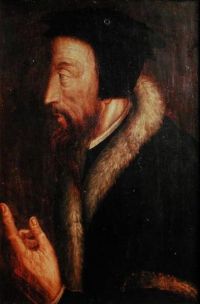
Portrait of Jean Calvin Jean Calvin A Treatise on Relics

What a marvellous disposition of things, that the Russian empire, whose governing principle is the diametrically opposite of the Christian law, should be the very one to make of Christianity the corner, the keystone of its might! And a no less marvellous disposition of things is it that the Czar, in whatever direction he stretches his far-grasping arms, should find Christian points of support whereon to knit the threads of fate for the followers of Islam, artfully scattered by him—that he should find Armenians at the foot of Ararat, and Georgians at the foot of Caucasus!
Source: Gutenberg

Portrait of Jean Calvin Jean Calvin A Treatise on Relics

After the council of Ephesus the churches of the East and of the West offered the worship of the faithful to the Virgin Mary, who had victoriously issued from a violent attack. The nations were as if dazzled by the image of this divine mother, who united in her person the two most tender feelings of nature, the pudicity of the virgin and the love of the mother; an emblem of mildness, of resignation, and of all that is sublime in virtue; one who weeps with the afflicted, intercedes for the guilty, and never appears otherwise than as the messenger of pardon or of assistance.
Source: Gutenberg

Portrait of Jean Calvin Jean Calvin A Treatise on Relics

Should not a solemn and grave worship, whose ceremonies were a constant and direct excitation to the practice of every virtue, appear an intolerable yoke to men who were accustomed to find in their sacred rites a legitimate occasion to indulge in every kind of debauchery? The fear of submitting their lives to the rule of a too rigid morality, and to bow their heads before a God whose greatness terrified them, kept for many years a multitude of Pagans from the church.
Source: Gutenberg

Get perspective with Kwize: daily news enlightened by great literature