AI-generated from sources
The Contested Soul of Ireland, A History of Representation and Reality
In Brief
- For centuries, England imposed demeaning stereotypes like the 'Stage Irishman' and a biased 'Imperial history' to justify its colonial dominance over Ireland.
- A powerful internal movement emerged in Ireland, advocating for self-education and historical revisionism to cultivate an authentic national identity rooted in native traditions.
- Irish art, especially theater, became a critical battleground for national identity, shifting from sentimental idealization to a more challenging realism to confront national truths.
- Despite significant efforts to forge a unified national narrative, Ireland remains deeply fractured by internal divisions, making the quest for a singular identity an ongoing, complex process.
Main authors

The historical representation of the Irish people has long been a fiercely contested terrain, marked by a profound struggle between external caricature and an internal quest for authentic self-definition. For centuries, Ireland’s identity was often shaped not from within, but by the perceptions and political agendas of its more powerful neighbor. This process frequently resulted in the propagation of demeaning stereotypes, most famously embodied by the figure of the 'Stage Irishman'—a crude and simplistic portrayal that bore little resemblance to the complex reality of Irish life [1, 3]. This distorted image, disseminated through popular culture and political discourse, served to rationalize and perpetuate a system of colonial dominance, embedding itself in the consciousness of both the oppressor and, to some extent, the oppressed [2, 6].
This dynamic of misrepresentation, however, did not go unchallenged. It sparked a powerful counter-movement dedicated to forging a national narrative rooted in Ireland’s own history, language, and cultural traditions [13, 14]. This endeavor was more than a simple act of political resistance; it was a deep cultural and intellectual project aimed at recovering a sense of national pride and self-knowledge that had been systematically undermined [17]. The path to this authentic identity was far from straightforward, complicated not only by the enduring legacy of external influence but also by Ireland's own internal divisions and the complex role of its artists and writers, who grappled with the choice between sentimental idealization and a more challenging realism [22, 34, 36].
The Weight of External Misrepresentation
The most pervasive and damaging tool of external misrepresentation was the 'Stage Irishman,' a theatrical stereotype that reduced the Irish character to a set of vulgar and comical traits . This caricature was not merely a harmless form of entertainment; it constituted a form of cultural libel that profoundly shaped how the Irish were perceived abroad . As James Jeffrey Roche observed in the late 19th century, this misrepresentation became a vicious cycle, with some Irish performers even exaggerating the offensive portrayals, leading to a distorted self-image projected to the world . The influence of these stereotypes was potent, creating a public perception on the continent and elsewhere of the Irish as an uncivilized and incorrigible people, which in turn justified England's political actions against them . This cultural phenomenon was part of a broader pattern of hypocrisy in which audiences demanded comforting, familiar stereotypes over nuanced, human portrayals [4].
These cultural distortions were deeply intertwined with a deliberate political strategy to suppress Irish identity and legitimize English rule. Historians like Alice Stopford Green argue that a biased, imperial version of history was constructed to portray Ireland as a nation without a true civilization of its own, thereby transforming national pride into humiliation and self-distrust . This historical narrative was selective, systematically ignoring records in the native Irish tongue and ensuring that the only recognized history was that of the Protestant planters [8]. The English administration actively worked to destroy any growing amity between the different peoples of Ireland, using religious and educational policies to sow division and placing English officials in key ecclesiastical and governmental roles to ensure loyalty to the crown [11].
The long-term consequences of this systematic oppression were devastating, fostering what Alice Effie Murray described as a history of continuous wrongdoing that blighted prosperity and degraded the national character [7]. This prolonged experience of political dependence, commercial restriction, and religious persecution inevitably cultivated a deep-seated distrust of English law and a simmering resentment [9]. The severity of this degradation was such that observers like Fanny Kemble drew parallels between the English perception of the Irish and the dehumanizing views held by American slaveholders towards Black people [5]. This sustained campaign of misrepresentation and suppression created a cycle of disaffection and suffering that imperiled the political institutions of both nations and left a legacy of bitterness that would endure for generations [10].
Forging an Authentic National Narrative
In response to centuries of external suppression, a powerful internal movement arose, centered on the belief that a nation’s survival depends on its pride and self-knowledge [12]. Proponents of this view argued that to be truly Irish was to resist becoming a mere provincial imitation of England, asserting that the nation’s spirit was so deeply embedded in its very soil and traditions that it could not be extinguished . This project of national revival was fundamentally an intellectual and spiritual one, aiming to unite disparate groups into a new fellowship centered on a shared national ideal [15]. This ideal was envisioned not as a modern political invention, but as the incarnation of a spirit that had existed since ancient times, preserved through bards and storytellers .
The foundation of this national reawakening was a rigorous commitment to self-education and historical revisionism. Thinkers like Thomas Davis insisted that true nationhood required a comprehensive understanding of Ireland, from its history and antiquities to its natural resources . This sentiment was echoed by Alice Stopford Green, who contended that the reform of Irish history had to begin at home, with the Irish people themselves becoming the guardians of their own heritage . A key part of this process, according to George William Russell, involved looking past the seven centuries of conflict with England to rediscover the nation's original character, which could only emerge in freedom [16]. By tracing the nation back to its origins, it was believed that a more authentic political identity could be understood and cultivated .
This conscious cultivation of a national identity served as a powerful form of spiritual opposition to foreign influence, inspiring a new wave of literature and intellectual work [21]. It empowered the Irish to re-examine their history and challenge narratives of inherent weakness or incompetence. Historical accounts began to emphasize the centuries-long military resistance against the formidable English empire, reframing the past not as a story of quick defeat but of prolonged, valiant struggle [18]. This reclamation of a history filled with both suffering and honor became the moral basis for demanding self-government [19]. This national rally was not born from misery alone; it was propelled by a growing sense of prosperity and confidence, which provided the necessary foundation for a successful political and cultural resurgence [20].
The Role of Art in Shaping National Identity
The arts, particularly the theater, emerged as a crucial arena in the battle for Ireland’s soul. It was widely believed that a national drama served as a mirror to its people; a base and degraded stage reflected a debased society, whereas a theater dedicated to patriotism and high moral purpose could elevate the national character [30]. The creation of a genuine national drama was thus seen not merely as an artistic endeavor but as a popular passion, a collective enterprise through which the mental character of the nation could be forged [29, 28]. Artists and writers bore a significant responsibility, as their work had the power to either reinforce damaging stereotypes or manifest an ideal of the national being [27].
However, much of the artistic expression related to Ireland fell short of this ideal, often succumbing to sentimentality or cliché. The critic William Hazlitt, for instance, dismissed the popular Irish Melodies as vapid and superficial, arguing that their prettified patriotism lacked the authentic tones of liberty and humanity, thereby implicitly accepting Ireland's subjugated status [25]. This tendency was linked to a form of defensive patriotism that bristled at any form of critique, preferring to see Ireland only as a victim and a repository of virtue [24]. George William Russell lamented this trend, suggesting that many Irish writers had abandoned the grand task of portraying an ideal humanity, choosing instead to focus on the small and mundane, thus failing their national duty .
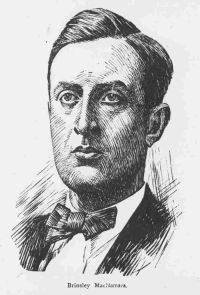
A significant shift occurred with the rise of realism, which was seen by some as a sign of national maturation. The writer Brinsley MacNamara proposed that the decline of the romantic Irish Literary Movement created a necessary opening for a more realistic school of fiction . This turn towards realism signaled a newfound willingness to confront the often harsh and tragic realities of Irish life without resorting to the comforting illusions of sentimentalism [23]. It represented a clearer, more realized vision of the nation's soul, moving beyond the simplistic binaries of caricature and idealization. While formal literature struggled with these questions, many believed the true, unvarnished expression of the national spirit—its sorrow, its hope, its enduring melancholy—had always been most powerfully conveyed through its traditional music and poetry, the last remaining voice of an oppressed people [26].
The Complexities of a Divided Ireland
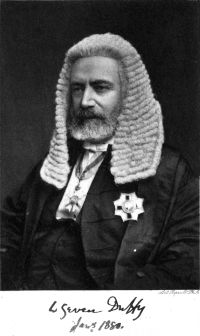
The very concept of a singular, unified Irish nation has been persistently challenged by the country’s deep-seated internal divisions. Far from being a homogeneous people, the population of Ireland has long been fractured by creed, history, and centuries of accumulated animosities . This lack of homogeneity has made the construction of a shared national story profoundly difficult. Some commentators, like Charles Gavan Duffy, went so far as to suggest that Ireland’s past was too fragmented to be considered the history of a single nation, arguing that its old laws, language, and social structures had been irrecoverably lost [32]. Others pointed out that, unlike nations with a clear place in broader European history, Ireland’s past was largely defined by its relationship with England, complicating claims of a distinct historical trajectory [31].
This internal fragmentation was reflected in the wide array of competing visions for the nation's future. As observed by George A. Birmingham, nationalist movements lacked a consistent aim, with leaders advocating for goals as disparate as a restored 18th-century constitution, a fully independent republic, or a non-political focus on cultural and economic regeneration . This disunity extended into the cultural sphere, where, despite producing numerous brilliant individual artists, Ireland failed to develop a cohesive national school or cumulative artistic effect [33]. This led to fundamental questions about what constituted
The narrative of Irish identity has been forged in the crucible of conflict, oscillating between the demeaning force of external caricature and the determined pursuit of an authentic national consciousness. For generations, the image of Ireland was dominated by politically expedient stereotypes, from the theatrical 'Stage Irishman' to biased imperial histories designed to justify colonial rule and erode national pride . This sustained cultural and political pressure prompted a powerful internal response—a movement to reclaim a maligned history and cultivate a sense of self rooted in native traditions and learning . This struggle played out vividly in the realm of the arts, where the tension between sentimental portrayals and a more bracing realism mirrored the nation’s own difficult journey toward self-awareness .
Yet, the quest for a coherent national identity remains an unfinished project, perpetually complicated by the realities of a society deeply divided within itself . The ideal of a unified Irish soul has consistently clashed with persistent fissures of politics, religion, and historical interpretation, preventing the emergence of a single, uncontested narrative . Furthermore, the profound and lasting influence of English culture means that even in independence, the very language and structure of the state carry the imprint of a complex history [35]. The Irish experience thus stands as a powerful testament to the ways in which national identity is not a static inheritance, but an ongoing, often contentious, process of negotiation between a difficult past and an ever-receding future.