AI-generated from sources
The Contested Soul of the Indian Nation
In Brief
- Indian nationalism is fundamentally split between an inclusive, syncretic vision and an exclusive, Hindu-centric understanding of national identity.
- The caste system has historically been identified as a critical internal division, preventing the formation of a cohesive Hindu national body and undermining broader social unity.
- Minority communities, particularly Muslims, voiced significant anxieties during the independence movement, fearing marginalization and a 'tyranny of the majority' in a Hindu-dominated state.
- The valorization of historical figures like Shivaji and the crafting of heroic narratives were central to building a Hindu-centric public consciousness focused on resistance and revolution.
Main authors
The concept of Indian nationalism has never been a monolithic idea but rather a dynamic and often contentious dialogue between two fundamentally different visions for the nation. One perspective posits a grand, syncretic identity, celebrating what it considers India's unique genius for absorbing and harmonizing a multitude of faiths and cultures [1]. In this view, the nation's destiny is not to enforce uniformity but to serve as a global exemplar of religious unity, a place where Hindus, Muslims, Christians, and Parsees can coexist and find common ground [2, 3]. This inclusive ideal imagines a national identity that transcends sectarian divisions, built on a foundation of mutual understanding and shared belonging.
In direct opposition to this pluralistic model stands a more exclusive, Hindu-centric understanding of the nation. This alternative vision defines Indian identity primarily through the lens of Hindu heritage, history, and culture, sometimes positioning other religious communities as historical adversaries or cultural outsiders [13, 21]. This framework raises profound questions about who belongs to the nation and on what terms. The deep-seated social divisions, most notably the caste system, and historical religious differences present formidable obstacles to the formation of a cohesive national body, fueling a debate that continues to shape the political and social landscape of modern India [18, 20].
Aspirations for a Grand Harmony
The philosophical bedrock of inclusive Indian nationalism rests on the belief in a distinct civilizational capacity for synthesis and hospitality . According to this ideal, India's historical mission is not to privilege one community but to create a harmonious whole from its diverse parts. This vision does not seek to erase distinct religious identities but rather to integrate them into a common national fabric that remains fundamentally Indian in spirit . Early 20th-century thinkers like Mohandas K. Gandhi expanded this idea into a global responsibility, arguing that India's purpose was to demonstrate the essential truth and unity of all religions through mutual respect and support . True nationhood, from this perspective, is contingent upon the ability to accommodate all faiths, making pluralism a matter of both pragmatic self-interest and moral integrity .
Advocates for this unified vision often contended that the intense religious strife seen in modern times was not an immutable feature of Indian history. Gandhi, for example, asserted that Hindus and Muslims had long established a mode of peaceful coexistence before the arrival of the British, suggesting that their enmity was a more recent development exacerbated by external forces [4]. This interpretation critiques sectarianism as a profound hindrance to national progress and authentic patriotism [5]. It views the framing of nationality on a religious basis as a corrupting influence that fosters division—such as a morbid dislike of Muslims—and prevents communities from engaging in common national work [6].
Achieving this syncretic ideal was understood to require significant internal reform, particularly within the majority Hindu community. Gandhi was explicit in his call for Hindus to atone for the social injustices of the caste system, which he described as a "devilish" system of suppression [7]. He insisted that marginalized groups must be treated not with condescension but as integral members of the national family, as "blood brothers" . This reformist impulse acknowledged that a truly unified nation could only emerge if the dominant community confronted its own entrenched hierarchies. The ultimate goal was to forge a higher national identity where the "aggressive part" of any single sectarian pride—be it Hindu, Muslim, or Christian—would be submerged for the greater good of a new, inclusive humanity taking shape in India [8].
This proposed nationalism was defined as inherently non-aggressive, focused on reclaiming lost sovereignty and fulfilling a duty to both country and world [9]. Figures like Surendra Nath Banerjea tirelessly promoted this ideal of a united India. This aspirational nation was not the exclusive property of any single ethnic or religious group but belonged to humanity as a whole, a space where all communities, including the English, could potentially find a place [10]. This flexibility was sometimes seen as an extension of Hinduism's own philosophical nature, which Jawaharlal Nehru characterized as lacking rigid fundamentalism and capable of absorbing diverse beliefs without demanding orthodoxy, thereby providing a cultural basis for a modern pluralistic state [11].
Heritage, Heroism, and the Hindu Nation
In contrast to the inclusive model, a more assertive and exclusive form of nationalism emerged, rooted in the fervent defense of Hindu identity. This perspective often mobilizes in response to perceived threats, such as religious conversion, viewing any departure from traditionary worship as an attack on the community's collective existence and a betrayal of patriotic duty [12]. For adherents of this view, Hinduism is not merely a religion but an all-encompassing social and cultural order . This sentiment has historically fueled political movements, as seen in the rise of the Marathas, who positioned themselves as champions of the Hindu faith against what they termed Mohammedan oppression, demonstrating the powerful dynamic of religious revolt in shaping political history .
The construction of this Hindu-centric nationalism relied heavily on the valorization of historical figures and the crafting of heroic narratives. The Maratha leader Shivaji, in particular, was elevated as a paramount symbol of Hindu resistance. Actions that might be seen as morally ambiguous, such as the killing of Afzul Khan, were reframed and justified through religious scriptures like the Mahabharata, placing such great men beyond the reach of common morality [14]. This narrative was actively cultivated through cultural channels—including newspapers, theatrical performances, and patriotic songs—to build a public consciousness centered on Hindu heroism and the necessity of achieving independence through revolution [16]. The historical success of the Maratha confederacy in the 18th century, which established practical mastery over much of India, served as a powerful precedent for this vision [17].
Despite these assertions of a unified Hindu identity, the project was complicated by profound internal divisions, most notably the caste system. For generations, critics have argued that caste represents an insurmountable barrier to national unity. Early 20th-century observers like John P. Jones contended that as long as this social hierarchy persisted, Hindus could never form a cohesive nation or cultivate the public spirit essential for self-government, making social reform a prerequisite for political progress . Decades later, B. R. Ambedkar echoed this sentiment, arguing that a Hindu's primary consciousness is of their caste, not a shared national identity, preventing the formation of a true society or nation [19].
Beyond these internal fractures, deep-seated differences in religious practice and social norms have historically impeded the creation of a single Indian nation. The stark contrasts in worship, dietary laws—such as the Hindu reverence for the cow versus the Muslim practice of its slaughter—and social exclusivity created persistent friction . The caste system, for instance, severely limited free social intercourse between Hindus and those of other faiths, often restricting interactions to the realms of trade or official administration [15]. In the late 19th century, observers like Francis Napier concluded that the subcontinent's two main religions were fundamentally incompatible, describing Islam as intolerant and aggressive in ways that were "directly repugnant" to the Hindu worldview, creating a social landscape that seemed naturally defiant of political cohesion .
The Anxiety of the Minority and the Challenge of Democracy
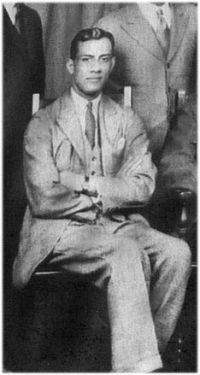
As the movement for an independent, unified India gained momentum, leaders from minority communities began to articulate growing fears about their future status. In the 1930s, figures like Choudhary Rahmat Ali voiced a sharp sense of betrayal, arguing that the Muslim nation was being sacrificed to advance a monolithic "Hindu Nationalism," a process he claimed was enabled by their own leadership [22]. This perspective viewed the concept of a single Indian nation as a dangerous illusion intended to secure the dominance of the Hindu majority [24]. The central fear was that in a federal structure, which would inevitably be overwhelmingly Hindu, all key levers of power—from the military and foreign relations to commerce and taxation—would be controlled by the majority, making it impossible for Muslims to pursue their own distinct cultural and political ideals [25].
This anxiety was not confined to the Muslim community. The constitutional principle of "one country, one nation" was perceived by some as a mechanism to subordinate numerous distinct peoples—including Sikhs, Dravidians, and Christians—into the position of mere satellites within a larger, Hindu-defined Indian nation [26]. This critique challenged the very democratic basis of the nationalist project, raising questions about the rights of self-determination for communities that did not subscribe to the majority's vision [27]. It framed the political reality as a potential "tyranny of the majority" where fundamental rights, including religious freedom, were at risk of being suppressed .
These concerns were heightened by the perception that the British administration itself was increasingly yielding to the demands of Hindu political movements. Observers like Sir Valentine Chirol noted that the colonial government appeared to be relinquishing powers to a specific class of Indian elites whose ambitions represented not a broad national consensus but rather an "aggressive Hinduism" [28]. This perceived shift in policy amplified minority fears, suggesting that the safeguards they had once relied upon under British rule were being dismantled in favor of a new political order that would institutionalize their marginalization .
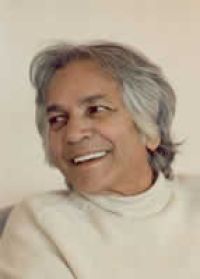
The profound nature of this impasse led some to a radical critique of India's entire cultural and political inheritance. Thinkers such as U. G. Krishnamurti argued that the nation needed to be saved from its own heritage, implying that the very traditions being celebrated by nationalists were the source of its problems [23]. This perspective suggests that without a fundamental break from the past, there could be no genuine hope for either individual freedom or national progress. It underscores the immense difficulty of forging a modern Indian identity that can reconcile its complex history with the principles of an inclusive and truly democratic future .
The intellectual and political history of Indian nationalism is marked by an enduring schism between two competing ideals. One is a syncretic and pluralistic vision that imagines India as a unique civilization with a special capacity to weave diverse religious and cultural threads into a single national tapestry . This aspirational model, powerfully articulated by figures like Gandhi, demanded not only peaceful coexistence among different faiths but also a profound commitment to internal social reform to rectify historical injustices like the caste system . In stark contrast stands a more sectarian nationalism, which defines the nation's core identity through its Hindu heritage, drawing inspiration from historical narratives of religious conflict and cultural defense while often viewing non-Hindu communities as fundamentally other .
This foundational tension has not dissipated with time; it remains a central fault line in contemporary India. The deep anxieties voiced by minority leaders during the independence movement—fears of a "tyranny of the majority" and the political dominance of "Hindu Nationalism"—continue to resonate powerfully in modern political discourse . The challenge of balancing the project of a strong, unified state with the legitimate claims of its diverse constituent peoples remains unresolved . Consequently, the question of which vision will ultimately prevail—whether India will cohere as an inclusive, pluralistic democracy or as a nation defined by the cultural and political primacy of its majority—is the fundamental contest that will determine its future.