AI-generated from sources
John Constable: The quiet revolution of a prosaic genius
In Brief
- Constable broke definitively from the academic 'classical' landscape tradition, which mandated idealized scenery and adherence to strict compositional rules inherited from masters like Claude Lorrain.
- His radical originality was based on painting 'just Nature,' using a humble and patient observation that defied the prevailing tastes exemplified by Sir George Beaumont's 'Cremona fiddle' color standard.
- Constable pioneered innovative techniques—such as using thick pigment, splashes of white, and palette knife scraping—to accurately capture the transient effects of light, atmosphere, and the glint of sunlight.
- Though overlooked in England, his work, notably 'The Hay Wain,' profoundly influenced French realism (the Barbizon School) and Impressionism, establishing him as a pivotal link between old masters and modern art.
Main authors
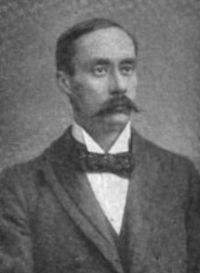

In the early nineteenth century, landscape painting in Europe stood at a crossroads, caught between two conflicting impulses. On one side was the entrenched academic tradition, which held that a landscape must be composed in a 'grand' or 'classical' manner, adhering to strict compositional rules inherited from Old Masters like Claude Lorrain and the Poussins [1]. This approach valued idealized, historically significant scenery over the faithful depiction of the natural world. On the other side was a burgeoning desire to break free from these conventions and paint nature as it was directly observed [2, 3]. This tension created the conditions for an artistic revolution, spearheaded by a painter whose quiet dedication to empirical truth would fundamentally alter the course of Western art.
That painter was John Constable, a figure who stands as a pivotal link between the old masters and the moderns [4]. Unlike his contemporary J. M. W. Turner, whose work often veered into the dramatic and idealistic, Constable was a 'prosaic man of genius,' a sane, level-headed artist dedicated to a single, powerful idea: that landscape painting should be learned from nature itself [5, 6]. He was the first to prove conclusively that a painting could be both a masterful work of art and a truthful representation of the natural world . His approach, characterized by a 'familiarity touched with honesty,' was a direct challenge to the derivative and formulaic art accepted by the establishment, introducing a new visual language grounded in patient observation and a humble reverence for the English countryside [7, 8].
A Break from Academic Formulae
To appreciate the scale of Constable's innovation, one must understand the artistic environment he entered. At the time of his birth, English landscape painting was divided among three dominant schools: the classical tradition sustained by Richard Wilson, the delicate romanticism of Thomas Gainsborough, and the emerging field of watercolor [9]. Yet, the prevailing force within the formal art world was the academic mandate for classically composed landscapes. This tradition, championed by influential connoisseurs like Sir George Beaumont, dictated that nature should be filtered through established artistic conventions, often resulting in works that were copies of other paintings rather than original observations . Artists were encouraged to produce idealized scenes, often bathed in a warm, brown tone reminiscent of an old Cremona fiddle, a standard Beaumont himself advocated .
Constable’s great departure was to reject this doctrine outright. His guiding principle was that while an artist should study the 'science of picture-making' from the masters, his ultimate classroom must be the outdoors . He famously demonstrated his dissent by placing a violin on the green lawn in front of Beaumont's house, a simple act that starkly contrasted the artificiality of the academic ideal with the vibrant reality of nature . This was not an act of arrogance but one born from a profound belief that an artist must approach nature with a 'humble mind,' as he argued that no arrogant man was ever permitted to see its true beauty . This radical originality was recognized by some of his contemporaries, such as the artist Joseph Farington, who foresaw that Constable's unique style would one day constitute a 'distinct feature in the art' [10].
His method was a quiet insurrection against the artifice of the 'grand manner.' Instead of composing heroic, historical landscapes, he turned his attention to the familiar, everyday scenes of his native Suffolk . Works like 'The Hay Wain' are not scenically dramatic when compared to Turner's epics, but they are 'wholesome and life-communicating' . This dedication to painting 'just Nature' was precisely what made his work so arresting and new when it was first exhibited . He was not merely painting landscapes; he was forging a new relationship between the artist, the canvas, and the observable world.
The Science of Light and Atmosphere
At the heart of Constable's artistic project was an almost scientific obsession with capturing the transient effects of the natural world, particularly what he called 'the light of Nature' [11]. He considered light, along with brightness and atmosphere, to be the very 'essence of landscape,' and he confessed that the sacrifices he made to capture these qualities were 'too great' but necessary . This passion for light was a constant throughout his career, though it never reached the 'white-hot fervour' of Turner's later, more abstract explorations of sunrise and ephemeral phenomena [12]. Constable's light was grounded, an observable quality of a specific time and place—the glint of sun on wet grass, the shadow of a passing cloud, or the humid haze of a summer afternoon [13, 14].
To translate these observations onto the canvas, Constable developed a range of innovative techniques that broke with the smooth, polished finish favored by the academies. He employed spots and splashes of white and colored paint to simulate the glitter of sunlight on water and foliage, and he frequently used a palette knife to apply thick touches and scrapes of pigment, giving his surfaces a force and brightness that was unprecedented . These methods, intended to convey the vibration of light and the movement of nature, were often misunderstood by his contemporaries but have since become standard practice . The brilliant treatment of sunlight and cool shadows in some of his studies is so forward-looking that it anticipates the work of later realists and Impressionists like Manet [15].
While his major exhibition pieces were the result of careful composition, much of Constable's genius is most visible in his numerous sketches and studies . It is in these works—a rainstorm sweeping across a beach, a sky filled with nothing but floating clouds, a boat laboring in heavy water—that his direct, emotional response to nature is most palpable [16]. These sketches were not mere preparatory exercises; they were 'significant moments seen in Nature,' captured with an intimacy and affection that reveals the core of his artistic vision [17]. They are the source of the 'joy' in his work, capturing the essence of summer with its breezes, heat, and sudden storms .
The Legacy of a 'Prosaic Genius'
In his own time and country, Constable's revolutionary approach meant his influence was 'almost negligible' among his major British contemporaries, who were pursuing their own individual visions [18]. He was labeled a 'realist,' a term then used by the schoolmen to describe an artist who dared to see with his own eyes and discard academic conventions [19]. It was in France that his work found its most receptive audience. When 'The Hay Wain' was exhibited at the Paris Salon of 1824, it created a sensation, marking an 'epoch in landscape art' [20].
The reason for this impact was timing and context. While English landscape was already diverse, French landscape painting was still 'slumbering in classical swathing-bands' . Constable’s work offered a powerful alternative, demonstrating a path toward realism that had a profound influence on the Barbizon School and, subsequently, the Impressionists [21]. While English landscape art remained a largely local phenomenon, the complex ramifications of the French realism Constable helped inspire spread across the globe, influencing every country where oil painting was practiced . His legacy in his home country was therefore indirect, with the best later English landscape painters inheriting his tradition back through the scientific lens of Monet or the poetic vision of Corot .
The debate over Constable's stature, particularly in relation to Turner, continues among critics . The critic John Ruskin, for instance, famously argued that Constable perceived only the surface truths of nature—'that the grass is wet, the meadows flat, and the boughs shady'—while Turner grasped 'the whole sum of visible truth open to human intelligence' . Yet this assessment, intended as a critique, highlights the very source of Constable's revolutionary power. His genius lay not in poetic invention but in his steadfast dedication to the tangible, observable world . It was his prosaic, honest vision that laid the groundwork for modernism, proving that the most profound truths could be found not in imagined ideals, but in the careful observation of the familiar world.
John Constable occupies a unique position in art history, standing at the 'parting of the ways between the old masters and the moderns' . His singular contribution was to dismantle the long-held academic belief that high art required idealized subjects and classical compositions. By insisting that a landscape painting could be simultaneously a great work of art and a faithful depiction of nature, he fundamentally altered the criteria for artistic merit . His 'familiarity touched with honesty' elevated the everyday English countryside into a subject of profound artistic exploration, liberating landscape from the constraints of historical and mythological narrative .
The quiet revolution he began in the fields of Suffolk had a delayed but immense impact. While initially overlooked at home, his work catalyzed the development of realism in France, and his influence rippled through the subsequent movements of the nineteenth century . The techniques he pioneered to capture the fleeting effects of light and weather, once considered radical, became integral to the vocabulary of modern painting . In this way, the patient, humble, and deeply honest vision of a 'prosaic man of genius' provided the crucial spark for a new way of seeing, demonstrating that the most enduring art is often born from the simple, radical act of looking closely at the world.

