AI-generated from sources
The scythe of time: Why some operas endure and others are forgotten
In Brief
- The operatic stage forces a tension between enduring artistic quality and ephemeral popular taste, often compelling composers to sacrifice artistic leanings for popular caprice.
- An opera's success is determined by a multitude of non-musical factors, including staging, spectacle, and the work's function as a social institution for the audience.
- Canonical status is achieved by works like 'Faust' and 'Carmen' that possess a 'dual character,' successfully balancing intrinsic artistic truth with the capacity to gratify the public’s deep emotional instincts.
- According to Oscar Wilde, the public often degrades classics into 'authorities,' using them as a check against the progress of new and freely expressed forms of beauty.
Main authors
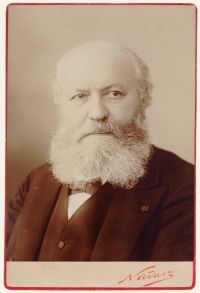


Opera, by its very nature, is a public art form, demanding a grand stage and an audience to complete its purpose [1, 2]. This fundamental relationship between creator and consumer establishes a central tension that has defined the genre's history: the conflict between enduring artistic quality and the ephemeral demands of popular taste [3, 4]. The formation of a stable operatic canon is therefore not a straightforward process of acknowledging genius. Instead, it is a complex and often contradictory negotiation between the intrinsic merits of a composition and a host of external factors—staging, performance, and social fashion—that can elevate a work to stardom or condemn it to obscurity [5, 6].
The crucial question, then, is what allows a work to survive the relentless passage of time [7]. The composer Charles Gounod himself observed that the longevity of an opera depends on more than just superior form and style; it must also gratify the particular instincts the public seeks to satisfy within the theater walls . These instincts often prioritize variety, spectacle, and sensory pleasure over intellectual beauty [8]. This creates a potential chasm between works of high artistic merit and those that achieve widespread popularity, often through non-musical means [9]. Time, with its proverbial scythe, is tasked with separating the two, sparing only that which is deemed
The public stage: An arena of art and commerce
For a composer in the 19th century, the operatic stage was the preeminent, if not the only, road to achieving a significant public name . It offered a permanent exhibition space where works could be kept constantly in view, unlike the rarer opportunities afforded by religious or symphonic music . This public-facing nature, however, meant that an opera's success was never judged on its musical score alone. A host of variables, including staging, ballet, scenery, costumes, and even the quality of the libretto, could collectively make or mar a production . The composer's artistic vision was thus subject to a multitude of practical and theatrical considerations, where the failure of even a minor accessory could compromise the effect of the most sublime musical passages .
The audience, in turn, approached the opera house with a specific set of expectations. As a social institution, particularly in places like Italy, the opera-box served as much as a private drawing-room or club as a venue for appreciating art . The public, as Gounod noted, has a right to demand that a work satisfy the instincts it seeks to gratify in the theater . This often translated into a desire for grand spectacle, passionate sentiment, and technical brilliance in both vocal and orchestral performance [10]. The primary design of opera, from one perspective, was simply to please the senses and maintain an
In this environment, the artist often confronts a difficult choice between creating conscientious, personal art and producing pecuniary, market-driven work [11]. The pressure to cater to public taste could become a powerful force, compelling a dramatic author to sacrifice artistic leanings for popular caprice . An artist who immerses themselves too deeply in the social world of varied opinions and fashionable trends risks losing confidence in their own unique feelings and vision [12]. This dynamic creates a competitive landscape where sincere art must vie for attention against works executed solely for effect, designed to manipulate and deceive the public for commercial gain [13]. The relationship between artist and audience thus becomes a delicate feedback loop, a process of mutual education where the author presents ideals of beauty and the public serves as a measure of emotional truth [14].
The unreliable canon: How public taste shapes posterity
The role of the public as the final arbiter of artistic worth is fraught with contradiction. On one hand, the collective judgment of the masses is sometimes viewed as being fundamentally sound in the long run, a powerful force of admiration that is rarely
A central tension lies in the public's simultaneous demand for
The trajectory of Gounod's `Faust` perfectly illustrates these dynamics. Initially, its innovative harmonies and novel style did not suit the established palates of Parisian connoisseurs [16]. Over time, however, it achieved unparalleled international success, celebrated as a masterwork that united classical form with modern dramatic passion, rich melody, and vibrant orchestration [17]. Its influence became pervasive in French music, its romantic appeal shaping other composers [18]. Despite this canonical status, Gounod's wider legacy remains a subject of debate. Critics have pointed to a certain cloying or enervating quality in his style [19, 20, 21] and argued that, outside of a few successful operas, his talent was often abused, leaving behind few songs a
The measure of genius: Elements of enduring art
If public favor is an unreliable metric, what intrinsic qualities allow an opera to endure? Gounod proposed that time's scythe ultimately spares only works that are
The history of opera is also a history of formal evolution, where artistic merit is often found in the expansion of expressive possibilities. Composers like Cherubini were hailed as foundational figures for introducing more passionate song, sharper rhythms, and greater sonorous brilliancy to the French stage [22]. The `opéra-comique`, once associated with lighter fare [23], evolved into a venue for the boldest dramatic experiments, with a work like Bizet's `Carmen` judged to possess more truth and power than the entire repertory of the more prestigious Grand Opéra [24]. This demonstrates that lasting value is not confined to a single genre or scale of production but is linked to potent innovation and the capacity to convey powerful, authentic emotion.
Ultimately, enduring art often hinges on the development of a unique and individual voice. While some composers, like the young Bizet, initially produced conventional works reminiscent of their famous predecessors [25], others, such as Debussy, were lauded for striking an
The operatic canon is not a static monument to pure, objective quality but the turbulent outcome of a perpetual negotiation between the artist's vision and the public's desires . The works that have achieved lasting fame, such as `Faust` and `Carmen`, appear to possess a dual character. They successfully gratify the public’s need for emotional connection and sensory experience , while also embodying an intrinsic artistic truth and innovative force that allows them to transcend the ephemeral tastes of their time . Compositions that rely too heavily on one aspect to the exclusion of the other—whether sterile academicism or fleeting popular appeal—are often the ones that fade from the repertoire [26].
An opera's survival, therefore, depends on its capacity to rise above the specific conditions of its premiere. While elaborate staging, the demand for novelty, and social prestige are powerful catalysts for immediate success , only works built upon a foundation of profound human emotion , a solid dramatic structure [27], and a