AI-generated from sources
Debussy's shadowy revolution: How Pelléas et Mélisande transcended Wagnerian drama
In Brief
- Pelléas et Mélisande marked an emancipation for French music, utilizing a freer, subtler aesthetic that deliberately moved beyond the rhetorical emphasis of the Wagnerian model.
- Debussy achieved a perfect synthesis of music and drama—an ambition of earlier reformers—by setting Maurice Maeterlinck's complete, self-sufficient play, focusing the drama on latent motives rather than external action.
- The opera is shrouded in a pervasive atmosphere of fate and darkness, where the orchestra functions as a voice that speaks in hints and allusions, manifesting the characters' inescapable internal states.
- The defining paradox of the work is its ability to generate piercing dramatic intensity through quiet restraint and reticence, proving that veiled passion can be profoundly powerful.
Main authors

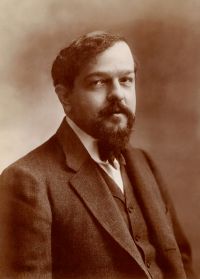
Claude Debussy's Pelléas et Mélisande stands as a singular achievement in the history of opera, a work whose spiritual and emotional character is without analogy [1]. Emerging in an era often dominated by rhetorical emphasis and dynamic brilliance, Debussy’s creation charted a contrary course, embracing a reticent, half-lit, and subtly structured aesthetic [2]. This opera was recognized as a moment of emancipation for French music, forging a new artistic path that was freer and more supple than the Wagnerian model it sought to transcend [3]. The result is an art that is incorrigibly unrhetorical, one that never declaims or insists, but instead operates through suggestion and allusion [4].
At its core, the opera offers a profound resolution to the historical tension between music and drama. Debussy accomplished what earlier reformers like the Florentine Camerata, Gluck, and Wagner had striven for: a perfect synthesis where music serves the dramatic subject with absolute fidelity [5, 6]. By selecting Maurice Maeterlinck's pre-existing, self-sufficient play, Debussy could evade the structural problems of crafting a libretto specifically for musical setting, instead creating a score that perfectly mirrors and deepens a complete literary work [7]. This approach allowed him to shift the focus of the drama away from external action and toward the inner world, exploring the psychological springs of human motivation in a way that was becoming increasingly central to modern conceptions of drama [8].
A Music of Shadows and Allusions
The world of Pelléas et Mélisande is shrouded in a pervasive atmosphere of portent and bodement [9]. The characters inhabit a gloomy castle surrounded by dark forests where the sun is rarely seen, creating a sense of claustrophobia and inescapable fate [10]. They exist as if whispering in a closed room, their lives playing out against a backdrop of deep yearning and sorrow [11]. This oppressive environment is not merely decorative; it is the physical manifestation of the characters' internal states, a world where beauty is desperately needed by the side of death and where human tears fall constantly through the shadows [12].
The orchestra is the primary vehicle for conveying this submerged emotional reality. Unlike the
Fathoming the Unspoken Soul
The true stage of Pelléas et Mélisande is the interior world of its characters . The opera is less concerned with what is done and said than with the latent motives and hidden emotions that drive the action [13]. It captures the sense that individuals are often protagonists in a vast, overarching drama whose full significance they cannot grasp [14]. Mélisande herself gives voice to this feeling when she attributes her sorrow not to any specific event, but to
Reticence as the Apex of Passion
The opera's defining paradox is its ability to generate immense dramatic power through quiet restraint [15, 16]. Rather than diminishing the emotional impact, this reticence creates moments of
Debussy’s opera represents a landmark achievement in the synthesis of artistic forms. By finding a perfect vehicle in Maeterlinck’s symbolic drama, he was able to carry the principles of operatic reform to their ultimate conclusion, creating a score that serves the text with unparalleled logic and consistency [17]. The music functions as a