“ The thought of such a man is an incomparable inheritance for any nation, and such a man was the actor—Shakespeare. Such is our birthright and yours. Such the succession in which it is ours to labor and yours to enjoy. For Shakespeare belongs to the stage for ever, and his glories must always inalienably belong to it. If you uphold the theatre honestly, liberally, frankly, and with wise discrimination, the stage will uphold in future, as it has in the past, the literature, the manners, the morals, the fame, and the genius of our country. ”
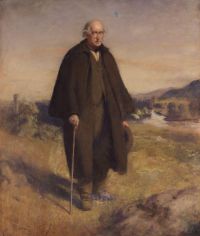
Sir Henry Irving
Biographical details
Sir Henry Irving, a distinguished English actor and playwright, is best known for his seminal work The Drama, a collection of essays that explore the profound connection between theater and human experience. Through reflective prose, he emphasized Shakespeare’s enduring legacy, arguing that the stage is a vital medium for conveying literature, morality, and national identity.
Irving’s writings underscore the actor’s role as a channel for universal emotions, blending passion with artistic discipline. His insights into the relationship between drama and other arts highlight his belief in theater’s power to illuminate human nature, ensuring his work remains a cornerstone in the discourse on performing arts.
Quotes by Sir Henry Irving
“ To master the technicalities of his craft, to familiarize his mind with the structure, rhythm, and the soul of poetry, to be constantly cultivating his perceptions of life around him and of all the arts—painting, music, sculpture—for the actor who is devoted to his profession is susceptible to every harmony of color, sound, and form—to do this is to labor in a large field of industry. But all your training, bodily and mental, is subservient to the two great principles in tragedy and comedy—passion and geniality. Geniality in comedy is one of the rarest gifts. ”
“ In every human heart there gleams a bright reflection of this shining armor. The stage has no lights or shadows that are not lights of life and shadows of the heart. To each human consciousness it appeals in alternating mirth and sadness, and will not be denied. Err it must, for it is human; but, being human, it must endure. The love of acting is inherent in our nature. Watch your children play, and you will see that almost their first conscious effort is to act and to imitate. It is an instinct, and you can no more repress it than you can extinguish thought. ”