AI-generated from sources
The transformation of the English oratorio: Wagnerian influence in Elgar’s The dream of Gerontius
In Brief
- The English oratorio tradition, exemplified by Handel, was criticized for being stagnant, monumental, and architecturally ill-suited to modern, introspective psychological drama.
- John Henry Newman's 'The Dream of Gerontius' demanded a new musical language capable of portraying the intensely subjective and universal experience of the soul after death.
- Elgar radically adopted the dramatic vocabulary of Wagnerian music-drama—including continuous flow, psychological orchestral narration, and emotional intensity—to realize Newman's text.
- This fusion created a new hybrid genre, a 'theater of salvation,' steering the oratorio away from a public civic statement toward an intimate, immersive meditation on faith and dying.
Main authors

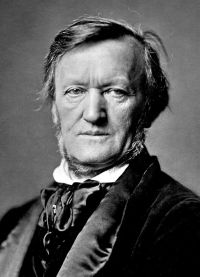
By the late nineteenth century, the English oratorio tradition, largely defined by the monumental legacy of Handel, had become a cornerstone of the nation's musical life [1]. This form, however, was seen by some as having reached its zenith centuries earlier, with little significant innovation since . Its grand, often epic character stood in stark contrast to the revolutionary currents sweeping through European music, most notably the intense, psychologically charged music-dramas of Richard Wagner [2]. While English musical life had its own robust traditions, the sheer force of Wagner's art presented a new model for what music could express [3].
Into this context came John Henry Newman's 1865 poem, The Dream of Gerontius, a work of profound spiritual and psychological depth [4]. The poem eschews grand historical narrative in favor of a deeply personal and universalized depiction of a single soul's journey after death [5]. It is an intensely interior drama, animated by the universal dread of dying [6], the solace of ritual [7], and the soul's final, painful, and purifying encounter with the divine [8]. The text offered a unique challenge: its drama was not one of external action, but of the inner consciousness during its most critical passage.
The central artistic problem was how the established form of the oratorio, with its public, often ceremonial character [9], could accommodate the introspective and theologically specific journey of Newman's poem [10]. The solution, as realized by Edward Elgar, involved a radical importation of a foreign artistic language. To translate Newman's psychological theater into sound, Elgar turned to the dramatic vocabulary of Wagnerian opera, fundamentally transforming the English oratorio from a sacred epic into a theater of the soul [11, 12].
The Stagnant Sanctuary: Conventions of the English Oratorio
The Handelian oratorio, which had long dominated English sacred music, was conceived as a form of "free theatre" [13]. In the absence of staging and scenery, the music itself was required to be picturesque and descriptive, painting vivid pictures for the listener's imagination . This gave the orchestra a significant narrative role, but one focused on illustrating external events and moods rather than plumbing psychological depths. The form was inherently public, an art that spoke to and for the people, often reinforcing a collective sense of national and religious identity . Its function was as much civic as it was artistic, a grand statement within the public sphere.
So powerful was Handel's influence that the oratorio was widely considered a genre that had essentially fulfilled its potential with him . For generations of composers, his work represented a perfected model, leaving little room for substantive evolution. This reverence for the past, combined with a native English musical sensibility that often favored grandeur and solemnity, contributed to a sacred music tradition characterized by magnificent resonance and formal pomp [14]. While emotionally powerful in its own right, this aesthetic was better suited to collective worship than to the nuanced portrayal of an individual's spiritual crisis.
This established tradition was ill-suited to the specific demands of Newman's poem. The Dream of Gerontius is not an epic but a "metrical meditation on death" [15], one that deliberately avoids the certitude of a Dante or Milton by framing its vision as a "dream" . Its focus is the intensely subjective and universal experience of "any soul" at the moment of judgment . To render this journey—with its fleeting consciousness, its terror, and its ultimate submission—required a musical language capable of a more intimate and penetrating psychological focus than the conventional oratorio form typically provided.
The Wagnerian Revolution: A New Language for the Soul
Concurrent with the stately persistence of the English oratorio, Wagner's music-drama was redefining the expressive possibilities of the stage. The essence of the Wagnerian innovation was its sheer energy and emotional intensity [16, 17]. It was a theatrical art, designed for the immediacy of the footlights [18]. Critics and acolytes alike recognized it as a music that aimed for a total, visceral impact, intending to shake the listener to their very core rather than merely pleasing the ear [19]. This was not music as decorative accompaniment but as the primary engine of a powerful, often overwhelming, dramatic experience.
Wagner achieved this effect through a comprehensive rethinking of operatic form. His method involved an immensely powerful and dramatically conceived orchestra, coupled with a fluid vocal style that fused recitative and melody into a continuous expressive line . The entire musical structure was meticulously designed to articulate the unspoken thoughts and motivations of the characters, to present the drama directly to the "inner consciousness" of the audience . This quest for psychological "definiteness" [20] resulted in a musical language capable of mirroring the soul's most subtle perturbations with unprecedented realism and force .
The impact of this new art form created a new kind of audience. The experience of attending a Wagner opera, particularly at his festival theatre in Bayreuth, was one of silent, petrified, and reverential attention [21]. The audience did not simply watch a performance; they participated in a quasi-religious ritual, becoming devotees stirred to their "profoundest depths" . This demonstrated that the mechanisms of theatrical music could be harnessed to create an experience of immense spiritual and psychological gravity, effectively turning the opera house into a secular cathedral.
The Marriage of Bayreuth and Birmingham: Gerontius as Psychological Drama
Newman's poem provided the ideal subject for this newly potent musical language. The drama of Gerontius is entirely internal, a journey through states of consciousness in which the spiritual vision is more real than any worldly interest . The text is filled with moments of intense sensory and emotional experience, from the soul's perception of "intense white light" [22] to the agony of purification when faced with the divine presence . To realize this interior world, a composer needed the tools to depict not just events, but the subjective experience of those events.
Elgar, in his setting of The Dream of Gerontius, effectively adopted the Wagnerian model to solve this artistic problem. He abandoned the discrete succession of arias and choruses typical of the Handelian tradition in favor of a continuous dramatic flow, a technique central to 19th-century German opera . In his hands, the orchestra is no longer merely descriptive but becomes a primary psychological narrator, while the fluid vocal lines give voice to the soul's inner monologue. This approach mirrored Wagner's own focus on internal psychology, where the music often reveals more than the words themselves [23].
This fusion of English subject matter and German technique transformed the oratorio into a new hybrid genre: a theater of salvation. The visceral, nerve-searching intensity that Wagner had used to explore erotic passion in works like Tristan und Isolde was here repurposed for a spiritual quest. Elgar's work invited the audience not merely to witness a sacred story, but to inhabit the "inner consciousness" of Gerontius himself. The concert hall became a space for a shared, immersive meditation on death and the afterlife, an experience akin in its reverential intensity to that cultivated at Bayreuth .
Elgar's setting of The Dream of Gerontius represents a watershed moment in English music. By integrating the techniques and aesthetic aims of Wagnerian music-drama, he steered the oratorio away from the monumental, public-facing model of Handel and toward a modern form of introspective psychological theater . He recognized that the language of the secular opera house, with its emphasis on continuous drama and emotional immediacy, held the key to unlocking the profound spiritual interiority of Newman's text .
This embrace of a theatrical and intensely emotional style did not secularize the oratorio; on the contrary, it discovered a new and vital way to articulate its sacred core. Elgar proved that the dynamic energy and psychological penetration of Wagner's musical language could convey the mysteries of faith more powerfully than the established conventions of sacred music. In doing so, he redeemed the English oratorio from the risk of becoming a beautiful but inert monument to its past , transforming it into a living, breathing theater of the soul.